Rural and distributed battery energy storage system (BESS) projects could be emerging as critical infrastructure in the US as grid reliability risks intensify nationwide.
A 2025 report from the US Department of Energy (DOE) warned that “if current load growth projections, retirement schedules, and incremental additions remain unchanged, most regions will face unacceptable reliability risks within five years.”
The report continued: “Electricity demand from AI-driven data centres and advanced manufacturing is rising at a record pace. To keep the lights on and power the next wave of innovation, the Nation must modernise planning processes and accelerate construction of both generation and transmission assets.”
As grid operators and policymakers grapple with these challenges, energy storage technologies are increasingly viewed as part of the solution. Clean energy trade body American Clean Power Association (ACP) has stated that “technology advances like smart inverters and fast controls expand the reliability services clean power sources can cost-effectively supply to the market.”
Try Premium for just $1
- Full premium access for the first month at only $1
- Converts to an annual rate after 30 days unless cancelled
- Cancel anytime during the trial period
Premium Benefits
- Expert industry analysis and interviews
- Digital access to PV Tech Power journal
- Exclusive event discounts
Or get the full Premium subscription right away
Or continue reading this article for free
Advances in BESS capacity have made it viable for residential and commercial properties to install on-site solar generation systems that capture energy during production periods and store it for later use. These buildings can remain connected to the grid, drawing conventional power when costs are low whilst switching to stored renewable energy during peak demand.
The consequences of grid vulnerability were starkly illustrated in August, when Gary, Indiana experienced approximately 14 days of power outages affecting tens of thousands of residents. Whilst the widespread outages were initially caused by wind storms, citizens of Gary have filed a class action lawsuit against utility NIPSCO alleging it failed to trim vegetation near power lines.
Data from the Indiana Utility Regulatory Commission (IURC) shows that NIPSCO charges the state’s highest electricity rates at US$233.62-per-1,000kWh. IURC records further indicate that NIPSCO maintains the poorest reliability performance of all utilities operating in Indiana, despite these premium rates.
Elsewhere, microgrids can provide reliable electricity to areas without grid access or with only weak links to utility distribution networks. This also enables local communities to deploy renewables and be protected from disruptions that cause blackouts or disconnection from the main grid.
Crucially, in some parts of the US, such as rural California, which suffer intensifying and longer wildfire seasons, microgrids can reduce the need to build out grid infrastructure, which can cause wildfires if wires come down during storms or are inadequately maintained. California has already seen a buildout of state-supported microgrids by its three investor-owned utilities (IOU).
Last week, the state’s governor, Gavin Newsom and the state’s Senate and Assembly came to an agreement on Senate Bill 492 (SB 294), which sets out the wildfire liabilities of IOUs Pacific Gas & Electric (PG&E), Southern California Edison and San Diego Gas & Electric (SDG&E).
Against this backdrop of reliability concerns and rising electricity costs, three recent projects demonstrate how rural and distributed BESS deployments are addressing energy resilience across diverse American communities.
WestLight receives funding for Northern California microgrid
California Community Choice Aggregator (CCA) WestLight Energy has received final funding to build a microgrid in Northern California’s Pescadero community.
Announced 27 August, WestLight will receive a US$3.5 million grant from utility Pacific Gas & Electric’s (PG&E’s) Microgrid Incentive Programme (MIP), a California Public Utility Commission (CPUC)-directed programme that all three California investor-owned utilities (IOUs) administer.
In addition to the US$3.5 million MIP grant, PG&E is providing up to US$4 million to pay for interconnection and microgrid studies and required PG&E grid upgrades to enable the microgrid to safely island.
According to WestLight, these grant funds will be combined with contributions of US$10 million from WestLight Energy and US$3 million from the County of San Mateo.
The project is a collaborative effort led by WestLight and supported by entrepreneur Irma Rodriguez Mitton of Arriba South Coast as the community liaison, the Sustainability Department and Office of Emergency Services from the County of San Mateo, and the Clean Coalition as a technical partner.
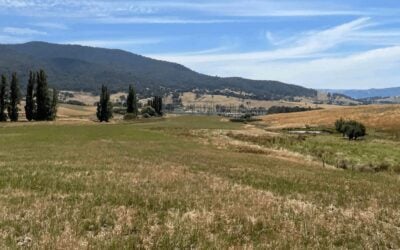
WestLight stated that the 700-person rural farming community of Pescadero has experienced recurring power outages that disrupt residents, businesses, schools and essential services.
Mitton, founder and Executive Director of the community-based nonprofit Arriba Southcoast, worked with community members to identify a solution to the town’s frequent outages. After identifying the MIP as a potential funding source, Mitton sought a partner with the necessary technical expertise, ultimately collaborating with WestLight Energy, which assembled the additional partners, funding and technical capabilities needed for the project.
Construction is anticipated to begin in mid-2029, with service expected to begin in mid-2031.
Once completed, the 1.5MW solar and 8MWh BESS microgrid is expected to serve nearly all of Pescadero, providing three days of backup power in average winter conditions and seven days in average summer conditions.
The MIP rules were approved in 2023, stating that an individual project can get up to US$15 million, with IOUs sharing the total based on their relative size and needs: Southern California Edison (SCE) got the biggest share, at US$83.3 million, PG&E US$79.2 million and San Diego Gas & Electric (SDG&E) share was US$17.5 million.
In March 2025, PG&E announced its intent to award up to US$43 million in grant funding for nine community-driven microgrids in the state.
Richardson Electronics to deploy 18 BESS units across remote Alaskan communities
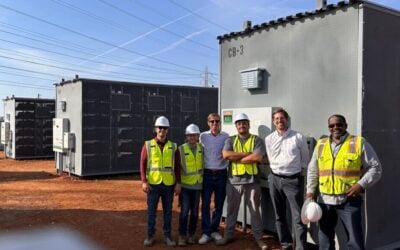
US power electronics manufacturer Richardson Electronics has announced it will deliver 18 customised BESS for deployment across seven remote communities in Alaska.
The multi-million-dollar programme will provide a combined energy storage capacity of 7MWh, with project completion expected by the end of 2027.
Richardson claimed that each system is being engineered to meet the unique energy requirements of its respective community, with a focus on performance, reliability and operation in demanding environmental conditions.
As remote communities in Alaska work to strengthen energy resilience and improve the reliability of their power infrastructure, renewable energy and energy storage technologies are becoming increasingly important. Richardson Electronics has developed customised energy storage solutions designed to operate reliably in Alaska’s challenging climate and extreme temperatures.
Richardson further stated that the project demonstrates its ability to combine its engineering, manufacturing and systems integration expertise with complementary technologies from its partners to address complex power management applications.
In 2024, utility Golden Valley Electric Association (GVEA) announced it would receive US$206 million from the US Department of Agriculture’s Empowering Rural America (New ERA) programme to help develop three projects, including a 46MW/92MWh BESS in Fairbanks, Alaska.
Shortly after, utility Chugach Electric Association successfully commissioned a 40MW/80MWh BESS in Anchorage, Alaska.
University of Minnesota Morris installs 1MW/6MWh Eos BESS
The University of Minnesota (UMN) Morris is advancing an energy storage project with the installation of a 1MW/6MWh non-lithium battery on its campus.
The project brings together UMN Morris, utility Otter Tail Power Company and Open Access Technology International (OATI) in a partnership “to demonstrate non-flammable zinc-based long-duration energy storage (LDES) in a real-world utility and campus setting.”
OATI will install zinc hybrid cathode battery and storage system maker Eos’ Z3 BESS solution.
OATI stated that Eos’ aqueous zinc chemistry, which can operate across a wide range of temperatures, is suited to Minnesota’s extreme seasonal conditions. forms the basis of the Z3 system, engineered for safe, durable operation and supporting frequent charge and discharge cycles with minimal degradation over time.
Under the partnership, Otter Tail Power will operate the Z3 system, connected directly to the utility’s electrical system. The installation became part of Otter Tail Power’s infrastructure following approval by the Minnesota Public Utilities Commission (MPUC) in March 2026. This marks Otter Tail Power’s first BESS project.
While Otter Tail Power will use the Z3 BESS to support grid reliability, the university will have dedicated research periods throughout the project’s anticipated 20-year lifespan to study the battery’s performance under different operating scenarios.
OATI’s GridMind software will manage and optimise the battery’s operation, including when it charges and discharges based on grid conditions and utility needs.
The system is expected to be commissioned on the university’s campus in 2027, with Burns & McDonnell providing engineering support for its installation.
The system has been intentionally sited along a highly travelled campus walkway, where students, visitors and community members will be able to see the technology firsthand. The BESS will join a diverse portfolio of energy technologies already operating on campus, including lithium-ion battery storage, wind turbines, solar arrays and an agrivoltaics installation.
Funding was provided by the Minnesota Environment and Natural Resources Trust Fund, as recommended by the Legislative-Citizen Commission on Minnesota Resources (LCCMR).
UMN Morris claimed that its campus generates more than 60% of its daily electricity needs from on-site renewable resources, including wind power from its two wind turbines and solar energy from campus solar arrays.
In June, OATI announced it had partnered with the Paskenta Band of Nomlaki Indians to integrate advanced microgrid controls into a two-part solar and BESS project in Northern California.
That project, combining .5MW of solar PV generation with 21MWh of BESS across two microgrid sites, also utilises a BESS solution from Eos.
Battery Asset Management Summit USA 2026 will be held 15-16 September in Garden Grove, California, hosted by Energy-Storage.news publisher Solar Media (part of the Informa Group). The agenda emphasises addressing the roles of AI, cybersecurity, and second-life applications, broken down into two tracks: Technical Asset Management and Commercial Asset Management. This year, the conference is also co-located with Solar & Storage Finance Summit USA. Visit the official site for more details.