Battery storage developer Delta Capacity has brought online the Nordic region’s biggest project to date and has acquired another project that would be almost twice the size.
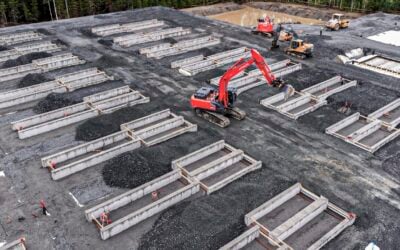
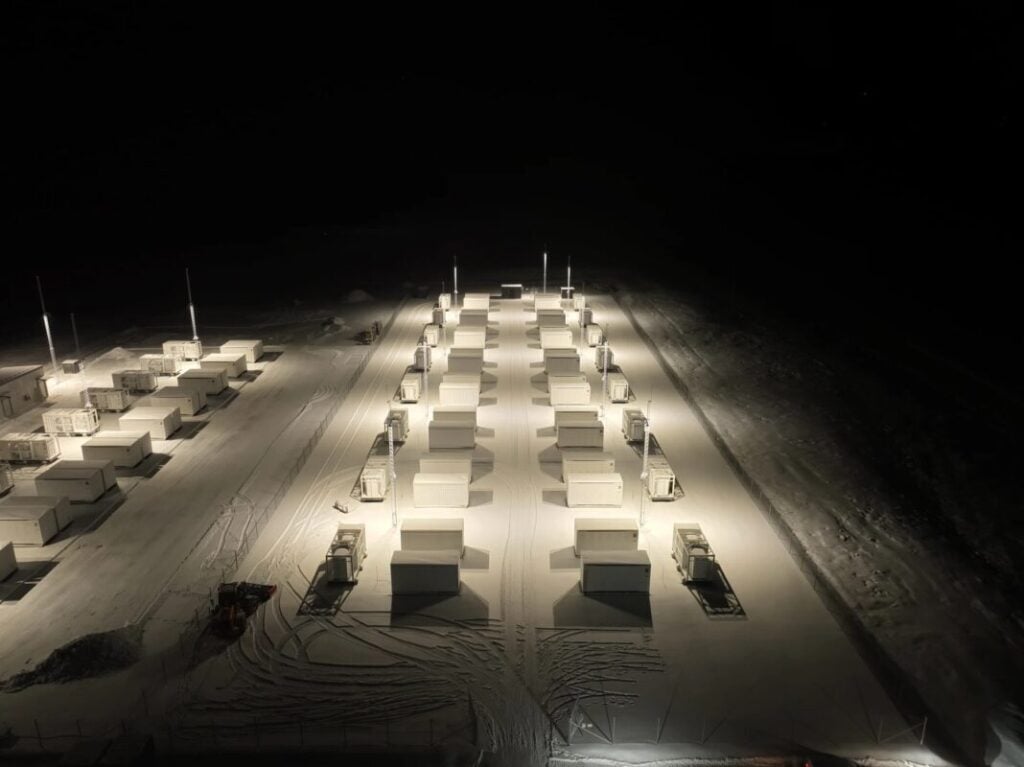
Late last month (23 June), Switzerland-headquartered Delta Capacity announced the start of commercial operation of the 70MW/160MWh battery energy storage system (BESS) in Ånge, a municipality in central Sweden.
Developed jointly by Delta Capacity and Czech investment bank WOOD & Company’s Renewables Sub-Fund, the 2-hour duration asset is in the Swedish SE2 bidding zone of the Nordic power market.
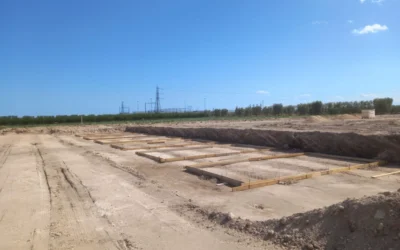
The two companies’ joint venture (JV), Ånge Storage Solutions AB, acquired the project from RES Group at the ready-to-build stage in early 2025.
Try Premium for just $1
- Full premium access for the first month at only $1
- Converts to an annual rate after 30 days unless cancelled
- Cancel anytime during the trial period
Premium Benefits
- Expert industry analysis and interviews
- Digital access to PV Tech Power journal
- Exclusive event discounts
Or get the full Premium subscription right away
Or continue reading this article for free
Delta Capacity said the Ånge project will play into the Nordic ancillary services markets and stack revenues from arbitrage in the power market: the Nordic countries share a single electricity market but have different pricing across the bidding zones.
The developer noted that the project was completed from procurement to the start of commercial operation within 15 months.
Meanwhile, the project’s BESS provider, Sungrow, announced this week (20 July) that it had supplied its PowerTitan 2.0 BESS units to the project. PowerTitan 2.0 is a 5MWh-capacity enclosure with a 2.5MW integrated power conversion system (PCS) housed in a standard 20-foot ISO container.
Sungrow said the system is built to withstand challenging weather conditions, including extreme temperature variations. Furthering the companies’ partnership, Delta Capacity signed a 1GWh framework supply agreement with the energy storage arm of the Chinese solar PV inverter manufacturer at Energy Storage Summit 2026 in London, UK, in March.
Centrica Energy is the project’s route-to-market (RTM) optimiser, while the previous owner, RES Group, recently signed up as the asset manager. Delta Capacity undertook engineering, procurement and construction (EPC) duties.
“The Nordic energy transition is moving fast and requires infrastructure that keeps the same pace. Sweden has great renewable resources, but flexibility is missing and that is exactly what Ånge provides,” Delta Capacity CEO Patrik Hes said.
Robert Doucha, investment director at WOOD & Company Renewables Sub-Fund, called the project “a strong signal of the value battery storage brings to the Nordic energy market.”
In April, WOOD & Company said it had acquired two further ready-to-build projects in Finland, totalling 75MW/150MWh, on which it would be collaborating with developer Winda Energy.
Around that time, a Centrica Energy spokesperson told Energy-Storage.news that optimising assets in the Nordics involves balancing in real-time the revenue opportunities between ancillary services, the most lucrative of which was manual Frequency Restoration Reserve (mFRR) in 2025, and wholesale trading in Day-Ahead, Intraday and Imbalance markets.
Delta Capacity partners with Strioga Family Foundation for 300MWh Finland project
Indeed, while it is now the largest BESS project in the Nordics, Ånge will soon be overtaken by other projects currently under construction. In March 2025, Swedish developer and optimiser Ingrid Capacity said it would build a 70MW/140MWh project in Finland in partnership with investor Nordic Energy due online during this year.
Ingrid Capacity also received construction permits earlier this year for two larger projects in Sweden, the 100MW/400MWh Vaggeryd project—which would be the country’s first 4-hour duration BESS—and the 100MW/200MWh Horsaryd project, both in the SE4 bidding zone and expected to go into commercial operation in 2028.
Delta Capacity is also now taking part in delivering a bigger project in the Nordics: the developer said earlier this month (14 July) that it has partnered with family investment office Strioga Family Foundation to acquire a 125MW/300MWh project in Finland.
Located in Teuva, South Ostrobothnia, around 375km northwest of the capital Helsinki, the Karppio BESS project is being acquired from Helios Nordic Energy. Delta Capacity will lead the project’s remaining development through to its planned commissioning in 2027. The developer will also serve as long-term asset manager.
Delta Capacity has nearly 1GWh of BESS under construction and targets getting more than 6GWh of “flexible assets” in operation by 2030.
It marks Strioga Family Foundation’s first entry into Finland. The investment office this month also entered the Italian BESS market by acquiring a 49.8% equity stake in a 150MW/600MWh project in Livorno, Tuscany, in development by Enfinity Global.
Ignitis Renewables takes FID on Latvia project
Moving away from the Nordics, but staying very much in northern Europe, the renewable energy arm of Nordic and Baltic utility company Ignitis Group has made a final investment decision (FID) to invest in a 107MW/215MWh BESS project in Tukums, Latvia.
Ignitis Renewables said yesterday (21 July) that it will build the project, Tume BESS, co-located with the company’s 174MW Tume solar PV plant. Under construction since late 2024, Tume is Ignitis’ third large-scale solar plant in Latvia.
The BESS and solar farm will share grid connection infrastructure. The batteries will store surplus electricity generated by the PV and inject it to the grid when demand rises.
Construction is due to begin this year, for COD in 2028, with Ignitis putting the total expected cost of the project at around €35 million. Ignitis Renewables is building a further three BESS projects in neighbouring Lithuania with a combined power output of 291MW and 584MWh storage capacity, located close to two wind farms and a pumped hydro energy storage (PHES) facility.
The three Baltic countries are, like the Nordics, a current hotspot for battery storage developers in Europe. In early 2025, Latvia, Lithuania and Estonia’s power grids disconnected from the BRELL network shared with Russia and Belarus, synchronising instead with Europe.
At the same time, the Baltic states have seen a huge rise in solar and wind generation over the past four or five years. In late 2025, Energy-Storage.news reported back from the Energy Storage Summit Central and Eastern Europe 2025 conference that the Baltics were among the most attractive regions in Europe for BESS investment.