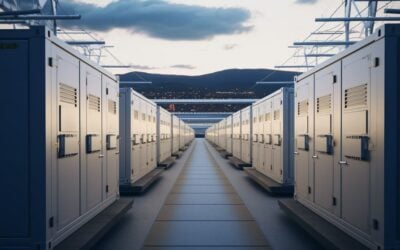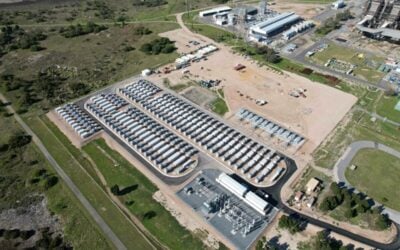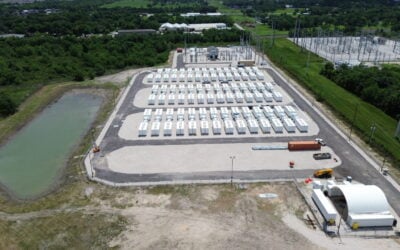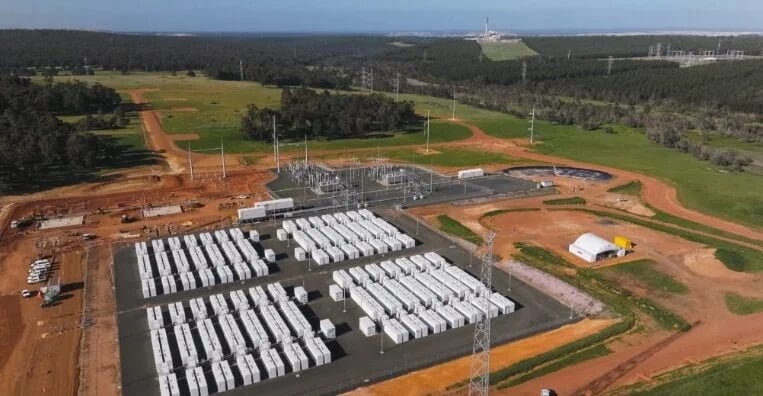
French independent power producer (IPP) Neoen, which is now fully owned by Canadian asset manager Brookfield, has switched on the second phase of its 560MW/2,240MWh Collie BESS in Western Australia.
The BESS, which is located in close proximity to Synergy’s 2GWh Collie Battery Energy Storage System (CBESS), has already been discharging energy to the Wholesale Electricity Market (WEM) in Western Australia, according to Sally Bogle, vice-president, APAC renewables and power at research company Rystad Energy.
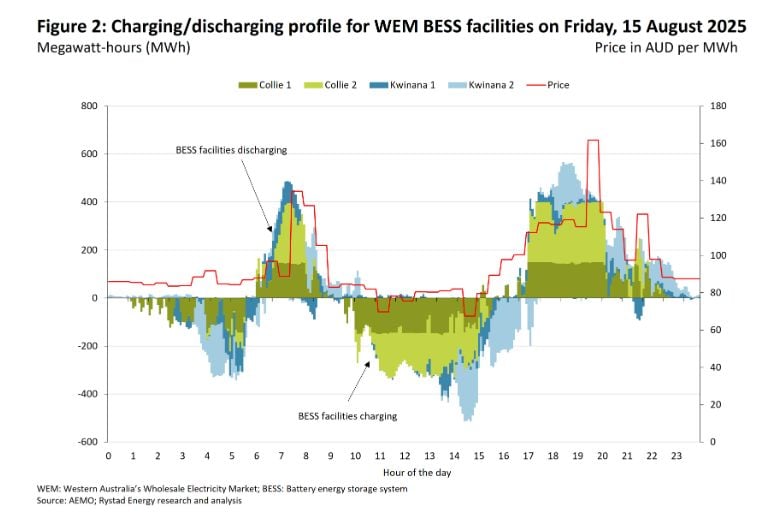
Shared on LinkedIn, Bogle also noted that the South West Interconnected System (SWIS), which covers much of the southwest of Western Australia, including the state capital Perth, is currently on track for over 1.6GW/6GWh of operational BESS capacity by the end of 2025, doubling to over 3GW/11GWh by the end of 2029.
Stage 1 of the Collie BESS, sized at 219MW/877MWh, began operating in October 2024, less than 18 months after construction commenced. The BESS features 224 Tesla Megapack 2XL units and represents Neoen’s first major project in Western Australia.
Try Premium for just $1
- Full premium access for the first month at only $1
- Converts to an annual rate after 30 days unless cancelled
- Cancel anytime during the trial period
Premium Benefits
- Expert industry analysis and interviews
- Digital access to PV Tech Power journal
- Exclusive event discounts
Or get the full Premium subscription right away
Or continue reading this article for free
On 1 October, the BESS began delivering its contracted 197MW/4-hour grid capacity service to the Australian Energy Market Operator (AEMO). This service, known as ‘Non-Co-optimised Essential System Services’ (NCESS), is contracted for a two-year period.
The BESS charges during daylight hours when solar generation is abundant and discharges during evening peak demand periods.
Building on the success of Stage 1, Neoen has now completed the second stage of the Collie Battery, adding 341MW/1,363MWh through the installation of 348 Tesla Megapack 2XL units.
In April 2024, Neoen secured a similar 300 MW/4-hour NCESS contract with AEMO for Stage 2. This contract will run for two years from 1 October 2025 and provide 300MW for four hours.
Synergy’s 2GWh Collie BESS on track to be online ‘by the end of the year’
In other news, Dom Watson, renewables development lead, future energy at state-owned company Synergy, has confirmed that its 2,000MWh CBESS in Western Australia is on track to be online “by the end of the year”.
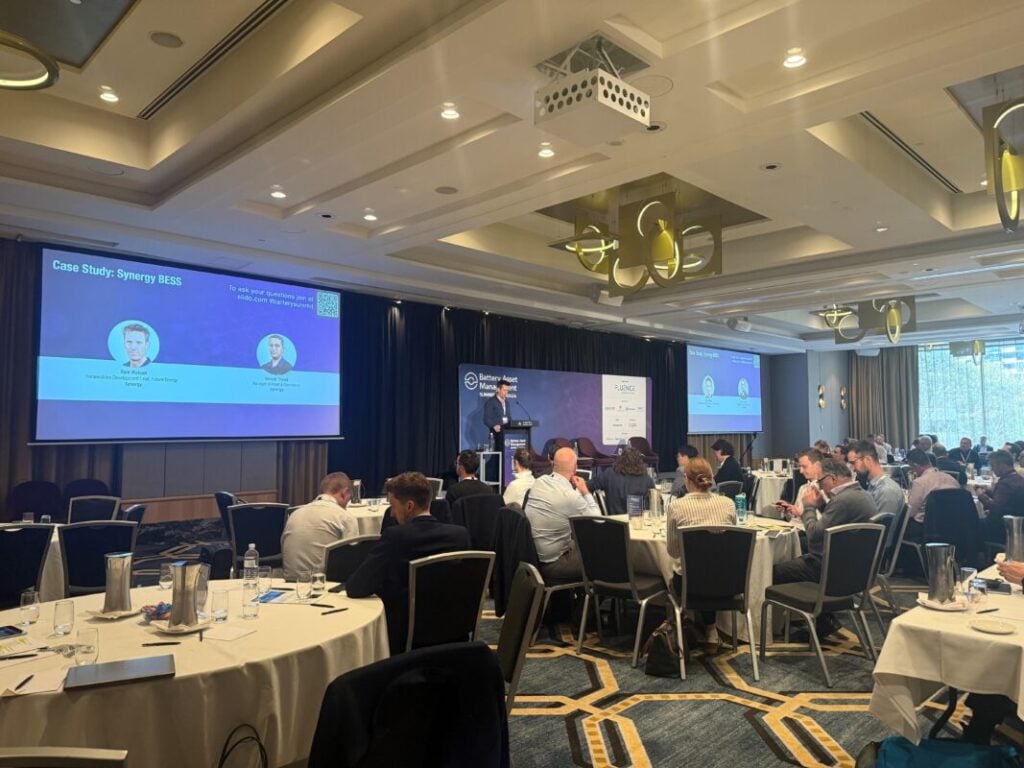
Speaking on stage at the Battery Asset Management Summit Australia 2025 earlier this week, Watson noted that CBESS, which is currently undergoing its commissioning phase, will be delivered by the end of the year.
Installation of all 640 battery packs and the inverters started in early October 2024 and was completed in April 2025. Construction on the site, which is set to be one of Australia’s largest battery projects, started in March 2024.
It is located at the site of the 300MW Collie Power Station, a coal-fired power plant scheduled for decommissioning in 2027. CBESS will be connected to the SWIS.
At the Summit, Watson provided a deep dive into Synergy’s operations in Western Australia and how it has transitioned from relying on coal-fired power stations to renewables and energy storage.
Indeed, Synergy has several large-scale BESS operational and under construction. For instance, last year, the organisation completed its 200MW/800MWh Kwinana 2 BESS. Construction started in July 2023, and the project was switched on before Christmas 2024.
Kwinana 2 is situated adjacent to the first Kwinana BESS 1, a 100MW/200MWh 2-hour duration system, at the existing gas-fired Kwinana Power Station.
Supply chain issues and switching to an ‘integrator model’
Although the initial impression when building the large-scale battery storage projects was that the batteries would be the toughest to secure due to demand, Watson pointed out that this was not the case.
“What we found ourselves was not only a huge task in delivering pretty material development projects in their own right, but we were also doing that right in the middle of some supply chain issues,” Watson noted
“There were supply chain concerns for batteries, inverters and transformers. We initially thought batteries would be the bit of equipment that needed to be secured earlier. But we soon found out that the power conversion systems (PCS) were probably the critical bit of equipment that needed to be secured as quickly as we could.”
As such, Watson outlined that Synergy abandoned the traditional engineering, procurement, and construction (EPC) model, finding it too rigid and slow for managing supply chain risks across its large project portfolio.
Instead, it adopted an “integrator model” that directly managed procurement, design, and construction as separate packages, giving it greater flexibility and control over supply chain challenges during project delivery.
“We selected the integrated model, which was great as a concept for delivering these projects at pace. But we realised we weren’t structured to deliver projects like this, and we’d never done it before at Synergy. However, we knew we needed to scale quickly, and we knew we needed to keep delivering at pace with control,” Watson continued.
Synergy then formed an “integrated project management team” by partnering with engineering firm GHD, which provided engineering expertise to complete detailed integration designs and develop IFC (Issued for Construction) packages.
GHD also supplemented the company’s project management capabilities with additional project managers and control systems. In doing so, this partnership enabled real-time decision-making without commercial constraints, which proved essential for delivering large-scale, complex projects amid supply chain challenges.
Our publisher, Solar Media, will host the Energy Storage Summit Australia 2026 on 17-18 March in Sydney. You can get 20% off your ticket using the code ESN20 at checkout.