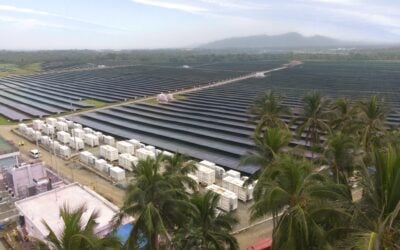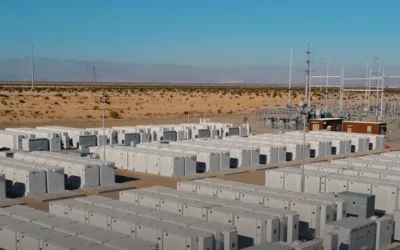
Octopus Australia has submitted the Hanworth Battery Project, a 1.2GW/4.8GWh battery energy storage system (BESS), for assessment under Australia’s Environment Protection and Biodiversity Conservation (EPBC) Act.
The project would be built on a 136.98-hectare site in Bannaby, in the Upper Lachlan Shire of New South Wales, approximately 46km northeast of Goulburn.
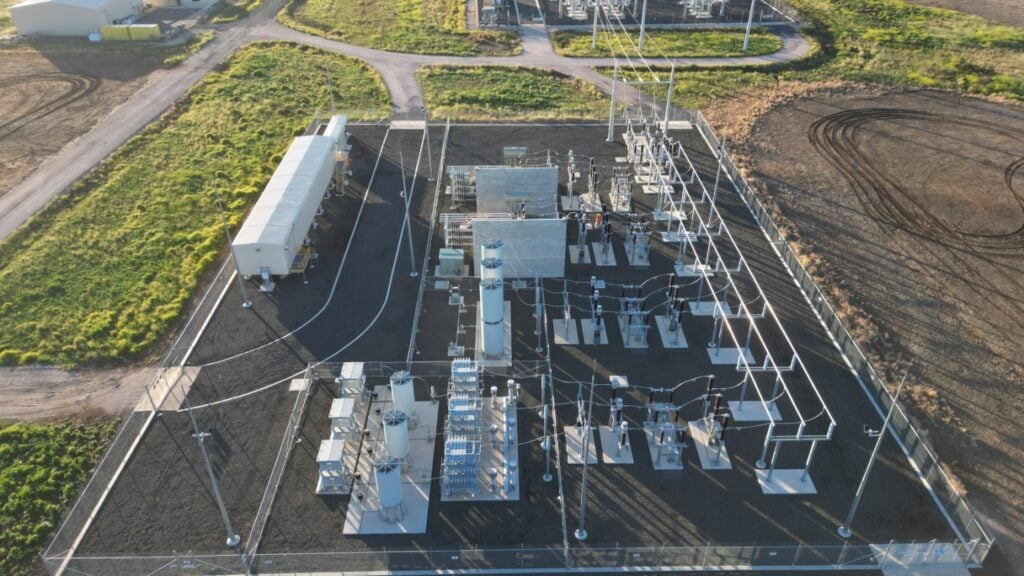
It would connect to Transgrid’s transmission network via an underground line to the existing 500kV Bannaby Substation, with two alternative transmission alignments still under consideration pending Transgrid’s connection agreement process.
The referral describes infrastructure comprising approximately 708 battery containers, alongside a 33kV/500kV substation and associated switchyard equipment.
Try Premium for just $1
- Full premium access for the first month at only $1
- Converts to an annual rate after 30 days unless cancelled
- Cancel anytime during the trial period
Premium Benefits
- Expert industry analysis and interviews
- Digital access to PV Tech Power journal
- Exclusive event discounts
Or get the full Premium subscription right away
Or continue reading this article for free
Construction and commissioning are expected to take around 32 months, with the project intended to operate for approximately 25 years from a proposed start date of January 2028.
Octopus Australia is an energy fund manager and developer with a portfolio and pipeline exceeding AU$16 billion (US$11.52 billion) across wind, solar and battery storage projects in Australia.
As reported by Energy-Storage.news earlier this year, the company acquired the 4.8GWh battery storage project from Enervest. At the time, Octopus described it as Australia’s “largest planned BESS”.
The project is classified as State Significant Development (SSD) under New South Wales planning law, given its estimated capital investment of approximately AU$1.9 billion (US$1.24 billion), meaning the EPBC referral proceeds in parallel with a state-level environmental impact assessment.
Threatened species assessment finds one likely significant impact
The referral’s ecological assessment evaluated 57 listed threatened species and three listed threatened ecological communities identified within 10km of the project area.
Field surveys conducted between July 2024 and July 2026 found the Diamond Firetail, a vulnerable woodland bird, and the Large-eared Pied Bat, an endangered species, present within the project area, while assessments concluded that most other listed species were unlikely to be significantly affected.
The proponent’s Assessment of Significance concluded that the project would not have a significant impact on any threatened ecological community or species, with one conservative exception: the Diamond Firetail, a vulnerable bird species.
Two individuals were recorded during surveys, and the referral treats them as potentially part of an important population, with up to 44.89 hectares of habitat, including 3.30 hectares of woodland considered critical to the species’ survival, falling within the disturbance footprint.
The White Box-Yellow Box-Blakely’s Red Gum Grassy Woodland and Derived Native Grassland, a critically endangered ecological community, was also confirmed present within the project area.
The Hanworth referral adds to a run of large battery storage submissions moving through Australia’s EPBC Act process this year.
In August, Windlab and Squadron Energy referred a 500MW BESS component of the Bungaban solar-plus-storage project in Queensland, while ZEBRE submitted its 180MW/360MWh Noblevale Battery in Queensland despite administration proceedings affecting its joint venture partner ZEN Energy.
Elsewhere in New South Wales, Samsung C&T Renewable Energy Australia submitted the 1,000MWh Boro solar-plus-storage project south of Goulburn, part of a broader pipeline the South Korean conglomerate’s local development arm has been advancing across multiple states.
The pace and volume of submissions reaching the EPBC Act process has drawn scrutiny from industry bodies over implementation speed.
The Clean Energy Investor Group published a report in July calling on the federal government to prioritise faster, more consistent decisions under the reformed Act, representing developers and investors with more than 16GW of installed capacity and a project pipeline exceeding 46GW nationally.
The group’s report found that National Environmental Standards, an offsets calculator and a formal definition of “net gain” remained under development as of mid-2026, despite the Environment Protection Reform Act 2025 having already delegated most assessment powers to a new National Environmental Protection Agency.
CEIG’s report noted that a streamlined 30-business-day assessment pathway introduced under the reforms is expected to particularly benefit projects with well-defined impacts, including battery storage, though the decision clock does not begin until the regulator is satisfied that all required information has been submitted.
Never miss an Australian energy storage story. Sign up for our Australia newsletter and get the latest project announcements, policy updates and market analysis delivered directly to you.