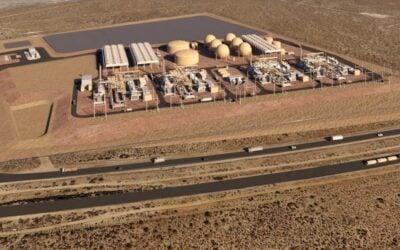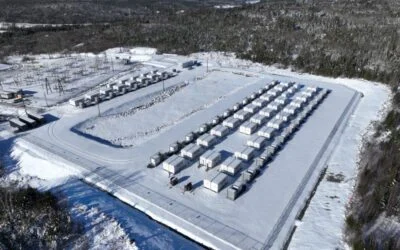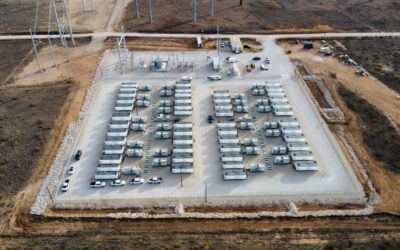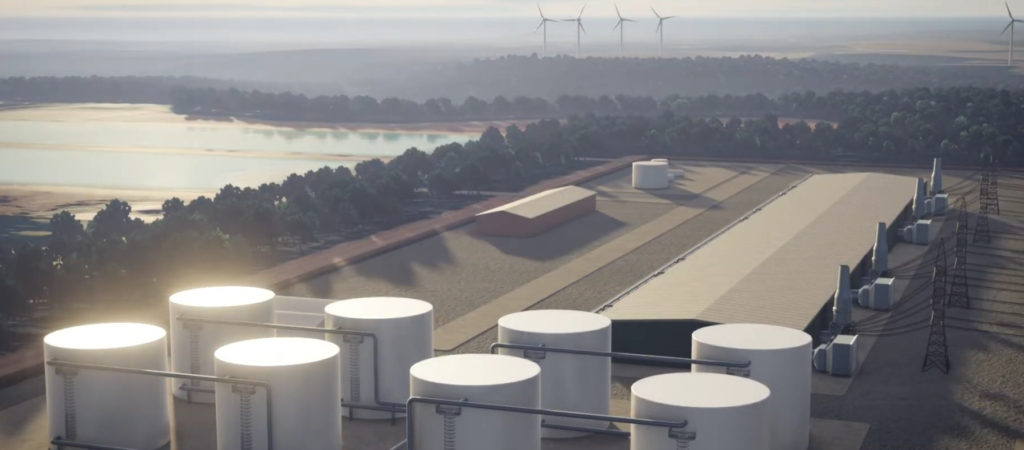
Geothermal energy company Bedrock Energy has had its proposed compressed air energy storage (CAES) project in Huron County, Ontario, Canada rejected.
On 13 August, the Municipality of Bluewater held a Special Council Meeting where the project was unanimously voted down.
Bedrock planned to bid the project in the Ontario Independent System Operator’s (IESO’s) Long Lead-Time request for proposal (LLT RFP) at 382MW/3,056MWh on approximately 130 acres. The project has been developed in partnership with Capstone Infrastructure.
The LLT RFP, launched 8 May, intends to procure up to 800MW of long-duration energy storage (LDES). It is also open to 1TWh of generation resources, and successful projects will be awarded a 40-year contract.
Try Premium for just $1
- Full premium access for the first month at only $1
- Converts to an annual rate after 30 days unless cancelled
- Cancel anytime during the trial period
Premium Benefits
- Expert industry analysis and interviews
- Digital access to PV Tech Power journal
- Exclusive event discounts
Or get the full Premium subscription right away
Or continue reading this article for free
CAES technology functions by pressurising and directing air into a storage medium to load the system. When discharging, the stored air is released through a heating system to expand, driving a turbine generator.
LDES developer Hydrostor, which uses a variation of CAES, named advanced-CAES (A-CAES), announced it was submitting the Quinte Energy Storage Centre A-CAES project into the LTT RFP around the same time it was announced by the IESO.
A-CAES technology operates by compressing air into a storage medium during the charging cycle. When electricity is needed, the compressed air is released and heated, causing it to expand and drive a turbine generator.
Hydrostor has claimed that A-CAES has an improved round-trip efficiency (RTE) over CAES and has greater siting flexibility.
These traits may have proven valuable in deciding the fate of Bedrock’s proposed project. Many of the comments received from community members in opposition to the project noted its placement on over 100 acres of “productive farmland”, and the project’s lifespan of 40-50 years.
However, it should be noted that the Agricultural Impact Assessment suggested that Bedrock should restore the land “to a condition conducive to agriculture” upon the project’s end-of-life, and a 40-50 year project lifespan is approximately 20-30 years longer than a utility-scale lithium-ion (Li-ion) battery energy storage system (BESS).
Elsewhere in Canada, CAES developer Cache Power announced in 2025 that it would be partnering with construction company EllisDon to deliver a CAES facility in Northeast Alberta. The project will be constructed in two phases and located next to the Marguerite Lake substation.