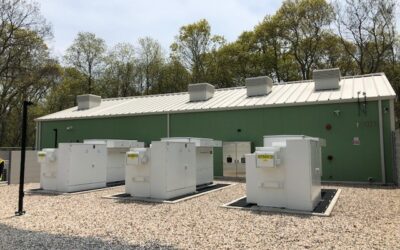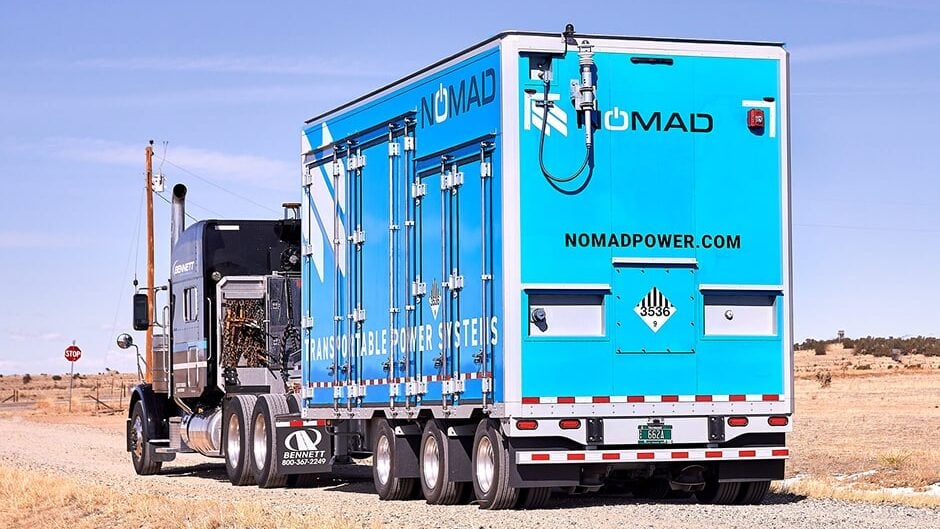
Nomad Power Solutions has announced that the US Department of Energy (DOE) Office of Electricity has authorised the advancement of an energy storage demonstration project in Vermont.
Announced 26 August, the DOE authorised Nomad Power Solutions through its subsidiary Nomad Transportable Power Systems to advance into phase 3 of the Vermont Long Duration Energy Storage (LDES) Demonstration Project.
The approximately US$19 million project is expected to deploy up to eight Nomad transportable battery energy storage system (BESS) units across five sites within utility Green Mountain Power’s (GMP) service territory in Vermont.
In 2023, Nomad first won a US$9.5 million DOE grant to deploy its mobile BESS in rural Vermont communities.
Try Premium for just $1
- Full premium access for the first month at only $1
- Converts to an annual rate after 30 days unless cancelled
- Cancel anytime during the trial period
Premium Benefits
- Expert industry analysis and interviews
- Digital access to PV Tech Power journal
- Exclusive event discounts
Or get the full Premium subscription right away
Or continue reading this article for free
The DOE LDES Demonstration Grant Programme was launched in 2020, with Nomad and one other recipient being the first companies to receive grants under it. Corvias Military Living has received a US$9.5 million award to demonstrate one of the first EV-inclusive microgrids at Fort Riley in Kansas, in a project involving General Motors Defense and other GM businesses, though fewer details were provided on that project.
The project’s advancement follows GMP’s operational use of an existing Nomad system for peak management and to maintain service to customers during planned utility maintenance.
The DOE project authorisation to proceed into phase 3 moves the Vermont project into installation, integration and construction.
Nomad’s patented platform is designed to be moved among locations and used for peak management, emergency response, maintenance support, renewable energy integration and other grid-resilience applications. The project is supported by a US$9.5 million DOE award and an approximately 50% non-federal cost share, with future reimbursements subject to the terms and milestones of the cooperative agreement.
Unlike conventional stationary BESS, which are generally designed for a specific location and application, Nomad’s patented transportable platform is engineered to be redeployed as operational requirements change.
Phase 3 of the Vermont project will incorporate Nomad’s latest platform, including lithium iron phosphate (LFP) batteries and microgrid-enabled controls. The project is intended to demonstrate how transportable LDES can provide a resource for improving grid reliability and resilience in rural communities.
With authorisation to proceed into phase 3, Nomad will continue work under DOE award DE-OE0000952 in accordance with the project’s Statement of Project Objectives. The milestone advances Nomad’s efforts to demonstrate transportable BESS as a resource for utilities and other critical power users whilst supporting the company’s broader commercialisation strategy across North America.
Nomad’s background and battle for commercial traction under new owner
Following its planned takeover by solar PV manufacturer T1 Energy (formerly Freyr), BESS manufacturer and system integrator Kore Power announced it would sell its subsidiary Nomad Transportable Power Systems.
On 11 June, Lixte Biotechnology Holdings, a pharmaceutical company, announced that it had entered a definitive agreement to purchase all of the outstanding equity of Nomad.
Since that time, Nomad has begun trading under the Nasdaq symbol NMAD, announced a third-generation of its Voyager mobile BESS series, has had two customer-owned BESS placed into operation by DSO Electric Cooperative in Kansas, achieved UL 9540 certification for its 1MW/2MW Traveler BESS, which was delivered to Missanabie Cree First Nation in Northern Ontario, and filed its 2026 Q2 Form 10-Q.
According to the Form 10-Q, “For the six months ended 30 June 2026, the Company incurred a net loss of US$4.3 million and used cash in operations of US$3.4 million. As of 30 June 2026, the Company had cash of $US12.6 million available to fund its operations. The Company has not generated recurring revenues since inception and has incurred negative operating cash flows as it advances its development programmes.”
Further, “The Company has not yet commenced any revenue-generating operations, does not have positive cash flows from operations, relies on stock-based compensation for a substantial portion of employee and consultant compensation, and is dependent on periodic infusions of equity capital to fund its operating requirements.”
Currently, the company’s stock price is hovering at approximately US$4. Its highest recorded price was approximately US$71 in summer 2020, falling substantially that winter.
The Form 10-Q further stated, “As a result of the foregoing, management has concluded that there is substantial doubt regarding the Company’s ability to continue as a going concern for a period of at least 12 months beyond the date these condensed consolidated financial statements are issued.”
Battery Asset Management Summit USA 2026 will be held 15-16 September in Garden Grove, California, hosted by Energy-Storage.news publisher Solar Media (part of the Informa Group). The agenda emphasises addressing the roles of AI, cybersecurity, and second-life applications, broken down into two tracks: Technical Asset Management and Commercial Asset Management. This year, the conference is also co-located with Solar & Storage Finance Summit USA. Visit the official site for more details.