AMPYR Australia has selected OptiGrid’s OptiBidder platform to optimise the battery storage systems in its portfolio, following a benchmarking process that compared the platform’s revenue performance against rival optimisation systems.
AMPYR Australia is an independent power producer (IPP) developing grid-scale battery storage projects across the country, backed by AGP Sustainable Real Assets, a global investor and asset manager with more than 13GW of clean energy assets operating or under development worldwide.
OptiGrid is a South Australia-based battery storage optimisation and trading intelligence platform built specifically for the National Electricity Market (NEM), with shareholders including the Clean Energy Finance Corporation, IP Group, Hostplus, UNSW, Adelaide University and EnergyLab.
Using OptiBidder’s AI-powered forecasting, optimisation and bidding algorithms, AMPYR will manage its battery storage operations across offtake contract commitments and merchant market opportunities, including energy arbitrage and Frequency Control Ancillary Services (FCAS).
Try Premium for just $1
- Full premium access for the first month at only $1
- Converts to an annual rate after 30 days unless cancelled
- Cancel anytime during the trial period
Premium Benefits
- Expert industry analysis and interviews
- Digital access to PV Tech Power journal
- Exclusive event discounts
Or get the full Premium subscription right away
Or continue reading this article for free
AMPYR selected OptiGrid after evaluating OptiBidder’s performance using a digital twin, a simulated model of one of AMPYR’s proposed battery storage systems, to benchmark trading strategies and stress-test planned contractual positions.
Jialin Shen, energy solutions director at AMPYR, said the digital twin tests enabled the company to compare trading strategies and stress-test its planned contractual positions in real time, with results showing that OptiBidder could deliver higher returns while providing the features AMPYR needed for its growing portfolio.
A growing portfolio spanning grid-forming and merchant-exposed assets
The deal adds to a battery portfolio AMPYR has been building across multiple Australian states.
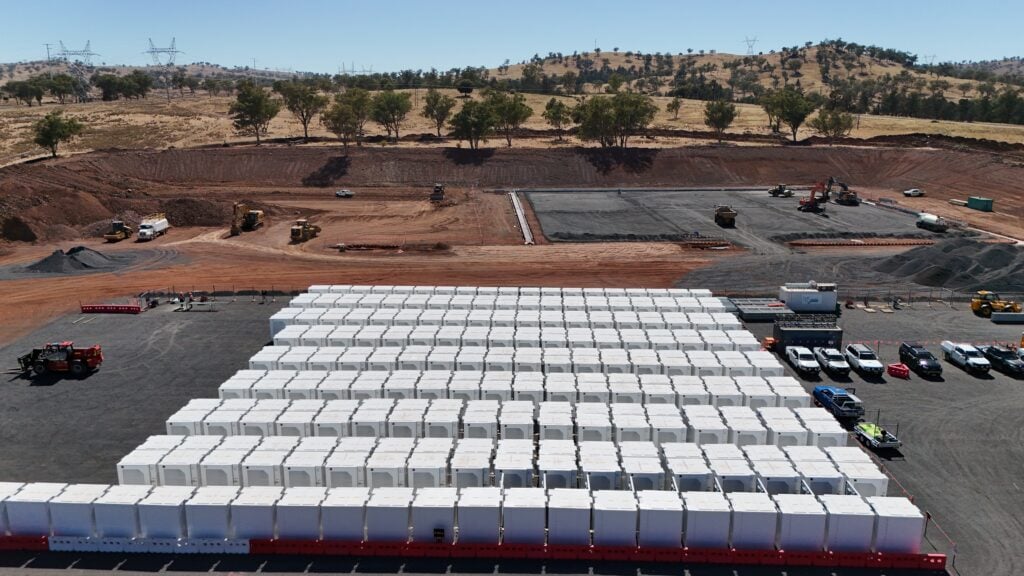
In New South Wales, the developer is constructing the 300MW/600MWh Bulabul Battery in the Central-West Orana Renewable Energy Zone (REZ), with Fluence delivering all battery enclosures for the project ahead of schedule.
That project operates under a capacity swap arrangement with Danish energy trading company InCommodities, covering up to 120MW of its output, a structure that departs from the power purchase agreements (PPA) and pure merchant exposure that have typically dominated battery storage financing in Australia.
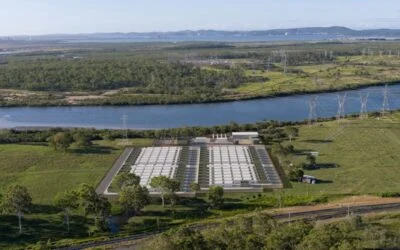
In South Australia, AMPYR acquired the 270MW/2,160MWh Northern Battery, an 8-hour-duration project equipped with grid-forming inverters sited at the former Northern Power Station precinct in Port Augusta, from Green Gold Energy and forming part of AMPYR’s target to deliver 6GWh of operational battery storage to the Australian grid by 2030.
The acquisition places AMPYR’s portfolio in a position where battery storage dispatch decisions increasingly shape, rather than simply respond to, wholesale market outcomes.
That dynamic was on display during a price cap event in South Australia’s SA1 region on 21 June 2026, when prices hit the NEM’s AU$20,300/MWh cap twice in a single evening.
In an interview with ESN Premium, Sahand Karimi, CEO of OptiGrid, said the divergent outcomes among the state’s 15 grid-scale battery storage systems during that event came down largely to state of charge management and bidding strategy rather than raw capacity, with some capturing significant revenue while others were caught charging into the cap itself.
“Some decisions look obvious after the event. They rarely are in real time,” Karimi said at the time of the interview in June, noting that assessing genuine trading performance requires looking beyond simple output figures toward metrics such as normalised revenue and percentage of perfect foresight.
Optimisation partnerships of this kind are becoming more common as Australia’s battery storage fleet expands and portfolios grow more complex to manage.
Never miss an Australian energy storage story. Sign up for our Australia newsletter and get the latest project announcements, policy updates and market analysis delivered directly to you.