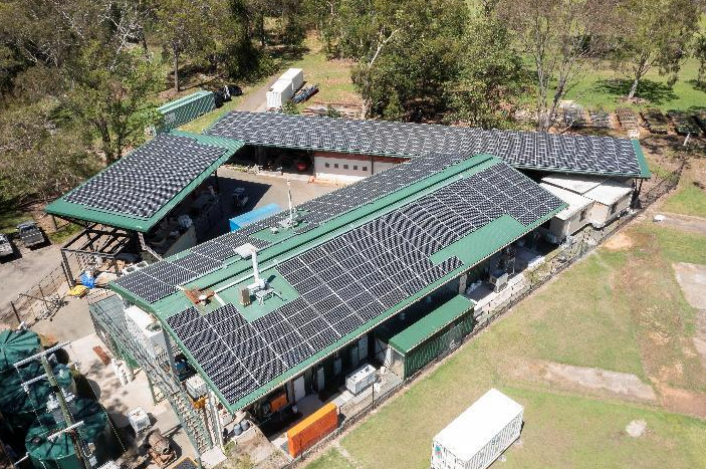
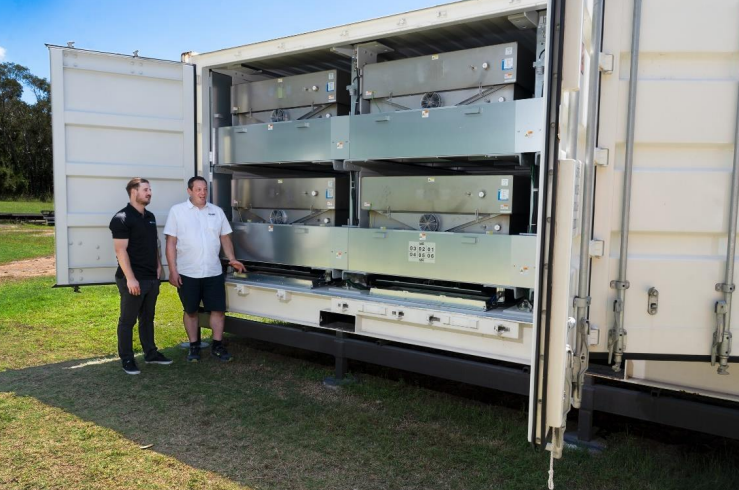
Australia’s first grid-connected sodium-sulfur battery storage system, developed through a Queensland University of Technology (QUT) research partnership, has begun operating in Brisbane.
Meanwhile, a separate 180MW/360MWh lithium-ion battery energy storage system (BESS) project being developed by ZEBRE has cleared a stage of federal environmental review.
Sodium-sulfur BESS brings long-duration storage to industrial site
Advanced materials company Lava Blue has commissioned a 250kW/1.45MWh sodium-sulfur (NAS) battery storage system at its Centre for Predictive Research into Specialty Materials (PRiSM) facility in Brisbane’s south-east, marking the first time the technology has been connected to an Australian grid.
The battery storage system, manufactured by Japan’s NGK, has been paired with 200kW of existing solar generation at the site and connected to Energex’s distribution network and the National Electricity Market (NEM).
Try Premium for just $1
- Full premium access for the first month at only $1
- Converts to an annual rate after 30 days unless cancelled
- Cancel anytime during the trial period
Premium Benefits
- Expert industry analysis and interviews
- Digital access to PV Tech Power journal
- Exclusive event discounts
Or get the full Premium subscription right away
Or continue reading this article for free
Lava Blue said the combined system can supply up to 100% of PRiSM’s peak operating load, including energy-intensive materials-processing equipment used in its work to develop high-purity alumina from low-grade feedstocks.
The project was delivered through the Queensland Energy Storage Technology (QUEST) Hub, a QUT and Queensland Government-backed initiative focused on commercialising battery materials and systems, with Lava Blue as a founding industry partner.
Melbourne-based Allset Energy handled electrical engineering and system integration, building on its earlier deployment of Australia’s first NAS battery storage system at a remote Western Australian mining site in 2023.
The power management interface connecting the battery storage system, solar array and grid was built with more than 80% Australian content, including DC converters supplied by Queensland manufacturer Advanced Converter Solutions.
NAS batteries are designed to discharge for 6-hours or more at rated capacity and have accumulated more than two decades of commercial operation internationally, with roughly 5GWh deployed worldwide.
The Australian Renewable Energy Agency (ARENA) previously backed the NAS and zinc-bromine microgrid trial in Western Australia, noting that the technology’s tolerance for extreme heat could make it useful in regional networks where lithium-ion and pumped hydro do not always suit.
The commissioning also lands at an uncertain moment for the NAS supply chain internationally.
NGK announced in October 2025 that it would discontinue manufacturing and sales of the NAS battery line and stop accepting new orders after its chemical partner, BASF, withdrew financial backing under new leadership.
At the time, NGK said the decision followed a failed search for alternative investment, though the company will continue servicing existing sites, including the PRiSM installation.
ZEBRE sees Queensland lithium-ion project waved through through EPBC Act
Around 20km from PRiSM, a considerably larger battery storage project has moved through a different regulatory process.
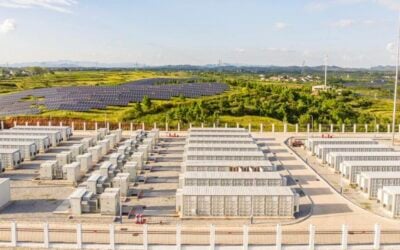
ZEBRE, a joint venture between Taiwan’s HD Renewable Energy (HDRE) and Australian developer ZEN Energy, has received a referral decision under the federal Environment Protection and Biodiversity Conservation (EPBC) Act for its 180MW/360MWh Noblevale Battery at Swanbank, near Ipswich.
The project, proposed for a repurposed mining site, will connect to the Blackstone substation via an underground transmission cable and has a 2-hour duration at full power.
The proponent structured the site layout, including three battery yards, koala-proof fencing, and a retained patch of remnant vegetation, specifically to avoid the mapped Koala Habitat Area, with 17 medium- to large-sized native canopy trees to be removed elsewhere on the property.
As reported by Energy-Storage.news, ZEBRE first lodged the Noblevale referral last month, when the joint-venture structure, with HDRE Trust II holding a 70% stake, had insulated the project from ZEN Energy’s separate administration process triggered by wholesale electricity market volatility.
\Ipswich City Council had already approved the development application in December 2025, with construction planned to begin in September 2027.
Noblevale will sit within the Swanbank Industrial Area, a former coal hub earmarked as a future Clean Energy Hub, alongside CleanCo Queensland’s operational Swanbank BESS.
That 250MW/500MWh facility, built on the site of a decommissioned coal station, opened in February 2026, and its developers pointed to the cost and speed benefits of reusing existing transmission infrastructure rather than building fresh connections, a rationale ZEBRE’s referral documents also cite for Noblevale’s siting.
Never miss an Australian energy storage story. Sign up for our Australia newsletter and get the latest project announcements, policy updates and market analysis delivered directly to you.