Vertically integrated energy storage company Kore Power is deploying a 41.2MWh BESS for a microgrid in Arkansas, US, with more downstream projects coming soon, president Jay Bellow told Energy-Storage.news.
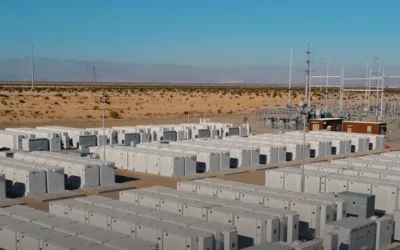
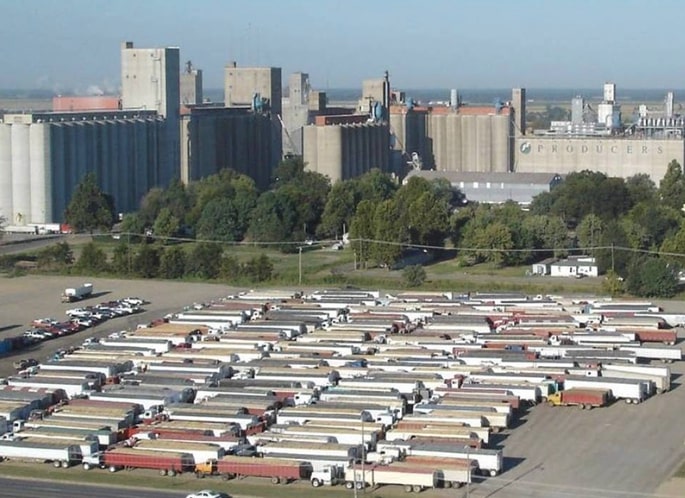
Kore will install a 41.2MWh lithium-ion battery energy storage system (BESS) for the solar-plus-storage microgrid project being developed for a facility run by Producers Rice Mill, a co-operative of 2,000 rice farmers.
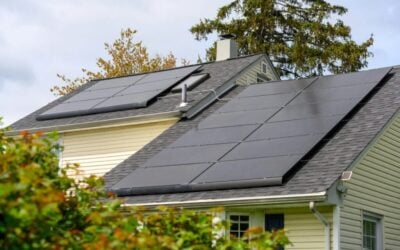
The microgrid will ensure uninterrupted power to the facility which processes, stores, and ships the harvest to customers in the US and globally, milling some 40 million bushels of rice annually. CS Energy will install the 20MWac solar PV component of the project, which is being developed by Scenic Hill Solar.
No estimated completion date has been provided for the project, which the companies claimed is the largest commercial and industrial (C&I) solar project in Arkansas history and one of the largest microgrid projects in the United States.
Try Premium for just $1
- Full premium access for the first month at only $1
- Converts to an annual rate after 30 days unless cancelled
- Cancel anytime during the trial period
Premium Benefits
- Expert industry analysis and interviews
- Digital access to PV Tech Power journal
- Exclusive event discounts
Or get the full Premium subscription right away
Or continue reading this article for free
Kore is deploying the BESS through its integrated energy storage solutions arm Kore Solutions, formed when it bought system integrator Northern Reliability a year ago.
The microgrid for Producers Rice Mill will allow the facility to continue operating during periods of electric curtailment by the local utility, as well as mitigate power quality issues and intermittent stoppages through its rapid response. It means renewables will provide 67% of the facility’s energy needs.
Kore is also building a KOREPlex lithium-ion gigafactory in Arizona, opening in 2024 with a 6GWh capacity eventually rising to 12GWh, and ramping up its existing China facility from 2GWh to 6GWh.
Jay Bellows, President, KORE Power, provided more details on the company’s microgrid work, other projects and broader developments in these responses to questions from Energy-Storage.news.
Energy-Storage.news: What sort of potential does KORE Power see in the microgrid space, versus the other areas the company is targeting?
Jay Bellows: As with many pieces of the energy storage sector, we anticipate significant growth in microgrid deployment. The C&I market, in particular, and the ability to island facilities is a particular market we see growing. The combination of renewable generation and storage combined to be able to harness the energy for when it’s needed, and, of course it will also be driven by the Inflation Reduction Act incentives. KORE Solutions is well-positioned to support this development building on the decades of experience that Northern Reliability brings to these projects. While we are also focused on utility scale energy deployments and opportunities in EV charging, microgrids will remain a key part of our business.
From a technical, design or installation (or other) perspective, what are the main differences between working in the microgrid space and in other types of stationary BESS projects?
Microgrids offer nuances that add layers of technical and operational benefits and complications. Adding generation to the equation, and the ability to “island” a facility or location, means that the developer has to have the skillset on the control’s side to make all of that happen.
Microgrids make locations self-sufficient and allow them the ability to be completely independent of the grid. Depending on electrical loads, internal equipment and needs, microgrids can be incredibly technical in both design and deliverable. Thus, there can be unique engineering challenges when compared to developing a standalone storage project or bringing BESS to an existing solar or wind project. These challenges can range from site design to ensuring the different parties are on the same page throughout the project. With this project we’re lucky to have a team that works very well together.
Does this work tie in with the acquisition of Northern Reliability in terms of developing the KORE Power system integration capabilities and offering?
Absolutely, in the time since the acquisition, our teams have been working together to develop new products that build on the KORE Power cells. This is one of a number of projects or offtake agreements that we will be announcing in coming weeks and months.
A quick update on KORE Power’s vertically-integrated strategy, from producing cells domestically to supplying complete solutions and further downstream work, as in this project, would be welcome.
Civil works at the site of the KOREPLex began late last year and is continuing. Our timeline has us producing cells at that facility in the first half of 2025. Meanwhile, as mentioned above, we are working on a number of exciting products at the KORE Solution’s facility in Vermont. Beyond just deliverable solutions, we also have our state-of-the-art Network Operating Center (NOC), based on over 50 years of industry knowledge, we are able to monitor, maintain, support, manage and operate systems from afar. We can assure that the systems are always working as they should, when they should and ensuring safety at all times.
How does this differ from the type of work that the NOMAD joint venture will be doing – I expect I know the answer there, but I think readers will want to hear it explained from the company’s perspective.
Obviously, we are very excited about the NOMAD and all of the potential applications for transportable power. But for a project like this, Producers Rice Mill is a single location that operates all year round, with predictable energy usage, so a stationary solution was ideal for this application.
Gigafactory in Arizona moving ahead
The timeline of H1 2025 for the first output of battery cells from the KOREPlex facility in Arizona is slightly later than the previous communicated aim of late 2024. The firm recently closed the first half of a US$150 million fundraising round for the facility.
More recently it contracted Siemens Smart Infrastructure to provide the facility’s critical electrical infrastructure and energy management solutions to automate and digitalise the facility’s operations. Siemens Financial Services led the first part of the aforementioned fundraise round.
Kore’s facility is set to benefit from the tax credit incentives under the Inflation Reduction Act.
Energy-Storage.news’ publisher Solar Media will host the 5th Energy Storage Summit USA, 28-29 March 2023 in Austin, Texas. Featuring a packed programme of panels, presentations and fireside chats from industry leaders focusing on accelerating the market for energy storage across the country. For more information, go to the website.