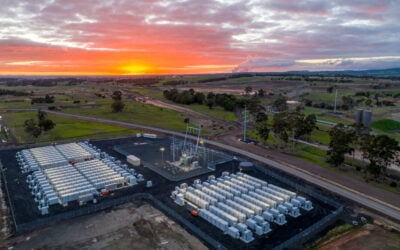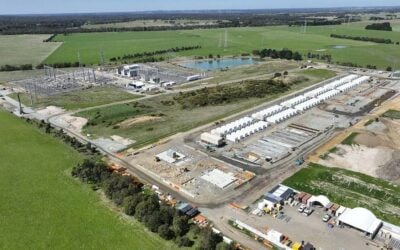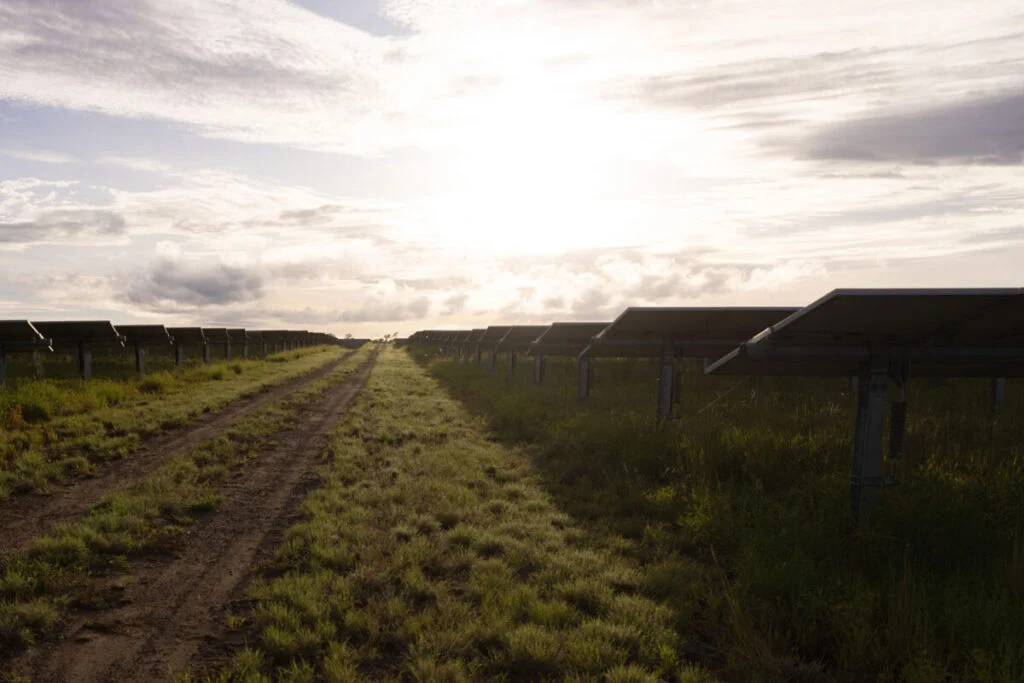
A joint venture between Windlab and Squadron Energy has referred the Bungaban Solar Project, a 500MW solar PV facility paired with a 500MW battery energy storage system (BESS), to Australia’s federal government for assessment under the Environment Protection and Biodiversity Conservation (EPBC) Act.
The project would be built at Bungaban, around 50km northeast of Wandoan in Queensland’s Western Downs region, on a 1,531.9-hectare site historically used for cattle grazing.
The referral includes a transmission line connecting the solar and battery infrastructure to Powerlink’s proposed Warranna substation, part of the separate Bungaban Wind Farm Connection Project.
Construction is proposed to start in July 2028, with a project life extending to 2068, following Western Downs Regional Council’s approval of the development application in June 2026.
Try Premium for just $1
- Full premium access for the first month at only $1
- Converts to an annual rate after 30 days unless cancelled
- Cancel anytime during the trial period
Premium Benefits
- Expert industry analysis and interviews
- Digital access to PV Tech Power journal
- Exclusive event discounts
Or get the full Premium subscription right away
Or continue reading this article for free
The referral was lodged by Bungaban Hold Trusco Pty Ltd, a 50:50 joint venture between Federation Asset Management, which wholly owns Windlab, and Squadron Energy, established in April 2026. Development work on the solar and storage component had previously been led solely by Windlab.
A battery-backed hub anchored by a Rio Tinto offtake deal
Bungaban Solar sits within Windlab’s broader South Queensland Renewable Generation Hub, which also includes the 1.4GW Bungaban Wind Farm, an AU$3.9 billion (US$2.54 billion) development.
According to Windlab, around 80% of energy generated across the hub over 25 years is contracted to Rio Tinto under what the company describes as Australia’s largest renewable energy power purchase agreement, supporting the miner’s Queensland aluminium and manufacturing operations. The remainder is intended for the National Electricity Market (NEM).
Windlab has taken over 1GW of wind assets to financial close and has referred a further eight projects under the EPBC Act, including Kennedy Energy Park and Gawara Baya wind farm, according to the referral documents, which state the company has not faced compliance proceedings under Commonwealth, state or territory environmental law.
Squadron Energy, described in the referral as Australia’s largest renewable energy developer, holds around 2GW of assets in operation or under construction.
The company recently completed a refinancing of its Australian portfolio, securing debt commitments of more than AU$2.7 billion, with the restructured platform built with flexibility to enable expansion into battery storage and hybrid projects, a shift the Bungaban BESS component reflects directly.
The 500MW battery component would place Bungaban among the larger co-located BESS developments moving through Australia’s federal approvals process, adding to a pipeline of solar-plus-storage hybrids increasingly designed with storage sized close to or matching generation capacity, rather than as a smaller firming addition.
The EPBC referral identifies threatened and migratory species with potential to occur within the study area, including the koala, greater glider and Belson’s panic, alongside ecological communities such as Brigalow and Poplar Box Grassy Woodland.
The ecological assessment found the 1,507.1-hectare development footprint would affect only a small proportion of habitat within the broader 2,394.4-hectare study area, with 99.99% of ground disturbance occurring within already-cleared, non-remnant vegetation.
The proponent concluded the project is unlikely to significantly impact any listed species or community, and that no environmental offsets would be required.
Consultation has been underway since 2022, expanding in early 2025 to include the solar and storage component, and has included briefings with Western Downs Regional Council and Banana Shire Council, as well as a social impact assessment engaging around 170 stakeholders.