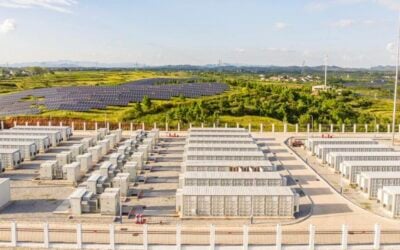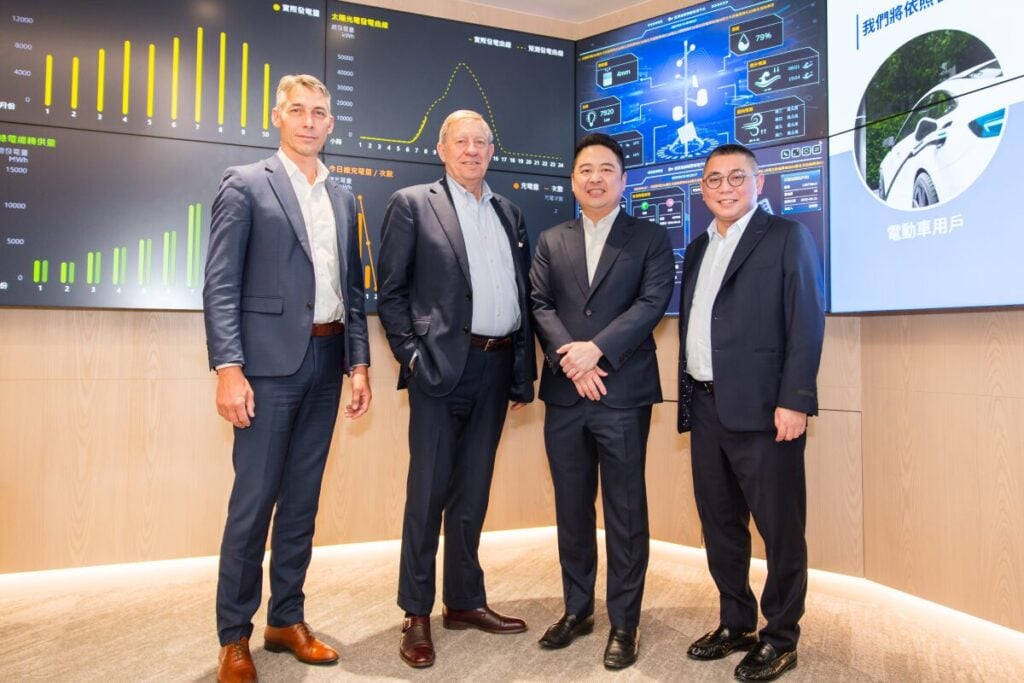
Taiwan’s HD Renewable Energy (HDRE) and Australian renewable energy developer ZEN Energy have secured a 795MW greenfield solar PV and energy storage portfolio spanning four projects in Australia.
Secured through the two companies’ joint venture (JV), ZEBRE, which was announced at the end of last year, the portfolio consists of an estimated total development volume of 695MW of energy storage and 100MW of solar PV.
The projects are spread across Australia’s east coast, including New South Wales, Queensland, and Victoria.
It has been confirmed that one of the four new projects is the Wagga Wagga site in the Riverina area of New South Wales. Owned by ZEN Energy, the project features a 105MW/420MWh BESS and is expected to obtain development permission in 2025 and officially start construction in 2026.
Try Premium for just $1
- Full premium access for the first month at only $1
- Converts to an annual rate after 30 days unless cancelled
- Cancel anytime during the trial period
Premium Benefits
- Expert industry analysis and interviews
- Digital access to PV Tech Power journal
- Exclusive event discounts
Or get the full Premium subscription right away
Or continue reading this article for free
The companies did not disclose the names of the three other projects, but they include a standalone BESS in Victoria and a solar-plus-storage site in Queensland.
HDRE said the acquisition had been completed following a NT$290 million (US$8 million) investment from the Taiwanese company. This brings HDRE’s total investment in ZEBRE to NT$1.18 billion.
HDRE, ZEN Energy eye 1.4GW portfolio in Australia
In a statement made public on 8 November, the two organisations mutually agreed to pursue energy storage and green hydrogen projects in Australia, Taiwan, and potentially Japan. Under the terms of the partnership, HDRE said it would subscribe for 9.7% of shares in ZEN Energy for AU$43 million (US$27.7 million).
ZEBRE, established through HDRE II Trust, a trusted company wholly owned by HDRE, and Zen Future, a subsidiary of ZEN Energy, is currently targeting an Australian portfolio of 1.4GW. Under the current planned structure, HDRE Trust II will secure an equity ratio of 70%, with Zen Future obtaining the remaining 30%.
When it first announced the JV, ZEBRE had already secured its first project, the 210MW Solar River solar-plus-storage site in South Australia.
The Solar River site includes plans for a 256MW co-located battery energy storage system. ZEN Energy, the site’s developer, is varying the development approval to allow up to 8-hours of duration but plans to proceed in the near term with 2.5-hours of storage capacity. The project will connect to the ElectraNet network via the newly constructed Bundey substation.
ZEBRE will now look to expand its investment in Australia.
HDRE Japan secures 104MWh BESS
In concurrent news, subsidiary HDRE Japan has entered into a Tokumei Kumiai (bilateral contract) interest purchase agreement with private equity firm Brawn Capital to acquire a majority interest in a 50MW/104MWh BESS.
The BESS, called Project Helios I, is located in Sapporo in Hokkaido prefecture, Japan’s northern island. It is expected to be completed and operational by the end of the year.
HDRE confirmed that the project had been developed by Brawn Capital-managed renewable energy developer Manoa Energy. Hokkaido Electric, a Japanese electric utility, will undertake the construction and maintenance.
HDRE’s general manager, Jason Chou, said the project marks an “important step forward” for HDRE’s Japanese operations.
The BESS will enhance grid stability by capturing and storing renewable energy. This process will help reduce solar curtailment in Japan, which is anticipated to grow further as more variable energy generation is deployed.
According to data from Japan’s Ministry of Economy, Trade and Industry (METI), in 2023, wind and solar power curtailment increased significantly, reaching 1.76TWh over a 12-month period.
Due to increasing electrification and the rise of new technologies such as AI and data centres, the Japanese government has forecast an increase in electricity demand between 35% and 50% compared to today’s levels by the 2050 carbon-neutral target.