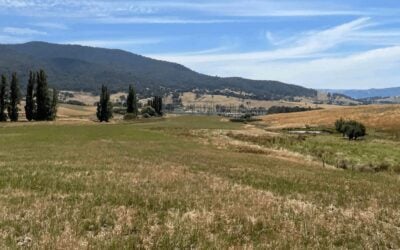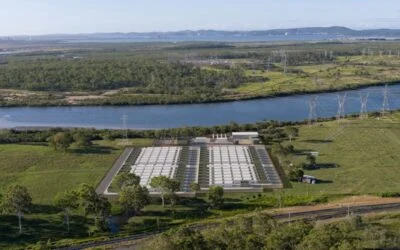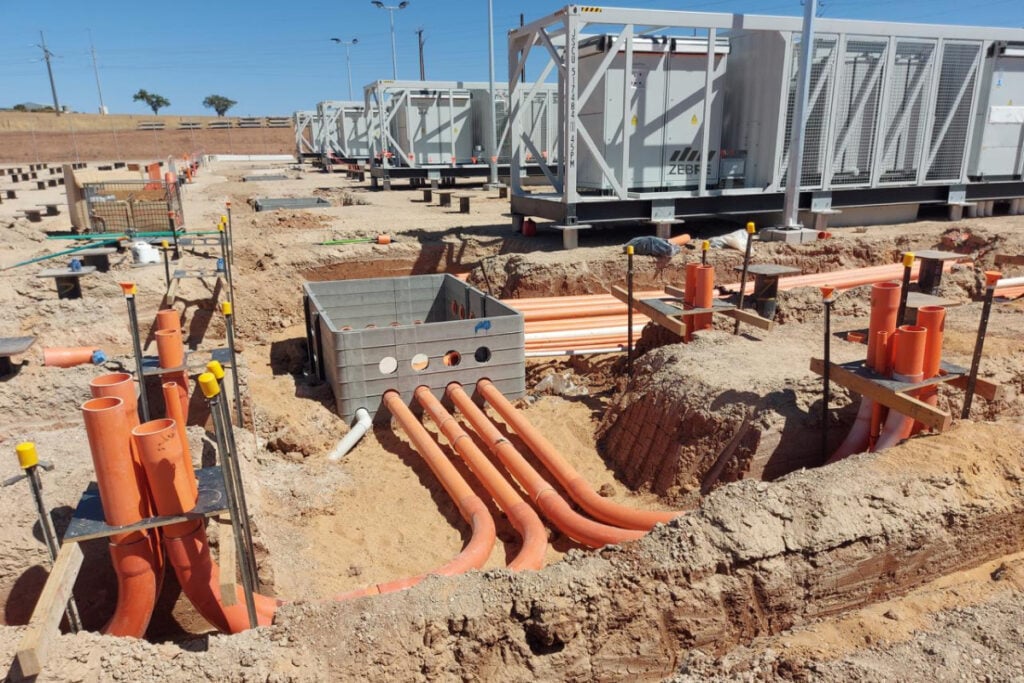
HD Renewable Energy (HDRE) and Zen Energy have executed a 20-year power purchase agreement for the 111MW/330MWh Templers Battery Project in South Australia, with commercial operations scheduled to commence by the end of 2025.
The offtake agreement continues HDRE’s expanding presence in the Australian energy storage market. The Templers project is owned through ZEBRE, a joint venture between the Taiwan-listed energy company and South Australian renewable energy retailer Zen Energy.
HDRE is advancing large-scale solar and storage projects across Australia, with combined installed capacity expected to reach 2.7GW by 2028. The company is deploying new capacity at a rate exceeding 2GW annually as part of its global expansion strategy, targeting the deployment of solar PV and battery energy storage systems.
The Templers BESS forms part of a broader portfolio development strategy between HDRE and Zen Energy. The joint venture ZEBRE has secured a 695MW energy storage portfolio in Australia while also acquiring battery storage assets in Japan, demonstrating the partnership’s regional expansion across Asia-Pacific markets.
Try Premium for just $1
- Full premium access for the first month at only $1
- Converts to an annual rate after 30 days unless cancelled
- Cancel anytime during the trial period
Premium Benefits
- Expert industry analysis and interviews
- Digital access to PV Tech Power journal
- Exclusive event discounts
Or get the full Premium subscription right away
Or continue reading this article for free
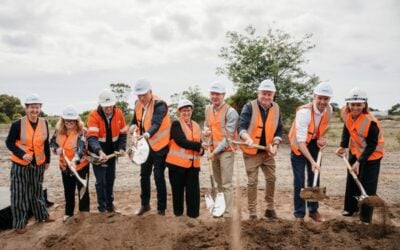
Construction progress on the Templers project has advanced following the approval of grid connections earlier this year. Zen Energy and technology provider Sungrow broke ground on the 330MWh South Australia BESS in June last year.
The project represents Zen Energy’s first utility-scale battery energy storage system (BESS) and supports the company’s strategy to provide grid stability services to the National Electricity Market (NEM).
The retailer has focused on supplying renewable energy to commercial and industrial customers with annual demand exceeding 160MWh since obtaining its electricity retail license in 2017.
HDRE general manager Jason Chous indicated that artificial intelligence and data centre demand growth are reshaping global energy priorities, driving increased requirements for reliable energy storage infrastructure.
Chous added that the company’s Australian operations are well-positioned to address these evolving market dynamics through the deployment of utility-scale batteries.
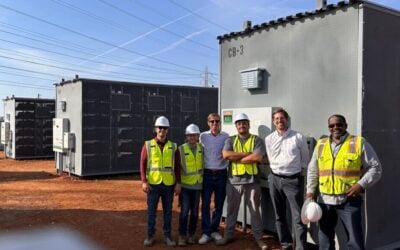
The Templers project utilises technology from Chinese manufacturer Sungrow, which has established a presence in Australian battery energy storage system deployments. The 111MW/330MWh configuration provides approximately three hours of storage duration, aligning with typical utility-scale BESS specifications for frequency regulation and energy arbitrage services in the NEM.
HDRE’s Australian expansion coincides with developments in other Asia-Pacific markets, as the company advances projects in Japan and maintains operations across multiple international jurisdictions.
South Australia’s energy transformation grants energy storage an opportunity
South Australia’s electricity market is dominated by renewable energy sources, which now account for the majority of the state’s electricity generation.
However, the intermittent nature of wind and solar generation has created challenges for grid reliability, particularly during extreme weather events when demand peaks coincide with low renewable energy output.
To capitalise on this opportunity, the South Australian government opened its inaugural Firm Energy Reliability Mechanism (FERM) tender round last month, seeking up to 700MW of long-duration energy storage (LDES) capacity. The FERM mechanism addresses these challenges by contracting dedicated dispatchable capacity.
Because of the rise in renewables, South Australia’s energy storage market has also experienced rapid growth, with multiple utility-scale battery projects operational across the state. This includes the 238.5MW/477MWh Blyth project, with additional systems under construction or contracted.
The FERM framework represents South Australia’s response to identified reliability gaps in the NEM as thermal generation retires and renewable energy capacity expands.
The South Australian government previously conducted consultation processes to refine the FERM framework and gather industry feedback on tender design elements, ensuring procurement mechanisms align with market capabilities and technical requirements.