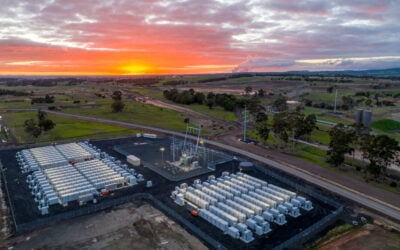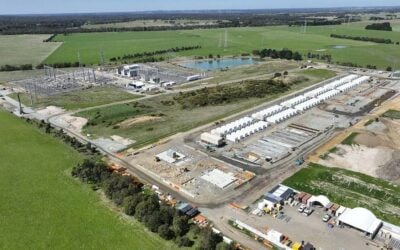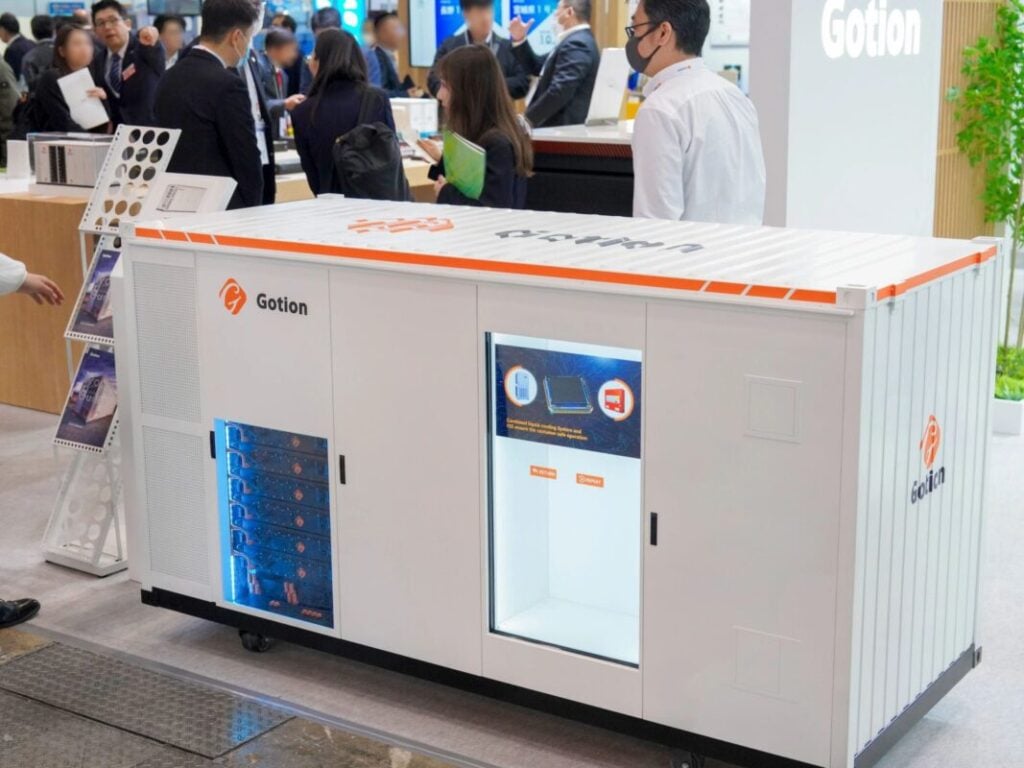
Chinese battery manufacturer Gotion High-Tech has been confirmed as the battery energy storage system (BESS) technology supplier for three projects totalling 6GWh awarded to an ACWA Power-led consortium under Saudi Arabia’s first utility-scale battery storage tender.
The three sites, Al Muwayah, Haden and Al Kahafa, are each configured at 500MW/2GWh, giving Gotion roughly 75% of the tender’s total 2GW/8GWh capacity, which Gotion values at approximately US$1.16 billion.
The award marks the first international large-scale deployment of Gotion Grid, the company’s utility-scale storage system.
The contracts themselves were awarded by the Saudi Power Procurement Company (SPPC), the Saudi government’s central procurement body for electricity generation and storage, known as the Principal Buyer. SPPC signed build-own-operate agreements for four 500MW/2GWh projects in August 2026, the kingdom’s first such contracts for battery storage.
Try Premium for just $1
- Full premium access for the first month at only $1
- Converts to an annual rate after 30 days unless cancelled
- Cancel anytime during the trial period
Premium Benefits
- Expert industry analysis and interviews
- Digital access to PV Tech Power journal
- Exclusive event discounts
Or get the full Premium subscription right away
Or continue reading this article for free
Qualified bidders were announced in January 2025, revealing that 33 bidders had applied, including big names such as Masdar, ACWA Power, EDF, and TotalEnergies. The qualification process was open to bidders with experience in renewable energy and/or battery storage, and with a tangible net worth of US$100 million or more for managing entities and US$50 million or more for technical partners, launched in November 2024.
Three of those agreements, covering Al Muwayah and Haden in Makkah province, and Al Kahafa in Hail province, went to a consortium comprising Saudi Energy, the Saudi-headquartered independent power producer (IPP) ACWA Power, and the EPC contractor Al Sharif Contracting and Commercial Development Company.
The fourth project, Al-Khushaybi in Qassim province, was awarded separately to a consortium of French energy major Engie and Haji Abdullah Alireza & Co.
Winning bidders entered 15-year service contracts and retain full equity in their project companies.
Gotion said its systems are engineered for Saudi Arabia’s desert conditions, operating between -30°C and 55°C with a thermal management system designed to maintain output during sandstorms and reduce high-temperature degradation by 40% compared with conventional systems.
The company said the units carry a 25-year design life, longer than the 15-20-year industry average, which it argues removes the need for mid-life equipment replacement over the course of a 20-plus-year build-own-operate contract.
All three sites will connect to Saudi Arabia’s 380kV transmission backbone.
Saudi Arabia’s BESS pipeline continues to outpace expectations
The award adds to a Saudi storage market that has expanded rapidly since the kingdom set out its Vision 2030 target of sourcing 50% of electricity from renewables.
Saudi Arabia led global utility-scale BESS installations in July 2026, ahead of China, with 2.5GW/12.5GWh commissioned that month alone, all supplied by Chinese manufacturer BYD and built by EPC firm Alfanar for state utility Saudi Electricity Company.
In August, the country accounted for around one-fifth of the roughly 21GWh installed globally, with two further 500MW/2GWh projects, this time supplied by Hithium, coming online at Tabuk and Ha’il.
SPPC has already begun qualifying bidders for a second build-own-operate tender, covering 3GW/12GWh of capacity in the same 500MW/2GWh-per-site configuration, suggesting the pace of procurement seen in the first round is set to continue.
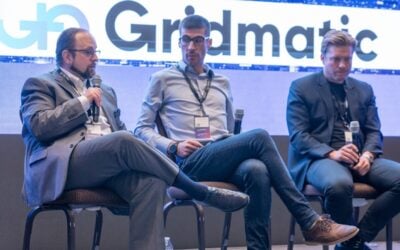
That growth has outpaced the financing structures needed to support it at scale. Speaking at Energy Storage Summit Middle East earlier this month, panellists described a region with no shortage of capital but a market still working out how to convert that capital into consistently bankable, repeatable projects.
Hammad Rabani of investment group Burj Capital said the challenge was converting a “huge pipeline of opportunities” into bankable deals, while the World Bank Group’s Yosra Assaker argued that regulators need to recognise standalone battery storage as a distinct asset class rather than treating it as an extension of generation, so its full value in providing grid flexibility can be captured and monetised.
Gotion’s position in Saudi Arabia fits within a broader pattern of Chinese battery manufacturers expanding into the Middle East, driven by improving financial performance at home.
Gotion High-Tech reported first-half 2026 revenue of RMB27.77 billion (US$4.14 billion), up 43.22% year-on-year, with net profit surging 278.05% to RMB1.386 billion, a recovery mirrored across most of China’s listed battery storage manufacturers as utility-scale cell prices stabilised following the 2024-2025 price war.
According to Gotion, the Saudi award adds to roughly 9GWh of projects the company has secured across the Middle East and North Africa, including a 1.5GWh BESS in Egypt paired with a planned 3GWh local manufacturing base, and a 1.2GWh project in Morocco also developed with ACWA Power.