A US battery storage pilot sponsored by tech giant Google has demonstrated how batteries can capture surplus renewable energy and deliver it during hours with greater fossil generation.
Announced 17 September, the demonstration created what the project partners describe as the first environmental revenue stream for battery energy storage system (BESS) assets.
The three-month pilot, conducted by Quintrace, part of global sustainable energy infrastructure investor Quinbrook Infrastructure Partners, developer esVolta and renewable energy procurement advisor LevelTen Energy, used hourly, time-stamped Granular Certificates (GCs) to allocate solar energy to grid-connected BESS and shift it to hours when Google’s energy consumption exceeded its renewable supply.
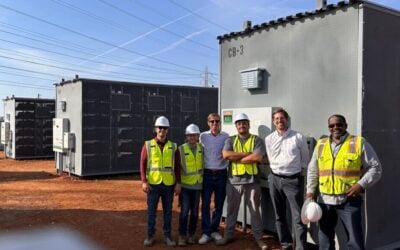
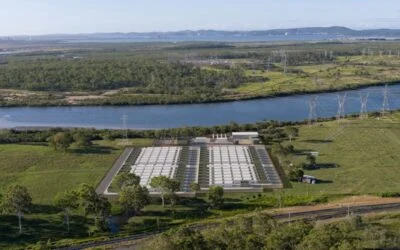
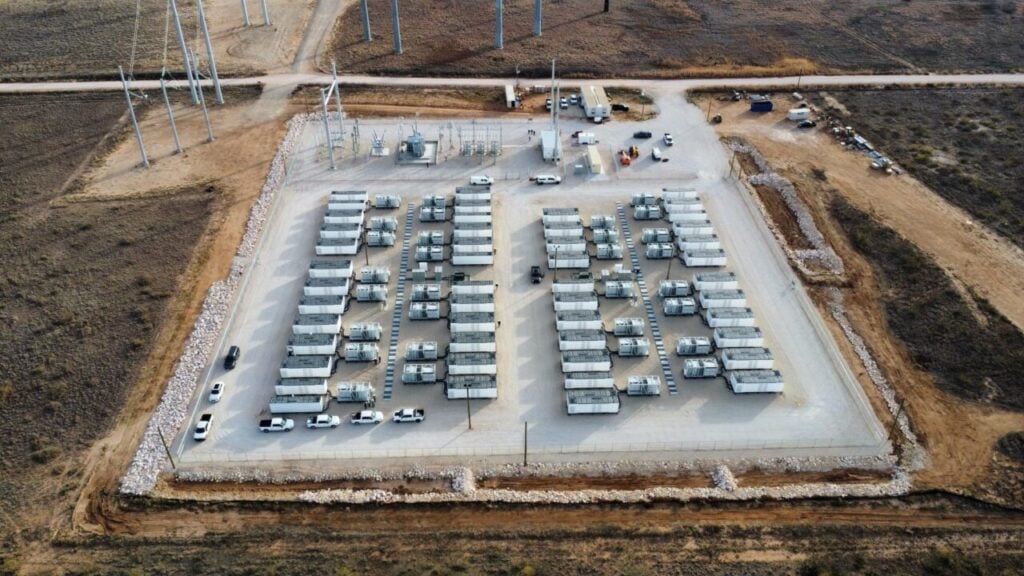
esVolta contributed its 240MW/480MWh Anole project and 100MW/200MWh Burksol project to the pilot. Quintrace provided the software platform used to implement verification, whilst LevelTen managed the registry accounts to prevent double-counting and provided the transaction framework for the storage-shift agreements.
Try Premium for just $1
- Full premium access for the first month at only $1
- Converts to an annual rate after 30 days unless cancelled
- Cancel anytime during the trial period
Premium Benefits
- Expert industry analysis and interviews
- Digital access to PV Tech Power journal
- Exclusive event discounts
Or get the full Premium subscription right away
Or continue reading this article for free
The companies explained that BESS has traditionally been difficult to represent in carbon accounting, as renewable matching has been measured against annual targets whilst the value of storage is inherently hourly.
However, the Science Based Targets initiative (SBTi), a corporate climate action organisation, is beginning to require hourly reporting for large energy users, and the GHG (greenhouse gases) Protocol is currently evaluating how to address this issue.
The pilot was designed to demonstrate both a commercial pathway that gives BESS operators a carbon-based revenue stream and a tracking pathway that accurately accounts for and retires the hourly certificates behind it.
Google contracted for defined daily charging and discharging windows based on forecasted gaps in carbon-free energy generation, and the operators dispatched their batteries in line with those guidelines.
Contract structure maintains operator control
The agreements had a distinctive structure: Google contracted with the battery operators to time-shift environmental attributes it already owned, without tolling the batteries or assuming any merchant or dispatch risk.
This structure left the operator in full control of their assets, including pre-defined flexibility to pursue energy price signals and to respond to grid emergencies.
Over the pilot period, the batteries charged with renewable energy during the defined mid-day charging window and discharged during the defined evening window, with each hour verified by Quintrace against the EnergyTag standard.
Across the three-month pilot, the batteries charged and discharged a total of 9.2GWh during the respective windows.
Quintrace’s software follows renewable energy from the moment it charges a battery to the moment it is sent back to the grid. The company claimed its dynamic loss calculations ensure the clean energy claimed is only the clean energy actually delivered.
The software can also apply different accounting approaches to fit each agreement structure between battery operator and buyer.
Earlier this month, Google announced with renewables developer-operator MN8 Energy, zinc hybrid cathode battery and storage system maker Eos Energy Enterprises, that the companies would be backing the Mammoth Solar project in Kanawha County, West Virginia. The project combines 86MW of solar, 10MW/100MWh of Eos’ Z3 zinc-based long-duration energy storage (LDES) solution, and a 70MW/280MWh lithium-ion (Li-ion) BESS.
The latest announcement adds to a growing number of Google-backed pilots and investments into BESS and LDES.
Energy-Storage.news Premium recently spoke with esVolta CEO Randolph Mann at the 2026 US Battery Asset Management Summit in Garden Grove, California, where he stated:
“The reason that we put our storage assets directly connected to the grid is because that’s where they can have the most benefit to the grid and to the consumers. If you put it behind the meter and you are using it solely for a specific customer, you’re losing some of the functionality of the asset.”
NeoVolta secures $53 million capacity reservation for Ontario AI data centre projects
In other news, San Diego-based home battery storage company NeoVolta has announced that its majority-owned subsidiary, NeoVolta Power, has entered into a binding capacity reservation agreement with Infinite Grid Capital (IGC) to provide BESS equipment for Northern Ontario Edge artificial intelligence data centre projects for calendar year 2027.
Announced 17 September, the approximately US$53 million binding commitment represents the first major commercial commitment under NeoVolta Power’s previously announced utility-scale framework with IGC, which contemplates approximately 1.1GWh of potential BESS deployments and approximately US$200 million of potential supply across multiple markets.
The capacity reservation agreement is intended to support the Northern Ontario Edge AI data centre project and represents an initial commercial step within NeoVolta’s broader relationship with IGC.
NeoVolta hosted a grand-opening ceremony for its NeoVolta Power facility in Pendergrass, Georgia, on 17 September.
The 210,600-square-foot facility is a purpose-built domestic BESS manufacturing platform designed to assemble commercial, industrial and utility-scale energy storage products.
The company’s initial Pendergrass production line is advancing through commissioning and site acceptance testing, with the production ramp remaining on track for Q4 of 2026.
This follows the 10 September news that NeoVolta obtained a US$20 million senior credit facility from RoHo Capital Opportunity Fund, a joint venture (JV) between Horizon Technology Finance Corporation and CR Financial Holdings.
The facility can be increased to US$30 million upon mutual agreement, with the initial US$20 million funded at closing.