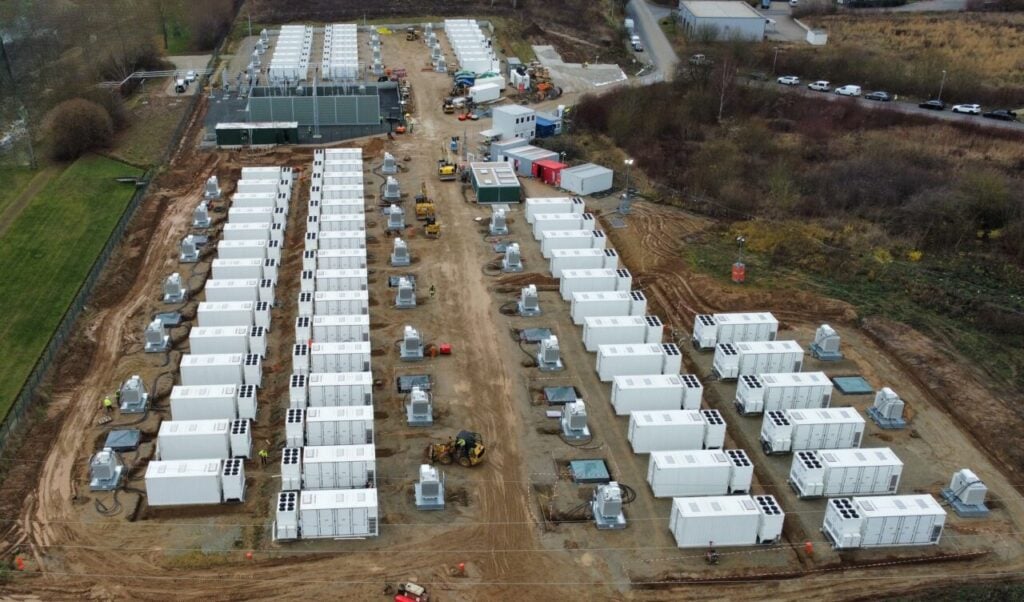
Germany is one of Europe’s most dynamic and attractive markets for storage but creating a level playing field for the technology around regulations and market design remains a key challenge.
That’s according to Benedikt Deuchert, head of business development and regulatory affairs for German battery energy storage system (BESS) developer and EPC firm Kyon Energy.
Deuchert and other industry figureheads will be speaking at the Energy Storage Summit at The Battery Show Europe, in Stuttgart, Germany next week (9-11 June).
Kyon has been one of the key movers in the German market in the past several years, and was acquired along with its portfolio by TotalEnergies in 2024. The oil and gas major then sold a 50% stake in an advanced 1.6GWh, 11-project tranche of that portfolio to Allianz GI, all set to be online by 2028.
Try Premium for just $1
- Full premium access for the first month at only $1
- Converts to an annual rate after 30 days unless cancelled
- Cancel anytime during the trial period
Premium Benefits
- Expert industry analysis and interviews
- Digital access to PV Tech Power journal
- Exclusive event discounts
Or get the full Premium subscription right away
Or continue reading this article for free
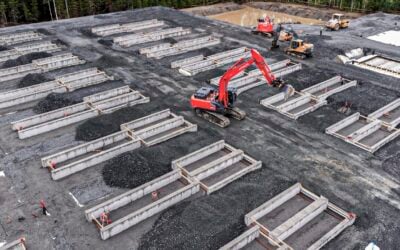
Just yesterday (28 May), Kyon announced it had started building three of those projects: the Brilon (103MW/208MWh), Husum (147MW/296MWh) and Sulzetal (24MW/48MWh) projects, totalling 552MWh.
In this Q&A, Deuchert gives a snapshot of the German market today, key trends in financing, and the major challenges including regulatory uncertainty.
Note that Deuchert’s comments were provided before German regulators last week clarified that BESS projects coming online by 4 August 2029 will be exempt from charge-discharge grid fees. There had been huge uncertainty over this in the past few months.
Germany ‘one of Europe’s most dynamic and attractive markets’
Energy-Storage.news: How would you characterise the current state of the German energy storage market, in terms of the key trends, major successes and achievements, and challenges still to be overcome?
Benedikt Deuchert: Key trends
- Germany has established itself as one of the most dynamic and attractive markets for large-scale battery storage in Europe, driven by strong renewable expansion and market volatility.
- The market is entering a new phase of maturity and large-scale deployment, shifting from project development to actual implementation and operation at GW-scale.
- There is rapid growth in installed capacity and project pipelines, with significant increases in both operational assets and development activity.
- Battery storage is becoming a core flexibility asset, increasingly integrated into trading markets (intraday, balancing) and system services.
Major successes and achievements
- The German storage market has achieved strong momentum with multi-billion-euro investments and growing involvement of international investors, including major energy companies.
- The industry has transitioned from a niche technology to a central pillar of the energy system, supporting grid stability and renewable integration.
- There is increasing political recognition and regulatory focus, reflected in national storage strategies and grid planning processes.
- Developers like Kyon Energy have significantly expanded pipelines, secured permits, and progressed projects into construction and operation, demonstrating market scalability.
Key challenges to overcome
- A major challenge remains creating a level playing field for energy storage vs. conventional generation, particularly in regulatory and market design.
- Grid connection constraints and long approval timelines are currently one of the biggest bottlenecks for project realization.
- The market faces regulatory uncertainty (The most urgent one being the uncertainty related to grid tariffs in the ‘AgNes’ reform process) and evolving framework conditions, impacting investment decisions and bankability.
- Increasing competition and project volumes require more efficient development, financing models, and optimised asset operation strategies.
- Ensuring efficient integration into the energy system (both markets and grids) remains critical to unlocking the full value of storage.
How is the financing of BESS projects evolving?
The financing landscape for BESS projects in Germany is undergoing a significant shift. Projects have increasingly reached a level of bankability that attracts large-scale infrastructure investors as well as major international financial institutions. This development is essential, as the scale of required investment has grown substantially, from projects that could previously be financed with budgets in the hundreds of millions by smaller, specialised players, to a market that now requires mobilising several billions to support large-scale expansion.
At the same time, this evolution is closely linked to the maturation of revenue structures and risk allocation mechanisms, which enable larger and more risk-averse investors to participate in the market.
How is the balance between merchant and tolling/fixed revenue schemes changing? In other words, to what extent are offtake and contracted revenues key to getting project finance?
The balance between merchant exposure and contracted revenues is becoming increasingly dependent on the specific deal structure and the risk appetite of the investor. While more opportunistic investors may accept higher merchant exposure, large infrastructure investors typically require a significant share of revenues to be secured through tolling or other contracted schemes.
These contracted revenues are therefore a key enabler for project financing, as they provide the predictability needed for debt structuring — and can be achieved either through integrated players or via the market.
What are the key evolutions in how BESS projects are being optimised and dispatched in the German market?
We are keeping a close eye on the current Flexible Connection Agreement (FCA) debate, even though it does not affect our mature portfolio; however, affected BESS will, of course, only be able to participate to a limited extent in the standard output markets and also in the wholesale markets, provided that strict ramping conditions are introduced, for example.
What are the key policy questions and grey areas which German industry and government still need to find solutions for, to unlock storage’s full potential for the grid?
Unlocking the full potential of energy storage in Germany will depend on resolving several key policy questions and remaining grey areas. First, the treatment of flexibility products such as FCAs and their integration into market design needs further clarity to ensure fair access for storage assets.
The planned expiry of grid charge exemptions by very likely 2029 (but the exact date isn’t entirely clear) creates uncertainty for long-term investment decisions, highlighting the need for a stable and investment-friendly regulatory framework. Similarly, high and often non-transparent BKZ (grid connection) fees remain a significant barrier to project realisation.
We are struggling with the setup of this year’s capacity tender, which de-facto excludes BESS participation (10h / 1h criteria and resilience criteria). Finally, the ongoing grid connection backlog is one of the most pressing challenges, requiring more efficient and transparent processes to accelerate project implementation.
Overall, establishing a level playing field for storage and providing long-term regulatory clarity will be key to unlocking the next phase of growth.
How is the role of TSOs and DSOs in the German energy storage market evolving?
The role of TSOs and DSOs in the German energy storage market is evolving significantly, as they move from traditional grid operators to active enablers of flexibility. With the rapid growth of renewable generation, storage is becoming an essential tool for maintaining system stability, and both TSOs and DSOs are increasingly integrating batteries into system services, congestion management and redispatch processes.
At the same time, grid operators are facing rising pressure due to the high volume of connection requests, which is leading to the need for more structured and transparent connection processes.
On a related note, Energy-Storage.news‘ free webinar tomorrow, The Impact of Germany’s Ramp Constraints and Grid Limitations on the Energy Storage Business Case, sponsored by Clean Horizon, takes place 2 June 2026 at 11am CEST. This webinar will provide a comprehensive overview of the current grid constraint landscape in Germany, with a focus on what it means in practice for the storage business case.