Fluence and utility LEAG have begun construction of a second battery storage project in Germany, through a partnership that is also deploying Europe’s largest battery energy storage system (BESS) to date.
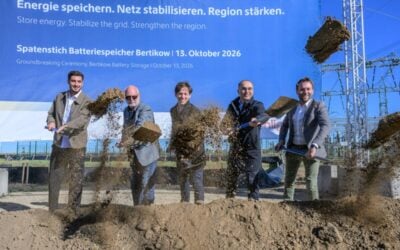
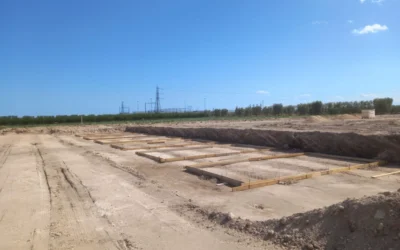
US-headquartered energy storage technology provider, system integrator and renewable energy software and services company Fluence announced the start of work at the new 100MW/400MWh project, Heinersbrück GridBattery, last week (13 August).
Fluence is working with project owner LEAG Clean Energy, one of LEAG’s three new energy business subsidiaries. Among the country’s largest utilities, LEAG is based in Lusatia, a region that straddles the border with Poland.
The utility is diversifying an existing asset base that includes lignite and coal mining and generation (among other resources) with new technologies, including renewable energy and BESS.
Try Premium for just $1
- Full premium access for the first month at only $1
- Converts to an annual rate after 30 days unless cancelled
- Cancel anytime during the trial period
Premium Benefits
- Expert industry analysis and interviews
- Digital access to PV Tech Power journal
- Exclusive event discounts
Or get the full Premium subscription right away
Or continue reading this article for free
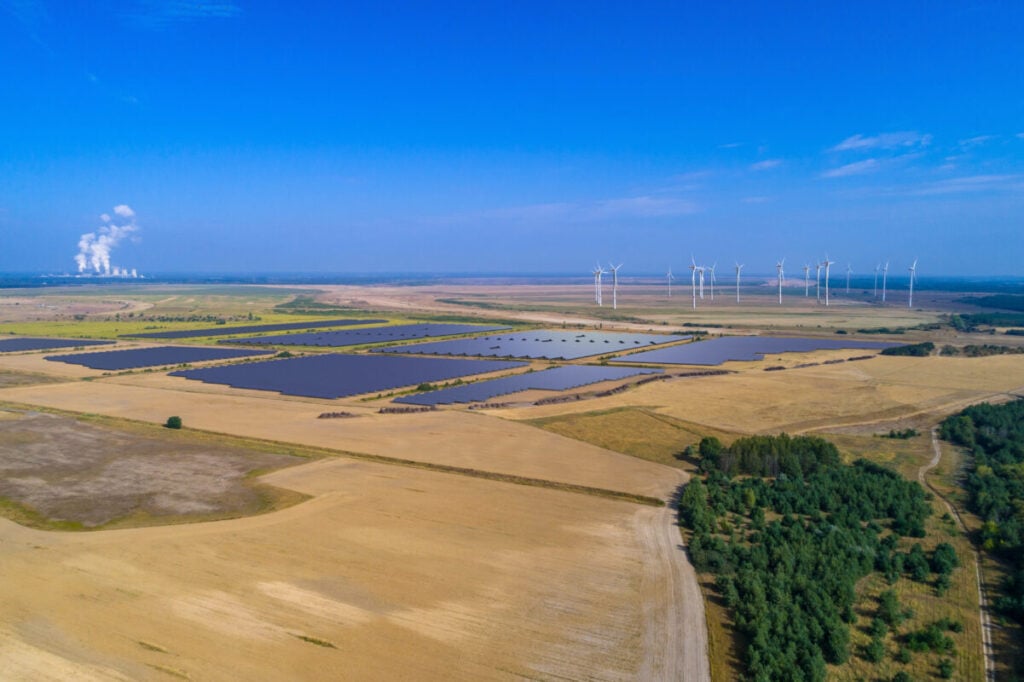
As is becoming increasingly common in Germany, Heinersbrück GridBattery will be sited on former opencast mining land that has been recultivated. The BESS will be co-located with renewable energy generation assets. LEAG owns the Heinersbrück substation, through which they will connect to the electric grid.
With coal due for national phaseout by 2038, LEAG is pursuing a strategic renewable energy plan it calls GigawattFactory.
GigawattFactory includes Bohrau Energy Park, comprising large-scale solar PV and wind generation. A first 133MWp phase of solar PV generation is currently under construction alongside the 105MW Forst-Briesnig II wind power plant, both to connect to the 110kV distribution grid via Heinersbrück substation.
At the same time, LEAG is building large-scale battery storage and hydrogen electrolysers to optimise the Gigawatt Factory generation assets’ grid integration and operation; to this end, LEAG Clean Energy and Fluence announced their first project together in late 2025.
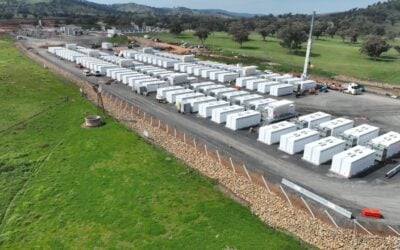
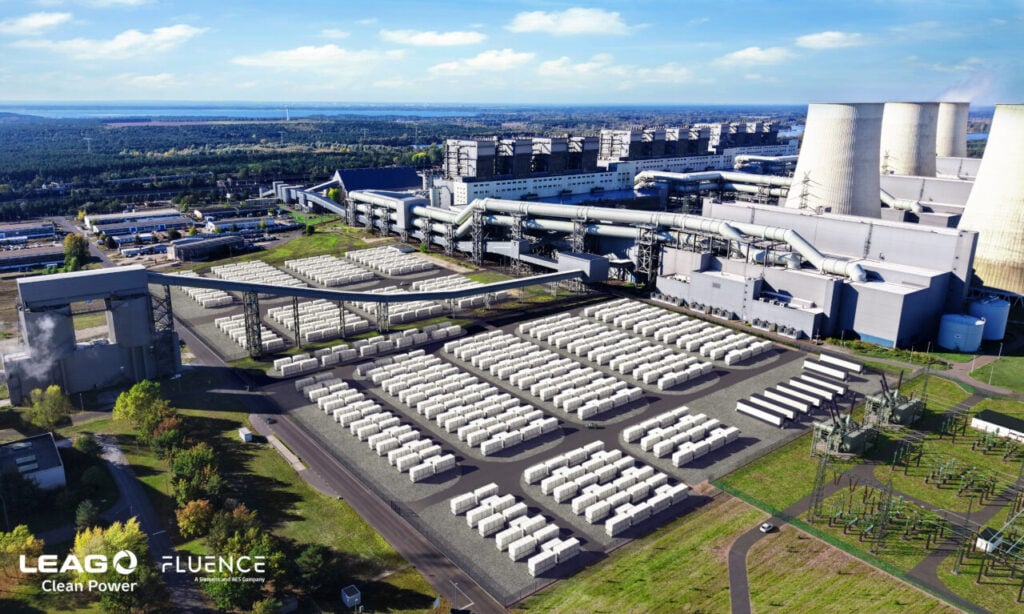
GigaBattery Jänschwalde 1000 is a 1GW/4GWh standalone BESS, being built at the former opencast mining site in the Lusatian municipality of Jänschwalde, close to Bohrau Energy Park and an existing 3GW lignite-fired power plant. LEAG had two opencast lignite mines that closed in 2023—the other is now a lake and wildlife conservation area in nearby Cottbus-Nord.
At the time it was announced in November 2025, LEAG Clean Energy managing director Thomas Brandenburg said GigaBattery Jänschwalde 1000’s technical design as a 4-hour duration asset “supports the further expansion of renewable energies at the GigawattFactory, helps stabilise the grid and, thanks to lower specific investment costs, enables optimal utilisation of the existing grid connection.”
Currently, the largest BESS project in Europe is the 500MW/1,000MWh Coalburn 1 BESS in Scotland, UK, which was recently brought into commercial operation by its owner, Copenhagen Infrastructure Partners (CIP).
Speaking again last week, Brandenburg said Heinersbrück GridBattery is LEAG’s first BESS that will share a grid connection point with solar PV and wind assets.
“This allows us to store surplus renewable electricity flexibly and make it available when it is needed. In doing so, we increase the efficiency of our energy system, relieve pressure on the power grid, and strengthen security of supply.”
Fluence is supplying its SmartStack 7.5MWh AC block BESS solution to both GigaBattery Jänschwalde 1000 and to Heinersbrück GridBattery.
LEAG is also partnering with Chinese energy storage system integrator Hyperstrong on the other major GigawattFactory BESS project to date.
In a deal that was also announced last November, Hyperstrong was named the engineering, procurement, and construction (EPC) partner and BESS supplier for GigaBattery Boxberg 400, a 400MW/1,600MWh project at the site of a former LEAG gas power plant in Saxony.
‘Establishing energy storage as a key pillar of a modern and resilient German energy system’
While much recent reporting has focused on Fluence’s US activities, Germany is also an important market for the company among the 17 or so regional markets it operates in, not least because of Fluence’s origins as a joint venture (JV) between US power producer AES Corporation and the Germany-headquartered engineering and technology group Siemens.
Fluence managing director for Germany, Julian Jansen, noted that the integrator has contracted or deployed 35 projects in the country with a cumulative capacity exceeding 6GWh.
“As a company with deep German heritage, we share LEAG’s ambition of establishing large-scale energy storage as a key pillar of a modern and resilient German energy system,” Jansen said last week.
Fluence announced its most recent financial results in early August. Its revenue and profitability took a hit from delays in ramping up at contract manufacturing facilities in the US, and it revised its guidance downward. However, the company also grew its contracted backlog to a record US$6.5 billion and booked its first data centre deals.
CEO Julian Nebreda said the production ramps would enable Fluence to respond to rising customer demand and meet targeted levels by early 2027, while the company was “confident in the long-term opportunity ahead and our positioning to capitalise on it.”