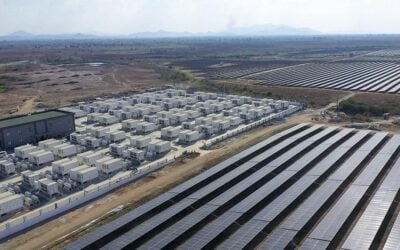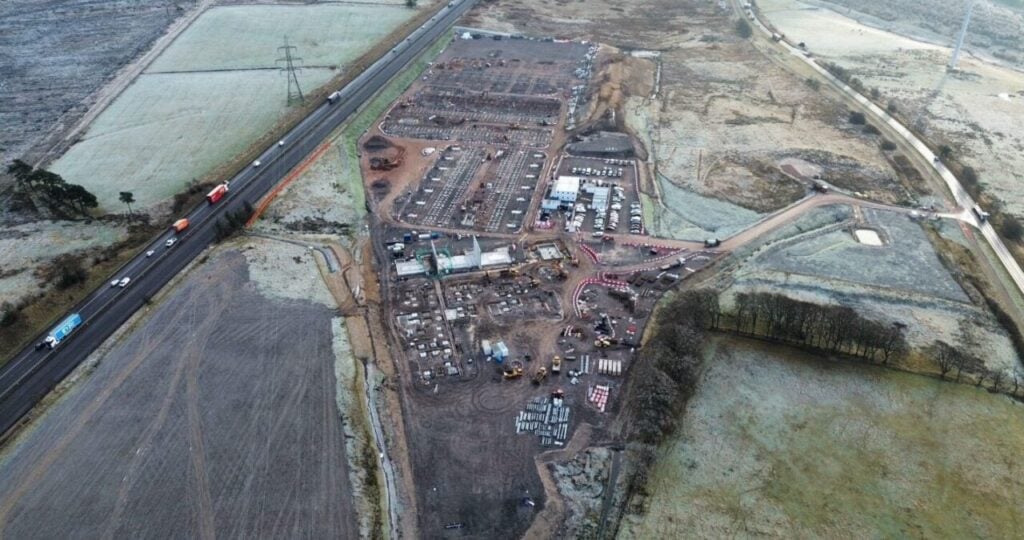
Denmark-headquartered investor Copenhagen Infrastructure Partners (CIP) has brought its 500MW, 2-hour duration Coalburn 1 battery energy storage system (BESS) into commercial operation.
Coalburn 1 is located in South Lanarkshire, southern Scotland, on the site of a former coal mining community. The lithium-ion project was developed by CIP through its flagship Copenhagen Infrastructure IV fund, in partnership with UK developer Alcemi.
The BESS was supplied by Canadian Solar’s e-STORAGE subsidiary under a contract covering 1,170MWh DC of its SolBank battery technology, along with full integration, commissioning and long-term operational services.
Nischal Agarwal, partner at CIP, said the project would “enhance the flexibility and resilience of the UK electricity system, support the integration of more renewable energy and contribute to lowering costs for consumers.”
Try Premium for just $1
- Full premium access for the first month at only $1
- Converts to an annual rate after 30 days unless cancelled
- Cancel anytime during the trial period
Premium Benefits
- Expert industry analysis and interviews
- Digital access to PV Tech Power journal
- Exclusive event discounts
Or get the full Premium subscription right away
Or continue reading this article for free
Coalburn 1 is one of three transmission-connected battery storage assets CIP is developing in Scotland, alongside Coalburn 2, which will add a further 500MW at the same site and the 500MW Devilla project near Fife.
Together, the three projects will provide 1.5GW of power output and 3GWh of energy storage capacity. Both Coalburn 2 and Devilla reached financial investment decisions in January 2026, with construction due to begin in 2027.
Ahead of commissioning, CIP agreed to divest a 50% ownership stake in Coalburn 1 to alternative investor AXA IM Alts, marking AXA’s first entry into the UK energy storage sector.
The transaction was carried out on behalf of CIP’s Copenhagen Infrastructure V fund, which has raised more than €12 billion (US$13.57 billion) for renewable energy investments across Europe, North America and Asia Pacific.
RES was appointed to manage the asset, adding Coalburn to a global services portfolio the company says spans more than 43GW of wind, solar, storage and green hydrogen capacity.
Meanwhile, SSE Energy Markets holds a ten-year optimisation agreement covering all three Scottish projects, while CIP has separately secured a 15-year Capacity Market agreement for Coalburn 1, providing a fixed revenue stream alongside the project’s merchant trading activities.
Scotland’s grid constraints and shifting access rules shape the investment case
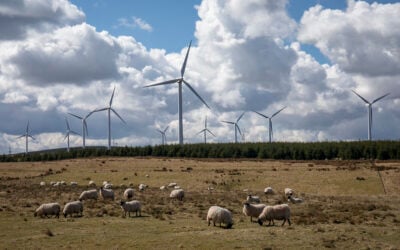
Scotland’s concentration of onshore and offshore wind generation, combined with transmission constraints that periodically force wind farms offline to avoid overloading the grid, has made the region an attractive location for battery storage developers seeking to capture curtailed generation and provide balancing services.
Paterson has previously said the Scottish portfolio would go some way toward supporting the UK’s net zero ambitions while reducing costs for consumers and improving energy security, adding that the balancing mechanism and intraday trading were expected to be the main routes to market for all three projects.
The project’s economics have also been shaped by the ongoing debate over the UK grid access policy. As part of the Review of Electricity Market Arrangements (REMA), the UK government has been considering non-firm grid access rights for new energy storage projects, a change intended to connect more storage to the grid faster, but one that would expose newer assets to being constrained off without compensation.
Paterson told ESN Premium that the risk of significant revenue loss from such a change was likely low, given battery storage systems are already incentivised to operate in ways that help rather than hinder grid constraints, though he argued a phased approach alongside wider transmission upgrades would be preferable to an abrupt shift in access rights.
Battery storage capacity in the UK has expanded rapidly since large-scale lithium-ion deployment began around 2018/19, with more than 7GWh of BESS now operational nationally, according to Solar Media Market Research’s UK Battery Storage Project Database.