BESS owner-operator BW ESS has launched construction on its second large-scale project in Italy in the space of a month, while developers Galileo and Aura Power have progressed portfolios in the country.
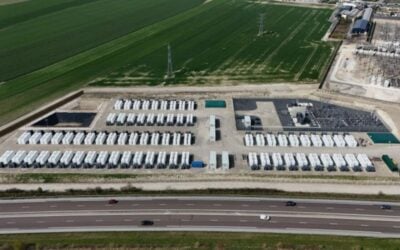
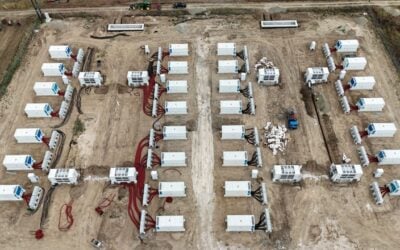
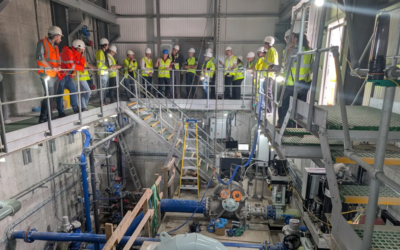
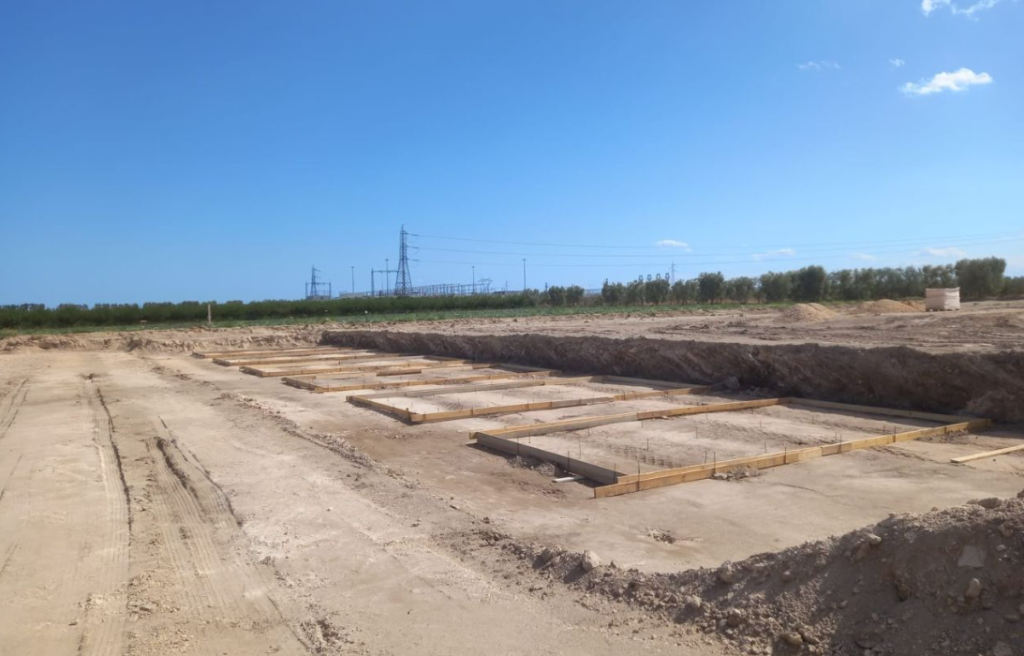
BW ESS has started building its Cerignola, 97MW/828MWh battery energy storage system (BESS) in the southern Apulia region for 2028 operations, it said last week (2 October). It comes a month after it announced construction on its 107MW/515MWh Chignolo Po project in northern Lombardy. Chignolo Po has a capacity market (CM) contract while Cerignola is one for which BW ESS won a MACSE contract in September 2025, via its development partner ACL.
Meanwhile, Galileo has secured planning consent for 250MW of BESS projects in North and Centre-South electricity market zones and Aura Power has sold its 200MW/1GWh Troia project to French IPP ZE Energy (it is ZE’s second major large-scale BESS in Italy).
Galileo managing director Italy Francesco Dolzani told Energy-Storage.news said the Italian market is now moving into its next phase: “The key challenge now is less about attracting capital and more about execution – specifically, turning the significant volume of already-authorised solar PV and BESS capacity into projects that are built and connected to the grid.”
Try Premium for just $1
- Full premium access for the first month at only $1
- Converts to an annual rate after 30 days unless cancelled
- Cancel anytime during the trial period
Premium Benefits
- Expert industry analysis and interviews
- Digital access to PV Tech Power journal
- Exclusive event discounts
Or get the full Premium subscription right away
Or continue reading this article for free
‘Italy offers an attractive combination for investors’, MACSE a positive
Galileo’s consents cover a 125MW/1GWh project and a 125MW/500MWh project, located in the North and Centre-South power market zones, and follow its recent expansion into energy storage and owning and operating projects. It has a 3GW pipeline of renewables and storage in Italy.
“Italy offers an attractive combination for investors: high capture prices, a stable regulatory framework and an active development pipeline, supported by a mature ecosystem of large and mid-sized utilities, IPPs, a robust banking sector and experienced local players,” Dolzani said.
The MACSE auctions are part of that stable regulatory framework, and the next auction is scheduled for the end of November. Dolzani said that MACSE remains attractive but does offer significantly lower returns, closer to the profile of regulated infrastructure than traditional merchant BESS investment. He still expects a highly competitive auction.
“With the volume of authorised projects still well above the available contingent, I would expect strong participation in the next round as well. Ultimately, it is positive for the market that a mechanism like MACSE can attract broad and genuine interest from a diverse range of market participants,” he said.
MACSE effectively acts as an offtake or PPA agreement between the system operator Terna and the project, whereby Terna guarantees it revenues for its energy. The broader, private PPA space is also evolving in Europe, Dolzani said.
PPAs
“The traditional pay-as-produced PPA is increasingly giving way to more sophisticated structures, often incorporating storage, particularly in markets facing significant cannibalisation,” he explained.
“Italy offers investors a broad range of offtake options to navigate this evolving landscape, including CfDs such as FER X, allocated through GSE auctions, a still relatively young but increasingly interesting bilateral PPA market, and innovative schemes such as Energy Release and FER Z. At the same time, the entire value chain, from development and offtake through to financing, is becoming more sophisticated.”
But he doesn’t see hybrid PPAs as being as popular in Italy as in other countries, like Spain where IPP Zelestra has over the past year contracted over 1GWh of solar-plus-storage capacity to power firm and utility EDP. This is because PV and BESS both have strong technology-specific routes to market.
In other markets, adding a BESS to a solar PV plant can help get a better PPA price. But the benefits of this hybridisation depend on market design and potential savings in grid connection costs, both of which vary internationally, he said.
“As of today, sophisticated offtakers such as traders, utilities and the largest corporate buyers are generally able to price these hybrid solutions.”
BW ESS was also in the headlines this week for a 10-year optimisation agreement with Danske Commodities for its 200MW/857MWh Berkswell BESS in the UK, covered by our sister site Solar Power Portal.