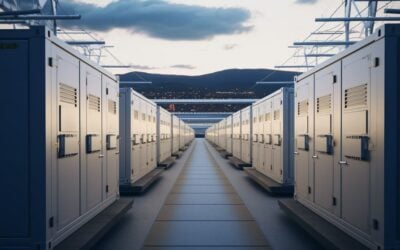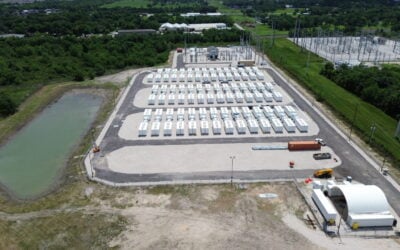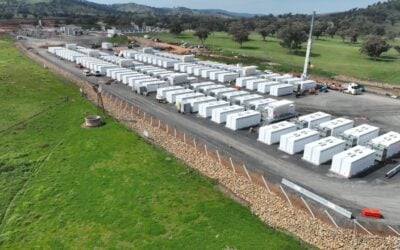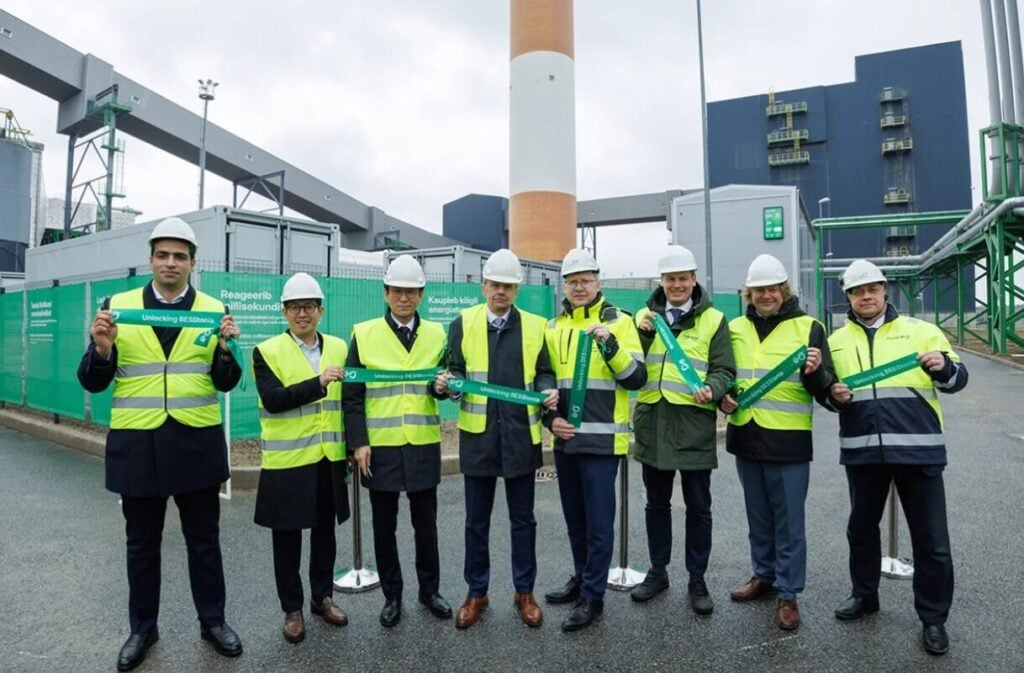
Enefit, the electricity business of state-owned Estonian utility and power generator Eesti Energia AS, will build three new battery energy storage systems (BESS) in Lithuania, with a combined capacity of 46MW/184MWh.
Enefit is allocating €30.3 million (US$34.96 million) for the projects, leading to the development of three new storage systems expected to be finished in the first half of next year: a 16MW system near the Kelme I wind farm, an 18MW system adjacent to Kelme II, and a 12MW system close to the Šilalė II wind farm.
The company states that leveraging existing energy infrastructure and grid connections at the wind farms enables more efficient implementation of new storage solutions.
In 2025, the Baltic region desynchronised from the BRELL network (Belarus, Russia, and formerly also Estonia, Lithuania, and Latvia) and synchronised with Continental Europe via a connection in Poland.
Try Premium for just $1
- Full premium access for the first month at only $1
- Converts to an annual rate after 30 days unless cancelled
- Cancel anytime during the trial period
Premium Benefits
- Expert industry analysis and interviews
- Digital access to PV Tech Power journal
- Exclusive event discounts
Or get the full Premium subscription right away
Or continue reading this article for free
The process, developed over more than ten years, further motivated the deployment of large-scale BESS, alongside increasing renewable energy adoption. The region has emerged as a significant hub for energy storage, relative to its size, with projects from both state-owned entities like Eesti and private developers and operators.
Russia’s invasion of Ukraine in 2022 sped up the process, which was marked by an event called ‘Energy Independence Day’ attended by EU and Baltic leaders. The initiative included more than 40 infrastructure projects and attracted over US$1.24 billion in investment, according to the European Commission.
Ancillary service prices in the Baltics have risen considerably since decoupling from Russia. Algirdas Ducinskas, BESS programme manager at Ignitis Group, noted in a panel at the 2025 Energy Storage Summit Central and Eastern Europe:
“One strong signal for investors is that ancillary service markets are now going through the roof. But I think one of the key drivers, before synchronising with Europe, was the state aid scheme.”
“We had a call for state aid that was to reach 1.2GWh. Now we have 4GWh of projects that are awarded, and there are way more projects in the pipeline, and we have a second call,” Ducinskas said.
He continued, “We do have these strong price signals. Recently, price indexes reported by third parties have looked at the Baltics as the most attractive. If you have a battery project going online, the IRRs will be 20-30%, that’s big.”
In March 2025, Eesti Energia put Estonia’s first large-scale BESS into commercial operation. The 26.5MW/53.1MWh project is located at the Auvere industrial power plant complex in Ida-Virumaa.
Diotech Group, a local system integrator, deployed the project using BESS units from LG Energy Solution (LG ES), a South Korea-based lithium-ion OEM. Enefit Solutions, a local engineering firm, managed installation and connection. Eesti’s initial procurement attempt failed, but a second attempt was successful in January 2024.
IPP E energija Group has also begun operating what it claims is Lithuania’s largest commercial BESS. The Vilnius BESS is a 65MW/130MWh project built in the Trakai district near Vilnuis.
In February 2025, E energija Group stated it had started building a 120MWh system near Vilnius. The company stated that a local system integrator would provide the energy storage solution, utilising battery units supplied by CATL, power conversion systems (PCS) from Power Electronics, and its proprietary energy management system (EMS), NordNest.
E energija Group states that it has three projects underway and is creating an investment platform to enable companies and individuals to participate directly in development.