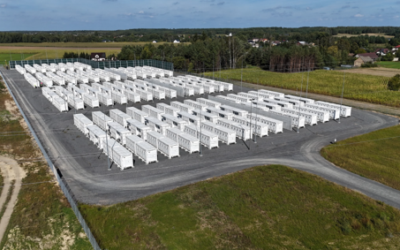
An EU-backed energy storage capex support scheme in Lithuania will support as much as 4,000MWh of battery storage, the Ministry of Energy has said.
The Environmental Project Management Agency (EPMA) has completed the assessment of applications for the scheme, revealing the total capacity of the projects that have successfully applied.
It was initially set to provide €102 million (US$118 million) in support, but was extended by €37 million following a high quantity of applications.
The projects totalling 1,700MW of power rating and 4,000MWh of energy storage capacity equate to around €840 million in investment, meaning the scheme will cover an average of around 15% of the costs.
Try Premium for just $1
- Full premium access for the first month at only $1
- Converts to an annual rate after 30 days unless cancelled
- Cancel anytime during the trial period
Premium Benefits
- Expert industry analysis and interviews
- Digital access to PV Tech Power journal
- Exclusive event discounts
Or get the full Premium subscription right away
Or continue reading this article for free
The scheme is part of a €180 million package approved by the EU late last year, funded by its State aid Temporary Crisis and Transition Framework (‘TCTF’), which was borne out of Russia’s invasion of Ukraine.
“Such capacities will ensure greater resilience, flexibility and security of the electricity system, which will also contribute to the stability of electricity prices. The high business interest in this measure shows that investors are ready to actively contribute to these goals. State support is becoming a key impetus in creating a modern, reliable and sustainable electricity system in the country,” said Acting Minister of Energy Žygimantas Vaičiūnas.
Although the Ministry’s announcement did not mention specific technologies, most projects are likely to be battery energy storage systems (BESS). The scheme is open to projects between 30MWh and 300MWh.
The Baltic states of Lithuania, Latvia and Estonia disconnected from the Russia-led BRELL grid and connected to mainland Europe earlier this year, an event in which BESS played a significant role. Lithuania’s transmission system operator (TSO) Litgrid deployed its own storage-as-transmission projects with system integrator Fluence, totalling 200MW/200MWh and designed specifically to support the grid in island mode during the switchover process.
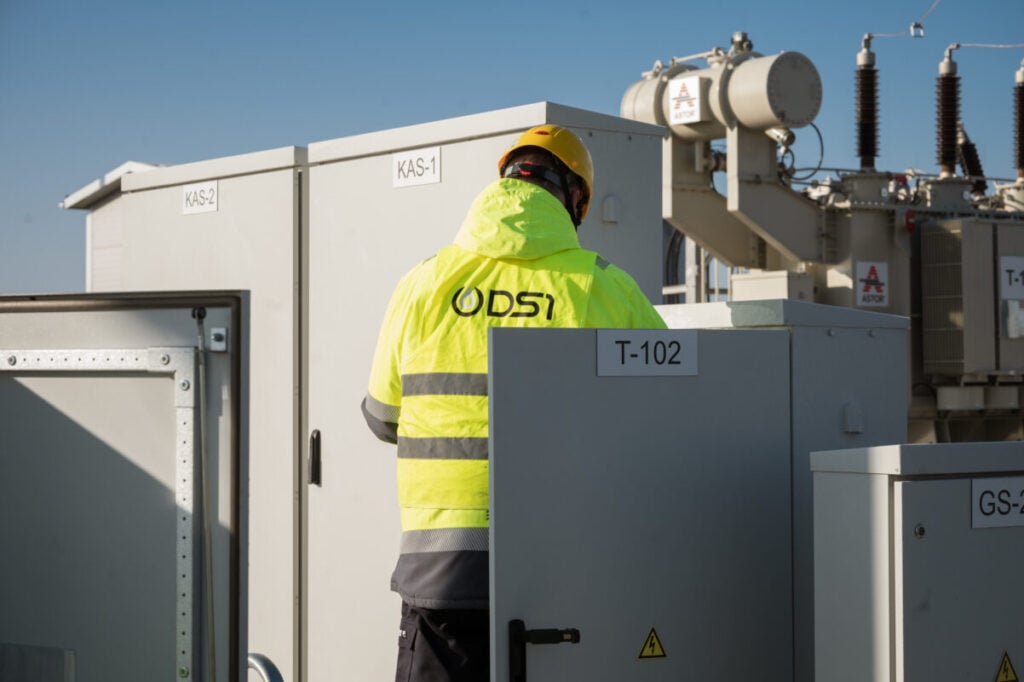
There has been progress on numerous large-scale merchant BESS projects from private investors too this year, with Energy-Storage.news reported on project investments and M&A from DS1, UAB Karjerų linija, Ignitis Group and E energija Group.