ESS Tech Inc highlighted the potential of its recent partnership with Alsym Energy and the advancement of its sodium-ion technology in its recent financial report.
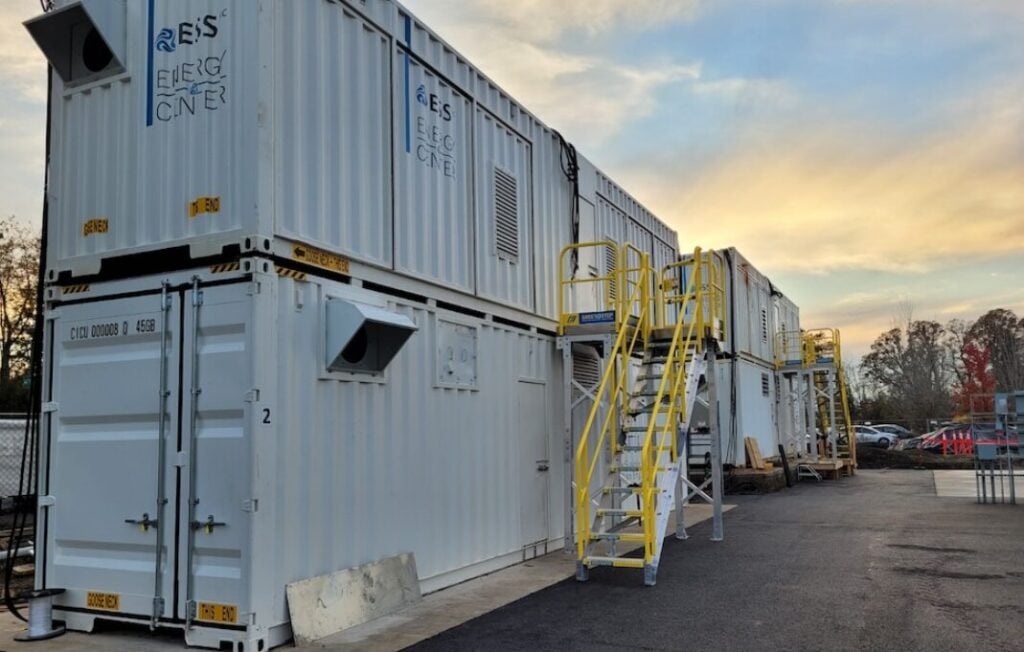
The Oregon, US-based technology firm, which owns the intellectual property for a proprietary flow battery energy storage system (BESS) using iron and saltwater electrolyte for long-duration energy storage (LDES) applications, announced its Q2 2026 financial results on 11 August.
ESS remained unprofitable, reporting a net loss of US$15.6 million for Q2 2026 compared to net losses of US$11.1 million in the prior-year period—representing a 41% increase in losses.
Revenue fell to just US$73,000, down from US$2.4 million in the prior-year period, a 97% decline.
Try Premium for just $1
- Full premium access for the first month at only $1
- Converts to an annual rate after 30 days unless cancelled
- Cancel anytime during the trial period
Premium Benefits
- Expert industry analysis and interviews
- Digital access to PV Tech Power journal
- Exclusive event discounts
Or get the full Premium subscription right away
Or continue reading this article for free
Adjusted losses were US$7.9 million for the three months ended 30 June 2026, compared to losses of US$7.8 million for the three months ended 30 June 2025.
Unrestricted cash and cash equivalents were US$5.6 million as of 31 July 2026. Operating expenses increased 19% to US$7.7 million in Q2 2026 from US$6.5 million in the prior-year period. Net cash used in operating activities was US$22.4 million for the first half of 2026.
Drew Buckley, CEO of ESS stated: “The second quarter marked an inflection point for ESS as we accelerated our expansion into sodium-ion (Na-ion) energy storage while maintaining the disciplined execution and capital focus that have defined our reset.”
Buckley further highlighted the company’s movement into the Na-ion space, noting the letter of intent (LOI) it signed with US Na-ion battery startup Alsym Energy in April.
“The demand we are seeing for Na-ion is unlike anything in our company’s history. Since signing our LOI with Alsym Energy, we have developed early-stage opportunities approaching US$1 billion across data centres, critical infrastructure, and utility markets, and with the recent market rollout of our Bridge modular Na-ion system we are moving decisively to convert that interest into near-term revenue.”
That partnership sees ESS adding 8.5GWh of Alsym’s Na-ion cells and modules to its portfolio. Alsym employs a proprietary sodium iron phosphate pyrophosphate (NFPP) cathode material called NFPP+, which the company claims offers best-in-class energy density with no risk of thermal runaway.
In July, ESS signed an LOI with California-based renewables developer Juniper Energy to deploy 500MWh or more of Na-ion BESS in the US. The partnership sees ESS deploying Na-ion BESS across multiple projects and a planned collaboration on a 10MW/80MWh BESS in California.
ESS Inc went public on the New York Stock Exchange (NYSE) in 2021 during a wave of energy storage technology startups listing through special purpose acquisition company (SPAC) mergers between 2020 and 2023.
The company has failed to approach its 2021 all-time high share price of US$281.25, though management had cautioned that achieving profitability would require time.
In its Q1 2026 financial results, the company pointed to its US$9.9 million contract with the US Air Force Research Laboratory, to deploy up to 27MWh of its BESS solutions, supporting the Clear Space Force Station in Alaska, as an achievement.
ESS also highlighted its Project New Horizon collaboration with utility Salt River Project (SRP) and tech giant Google, a 5MW/50MWh system using the company’s iron flow Energy Base technology.
Recently, ESS signed an LOI for “a proposed business combination with a private company in the energy sector.” The company anticipates announcing a final agreement by the end of September.
Battery Asset Management Summit USA 2026 will be held 15-16 September in Garden Grove, California, hosted by Energy-Storage.news publisher Solar Media (part of the Informa Group). The agenda emphasises addressing the roles of AI, cybersecurity, and second-life applications, broken down into two tracks: Technical Asset Management and Commercial Asset Management. This year, the conference is also co-located with Solar & Storage Finance Summit USA. Visit the official site for more details.