EDF Power Solutions Australia has referred the Wala Wala Pumped Hydro Energy Storage project, a 300-400MW facility offering 10-hour duration storage, to Australia’s federal government for assessment under the Environment Protection and Biodiversity Conservation (EPBC) Act.
The project, proposed for the Dungowan Valley near Ogunbil in the Tamworth local government area of New South Wales, would provide between 3,000MWh and 4,000MWh of storage capacity through two new off-river reservoirs, connected by an underground pipeline and hydroelectric power station.
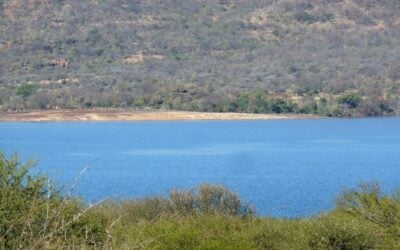
Water would flow from a lower reservoir near Dungowan Creek to an upper reservoir at approximately 1,131 metres elevation during periods of low demand, before being released to generate electricity during peak demand.
The project would connect to the electricity grid via a new substation and 330kV transmission line linking to Transgrid’s existing Line 85 near Bendemeer, with EDF Power Solutions Australia also considering a future connection to EnergyCo’s proposed New England Renewable Energy Zone (REZ) transmission line.
Try Premium for just $1
- Full premium access for the first month at only $1
- Converts to an annual rate after 30 days unless cancelled
- Cancel anytime during the trial period
Premium Benefits
- Expert industry analysis and interviews
- Digital access to PV Tech Power journal
- Exclusive event discounts
Or get the full Premium subscription right away
Or continue reading this article for free
Water supply arrangements remain under investigation, with the referral indicating the project will likely draw at least part of its requirements from the existing Dungowan Dam, either via a new pipeline or the existing Dungowan pipeline, subject to ongoing consultation with Tamworth Regional Council.
Construction is expected to begin in early 2029 and run for four to five years, with commercial operation targeted from mid-2033 and an operational lifespan of around 100 years.
The referral states the project would support the New South Wales Electricity Infrastructure Roadmap and the “urgent need for utility-scale storage” identified in AEMO’s 2026 Integrated System Plan.
The referral’s biodiversity assessment identified 80 threatened species under the EPBC Act with potential to occur across the project area, of which 66 were assessed as having at least moderate likelihood of presence and, applying the precautionary principle, are treated as likely to be significantly impacted.
Species considered most at risk include the Regent Honeyeater, Koala, Greater Glider, Large-eared Pied Bat and Spot-tailed Quoll, alongside 26 threatened flora species.
Two threatened ecological communities were also confirmed present: the critically endangered White Box-Yellow Box-Blakely’s Red Gum Grassy Woodland and Derived Native Grassland, and the New England Peppermint Grassy Woodlands.
No survey work has yet been conducted across the transmission investigation area, with the referral relying on desktop assessment for that component pending further field investigation.
Part of a wider pumped hydro pipeline across regional New South Wales
Wala Wala adds to a run of pumped hydro projects moving through New South Wales’ development and approvals pipeline as the state works to secure long-duration storage capacity ahead of coal plant retirements.
In July 2026, the state government granted planning consent to the 3.6GWh Stratford Pumped Hydro and Solar project at a former open-cut coal mine near Gloucester, developed by Gloucester Coal, a subsidiary of Yancoal Australia, marking the first pumped hydro project to secure final planning consent in the state in six years.
That AU$1.8 billion (US$1.26 billion) project pairs a 300MW pumped hydropower station with a 320MW solar array, repurposing existing mine infrastructure to avoid the reservoir excavation costs that have driven cost overruns at greenfield pumped hydro developments elsewhere in Australia.
Stratford was one of three projects granted Critical State Significant Infrastructure status in New South Wales in 2024, alongside AGL and Idemitsu Australia’s 250MW Muswellbrook project and EnergyAustralia’s 335MW Lake Lyell facility.
The state government extended that designation further in February 2026, when it declared two additional pumped hydro projects totalling 22,000MWh of storage capacity as critical infrastructure: ACEN Australia’s 1,000MW/11,990MWh Phoenix project near Mudgee and ZEN Energy’s 2,000MW/16,000MWh Western Sydney project at Lake Burragorang, both identified through feasibility studies conducted by state-owned water utility WaterNSW.
The critical infrastructure designation provides streamlined planning pathways and coordinated assessment across government agencies, a status that the Wala Wala referral notes has been applied to comparable pumped hydro projects in the state, though it has not yet been granted to the Dungowan Valley development.
Never miss an Australian energy storage story. Sign up for our Australia newsletter and get the latest project announcements, policy updates and market analysis delivered directly to you.