Gloucester Coal, a subsidiary of mining company Yancoal Australia, has received planning approval from the New South Wales government for the 3.6GWh Stratford Pumped Hydro and Solar project.
The AU$1.8 billion (US$1.26 billion) project has become the first pumped hydro development to secure final planning consent in New South Wales in six years.
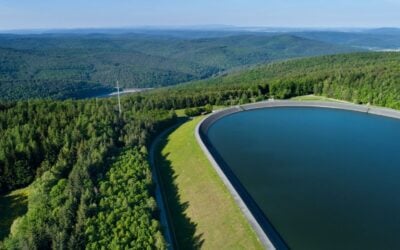
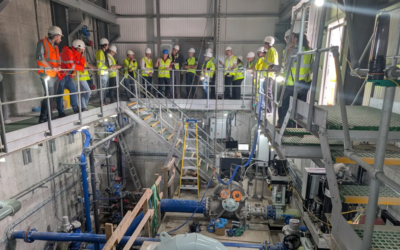
The pumped hydro energy storage (PHES) site will be built at the Stratford Mining Complex in the Gloucester Valley, approximately 100km north of Newcastle, where open-cut coal mining operations ended in 2024.
It features a 300MW pumped hydropower station with up to 12 hours of storage capacity (3.6GWh), paired with a 320MW solar PV power plant.
Try Premium for just $1
- Full premium access for the first month at only $1
- Converts to an annual rate after 30 days unless cancelled
- Cancel anytime during the trial period
Premium Benefits
- Expert industry analysis and interviews
- Digital access to PV Tech Power journal
- Exclusive event discounts
Or get the full Premium subscription right away
Or continue reading this article for free
The Environmental Impact Statement indicates an alternative configuration of 400MW over 9-hours is possible, subject to network capacity. Water will be transferred between a purpose-built upper reservoir and an existing dam on the mine site via a tunnel, with the initial water supply drawn from the mining complex itself.
The project is expected to deliver around 13% of NSW’s 2034 long-duration storage target. A Voluntary Planning Agreement with Mid Coast Council will deliver AU$18.2 million in community and infrastructure funding over the life of the project. Up to 350 construction jobs and 10 ongoing operational roles are anticipated.
New South Wales Minister for Planning Paul Scully described the approval as the first of its kind in the state for six years.
“Projects like Stratford Pumped Hydro show how we can make the most of former mining sites and create new jobs and industry which will help to drive the region’s economic growth for decades to come,” he said.
Mine repurposing as a cost lever
The Stratford project follows the same logic that made the now-shelved Mt Rawdon pumped hydro project in Queensland commercially attractive, repurposing existing mine infrastructure to eliminate the reservoir excavation costs that have driven greenfield PHES cost overruns elsewhere.
The Queensland government’s decision to shelve the AU$6 billion Mt Rawdon project in favour of the AU$18.4 billion Borumba Dam drew criticism precisely because Mt Rawdon’s mine-repurposing approach would have removed most of those civil engineering costs.
The Stratford approval suggests New South Wales is pursuing a different path, backing mine-site conversion as a viable route to long-duration storage.
As reported by Energy-Storage.news, CSIRO’s final GenCost 2025-26 report revised pumped hydro’s current capital costs upward relative to the consultation draft, citing new data from an ongoing Australian PHES development, while projecting those costs to continue rising through to 2055 due to construction and land cost escalation. You can find a breakdown of the costs below.
At AU$1.8 billion for 300MW of power output, the Stratford project implies a capital cost of approximately AU$6,000/kW, broadly in line with CSIRO’s current benchmark of AU$5,687/kW for a 24-hour system, and well below Borumba’s implied AU$9,200/kW.
The mine-site infrastructure advantage appears to be doing the work that CSIRO’s benchmark assumes, but Queensland’s flagship project has failed to deliver.
The Stratford approval lands within a NSW pumped hydro policy framework that has been progressively tightened over the past two years.
In July 2024, the NSW government granted critical state significant infrastructure status to three pumped hydro projects. One of them is Stratford, a designation that accelerates planning assessments and signals the state’s intent to prioritise long-duration storage in its transition away from coal.
In February 2026, the government went further, declaring two pumped hydro projects, totalling 22GWh of storage capacity, as critical infrastructure under state legislation, providing additional regulatory protections and expedited approvals pathways.
Never miss an Australian energy storage story. Sign up for our Australia newsletter and get the latest project announcements, policy updates and market analysis delivered directly to you.
Our publisher, Solar Media (part of Informa Group), will host the Battery Asset Management Summit Australia 2026 on 25-26 August at Amora Hotel Jamison in Sydney. You can find out more about the Summit on the official website.