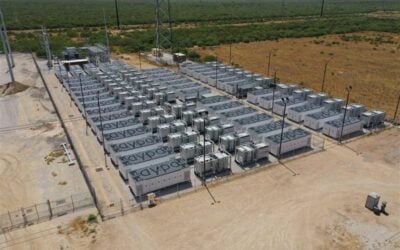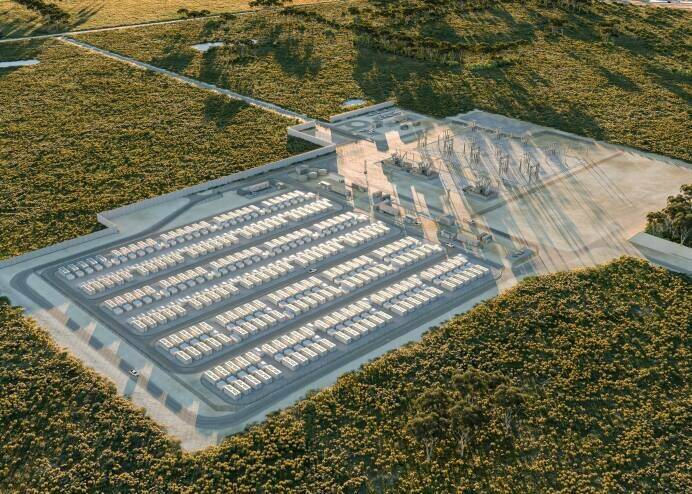
Commissioning of the 1.6GWh Melbourne Renewable Energy Hub (MREH) battery energy storage system (BESS) in Victoria, Australia, is set to begin.
According to Geoff Eldridge, National Electricity Market (NEM) and energy transition observer at consultancy Global Power Energy, the first two BESS at the Hub entered the AEMO Market Management System (MMS).
This means the two systems are now ready to commence commissioning and testing. Lumea, the commercial arm of Australian transmission system operator Transgrid, carried out the grid works.
The 600MW/1,600MWh MREH battery storage project is owned and being developed by Singapore-headquartered renewable energy investor and developer Equis in partnership with the State Electricity Commission (SEC), an entity owned by the Victoria government.
Try Premium for just $1
- Full premium access for the first month at only $1
- Converts to an annual rate after 30 days unless cancelled
- Cancel anytime during the trial period
Premium Benefits
- Expert industry analysis and interviews
- Digital access to PV Tech Power journal
- Exclusive event discounts
Or get the full Premium subscription right away
Or continue reading this article for free
Equis received Commonwealth government approval for MREH in October 2023, although its output and capacity were given at 1.2GW/2.4GWh in approvals granted by minister for the Environment and Water Tanya Plibersek.
In November 2023, the SEC invested in the hub to help progress its development to unlock 4.5GW of renewable energy projects. MREH is expected to cost in the region of AU$1 billion (US$660 million).
Construction on the MREH, touted as one of the largest BESS projects in Victoria, started in September 2024, with the installation of the first of 444 Tesla Megapack battery components.
Tesla’s Megapack is an integrated solution that includes lithium-ion batteries, a power conversion system (PCS), thermal management, and controls. With increased demand globally for the technology, Tesla’s Megapack factory in Lathrop, California, ramped up to 40GWh annual production capacity by the end of 2024, and the company’s equally sized Megapack ‘Megafactory’ in China has recently gone online.
MREH is anticipated to be operational in 2025 and will comprise three separate BESS containing Tesla’s Megapack solution.
Potentia Energy issues notice to proceed with 260MWh BESS
Elsewhere in Australia, Potentia Energy, a joint venture co-owned by Enel Green Power and INPEX, has issued a notice to proceed with its 130MW/260MWh Ridgey Creek BESS in New South Wales.
The Ridgey Creek BESS is located 10km west of the town of Parkes in rural New South Wales. One of the most famous features of Parkes is the CSIRO Parkes Observatory’s radio telescope, which helped broadcast the Apollo 11 Moon landing in 1969.
Potentia Energy confirmed that the BESS will feature grid-forming technology and connect to the NEM. The site is subject to a final investment decision. Construction is anticipated to begin later this year, and it will be operational in early 2027.
The estimated investment value of the proposed project would be around AU$180 million.
Potentia Energy CEO Werther Esposito said the BESS will provide the essential energy storage capacity needed to maximise affordable, sustainable energy advantages.
“This project will play a crucial role in enhancing the grid’s reliability and, importantly, in facilitating more sustainable power for homes and businesses,” Esposito said.
“We’re proud to be delivering projects that provide the grid strength and reliability needed to deliver Australia’s clean energy transition.”
Earlier this year, Potentia Energy secured several BESS assets across Australia as part of a 1.2GW portfolio acquisition. The portfolio, acquired from infrastructure investor CVC DIF, comprises 700MW of solar PV and wind assets across multiple states and the Australian Capital Territory.
Our publisher, Solar Media, will host the Battery Asset Management Summit Australia 2025 on 26-27 August in Sydney. You can get 20% off your ticket using the code ESN20 at checkout.