This edition of news in brief from around the world in energy storage features Engie, Econergy and Inion Software in Central and Eastern Europe.
Engie takes Poland portfolio beyond 2GWh
French multinational energy company Engie has made its third battery energy storage system (BESS) project acquisition in Poland.
In a deal that takes the company’s development portfolio in the country to 758MW/2,156MWh, local subsidiary Engie Zielona Energia has finalised the acquisition of a special purpose vehicle (SPV) developing a 438MW/876MWh project in Łódź, central Poland.
The project, in the town of Działoszyn, was initially developed by renewables developer Mithra Energy and investor Futureal Investment Partners. Financial terms of the deal were not disclosed in an Engie announcement on 4 September.
Try Premium for just $1
- Full premium access for the first month at only $1
- Converts to an annual rate after 30 days unless cancelled
- Cancel anytime during the trial period
Premium Benefits
- Expert industry analysis and interviews
- Digital access to PV Tech Power journal
- Exclusive event discounts
Or get the full Premium subscription right away
Or continue reading this article for free
Engie said the project is scheduled to reach ready-to-build status in Q4 2026, with commissioning expected in Q1 2029. The project site is strategically located near a local power station’s grid connection, which will help alleviate network congestion.
The French company is seeking to rapidly establish a foothold in the Polish BESS market. In June, it agreed to buy the 250MW/1,000MWh Tursko Wielkie BESS project from independent power producer (IPP) R.Power.
As with the Łódź project, Tursko Wielkie is strategically located to connect to the grid via an existing power station’s infrastructure. Tursko Wielkie is already at ready-to-build status and is expected to be commissioned by the end of 2028. Engie followed up its acquisition with the immediate purchase of another 70MW/280MWh development on an adjacent site, bringing the Tursko Wielkie project’s planned output to 320MW and capacity to 1,280MWh.
Econergy connects BESS at Romania solar PV project
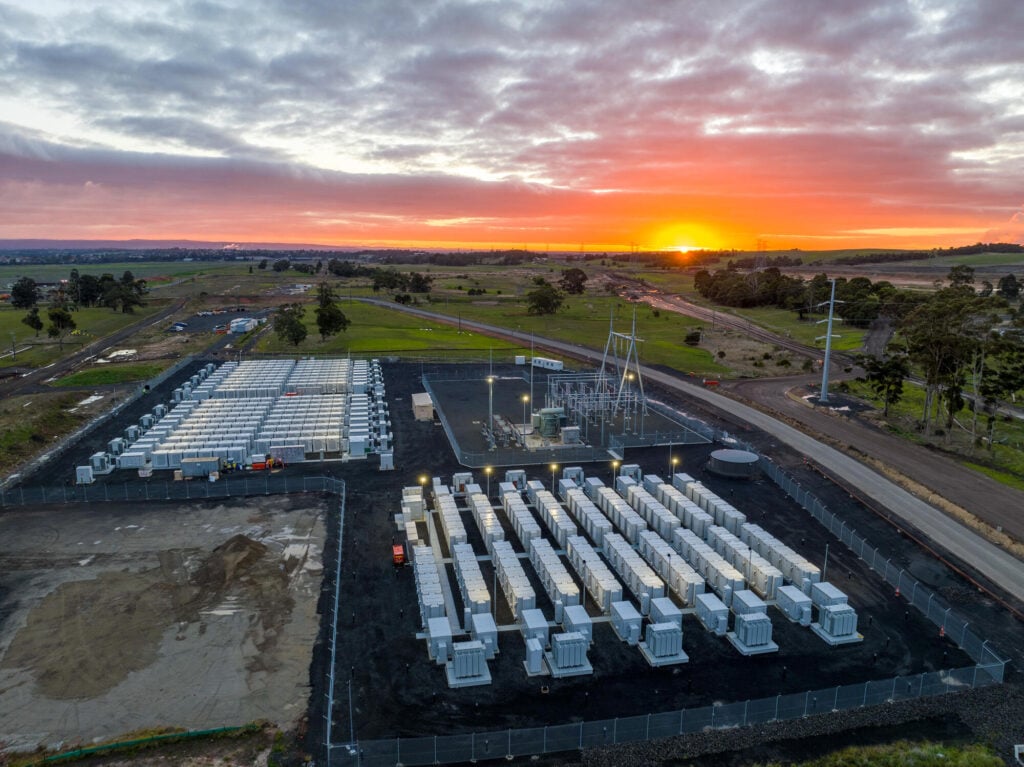
IPP Econergy has connected battery storage equipment at a co-located solar PV site in Romania.
Econergy announced earlier this month (7 September) that the 70MW/140MWh BESS component of the Parau 1 project was connected to the grid on 2 September. It joins 92MW of solar generation that has been in commercial operation since it was connected to the electricity grid in 2024.
The IPP said the energy storage component’s total construction costs, excluding financing costs and VAT, were around €21.3 million (US$24.57 million) Total construction costs, including solar, were approximately €84.7 million.
In a stock market disclosure, it cited an annual projected revenue from electricity sales attributable to the storage component of ~€9.7 million, an annual projected EBITDA of €7.98 million, and average annual funds from operations (FFO) from electricity sales attributable to the energy storage component of €6.3 million.
Annual revenue from electricity sales, including solar, should average about €18.4 million based on the expectations of the first five years of operation, generating €14.7 million EBITDA and €11.2 million FFO.
The project, owned by Israeli-headquartered Econergy’s Econergy UK subsidiary, features dedicated import capacity to charge directly from the grid, not only from the solar PV plant. This increases operational flexibility, allowing the asset to be charged from the grid during low- or negative-pricing events and to discharge when demand peaks.
The grid connection announcement comes just a few weeks after Econergy signed financing agreements for another solar and energy storage project in Romania. The company signed agreements with a six-lender consortium for Părău 2, a 342MW solar PV and 150MW BESS project. The aggregate financing package was worth around €229 million.
Lithuania VPP launches with 160MW of DERs
Inion Software, a Lithuanian energy tech company, has launched a virtual power plant (VPP) aggregating solar, wind, BESS and other distributed energy resources (DERs).
The VPP is already participating in Lithuania’s electricity balancing market. There are currently 30 assets connected, with a combined 160MW capacity.
“Traditionally, each power plant had its own local control system and was managed as a separate asset. With a virtual power plant, we can connect multiple remote power plants to a central system and manage them as a single portfolio,” Inion Software CEO Dr Šarūnas Stanaitis said.
“This also allows the portfolio to participate in the balancing market.”
Inion said the VPP can automatically adjust the operation of renewable energy assets based on trading operations. An onsite solar system, for example, could be prevented from exporting during negative pricing events and the PV used to charge a battery instead.
The platform can participate in all balancing market opportunities, including the mFRR, aFRR and FCR ancillary services and day-ahead, intraday and custom trading, while it can separately control and command battery storage units at the same site.
Inion Software is initially rolling out the VPP in Lithuania, which is part of the Baltic region that disconnected from the BRELL grid it shared with Russia and Belarus and synchronised with the European grid in early 2025. However, the company intends to license the platform and offer it on a white-label basis in other countries.
Energy Storage Summit CEE 2026, the essential meeting point for the most influential voices shaping the future of Central and Eastern Europe’s power landscape, takes place 6-7 October 2026 at the Warsaw Presidential Hotel, Poland and is hosted by our publisher Solar Media (part of the Informa Group). Learn more at the official website.