Utility-scale energy storage project developer / owner esVolta will execute a 15MW / 60MWh battery project to serve California cities that have formed their own ‘community choice’ energy supplier.
California Choice Energy Authority (CalChoice), is one of the US’ Community Choice Aggregation (CCA) municipal energy supply groups. A handful of states in the country allow for local governments to procure their power while remaining connected to the transmission and distribution networks of utility companies.
In the case of CalChoice, this means that local authorities in four cities and one town within the service area of investor-owned utility Southern California Edison (SCE) have the freedom to set their own energy mix while also benefiting from the reliability of being connected to the grid.
Like a much larger utility entity would, CalChoice files an integrated resource plan (IRP), which sets out its strategic goals over a long-term (usually 10-year) period, with the state regulator, the California Public Utilities Commission. CalChoice’s currently-in-place IRP sets out ambitious greenhouse gas (GHG) reduction goals of 0.102 MMT or less by 2030 and in 2018 put forward a model energy portfolio for achieving this.
Try Premium for just $1
- Full premium access for the first month at only $1
- Converts to an annual rate after 30 days unless cancelled
- Cancel anytime during the trial period
Premium Benefits
- Expert industry analysis and interviews
- Digital access to PV Tech Power journal
- Exclusive event discounts
Or get the full Premium subscription right away
Or continue reading this article for free
Along with existing resources, this called for 34MW of new solar, 23MW of new wind energy resources, 33MW of new behind-the-meter solar – and 15MW of battery energy storage. esVolta said this week that it has been picked out to develop, build and operate that facility, the Black Walnut Energy Storage project.
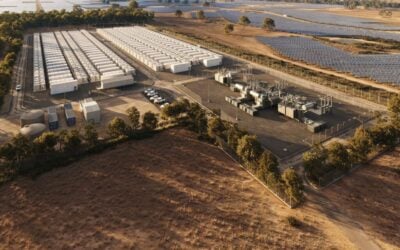
The lithium-ion battery storage system will be located in Santa Paula, California. Energy-Storage.news reported in late February that esVolta had secured US$140 million in financing for a pipeline of projects on the US West Coast, while the company claims a total 575MWh of its energy storage projects are in “operation, under construction or under development pursuant to executed utility and CCA off-take contracts”.
Expected to be in service by the middle of 2022, the 15MW / 60MWh Black Walnut project battery system will provide resource adequacy for the different member communities that make up CalChoice as their expected electrical demand incrementally increases.
Energy-Storage.news has to date reported on various projects put forward by CCA groups in the US, with California seemingly a particular focus out of the seven states in which community choice is allowed by legislation, in the past few years. According to the US Environmental Protection Agency (EPA) website around 3.3 million Americans are served by Community Choice Aggregators.
On a related note, a recent Guest Blog for this site by Alex Morris, executive director of the California Energy Storage Alliance (CESA), looked at how the state can continue scaling its clean energy efforts upwards, reporting back from the group’s annual convening of CESA members, policy makers, regulators, environmental advocates, utilities and load serving entities, grid operators in February.
“California, the world’s fifth largest economy and a global innovation engine, is confronting ambitious clean energy and GHG reduction goals. California must achieve 60% renewable energy and 5 million electric vehicles on the road by 2030, and a fully decarbonised power sector by 2045.
“Energy storage solutions will be required to support the state in its decarbonisation efforts for renewables integration, grid reliability, local area support, fire resiliency, microgrids, and more,” CESA’s Alex Morris wrote, in the blog which you can read here.