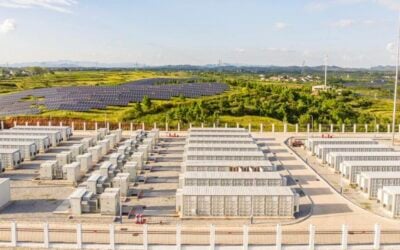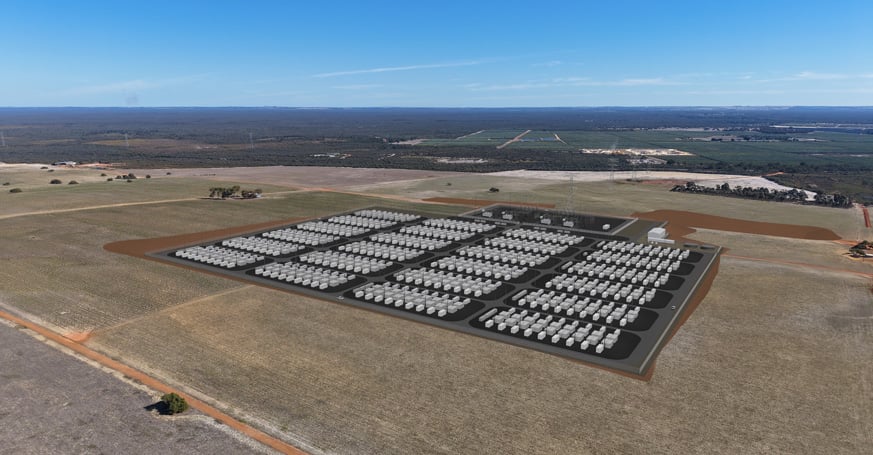
Perth-based Developer BLT Energy has received development approval from Western Australia’s Regional Development Assessment Panel for the 800MW/4,800MWh Red Gully battery energy storage system (BESS).
The approval marks what BLT Energy called “an important milestone for the project and Western Australia’s clean energy future.”
The project will be delivered in phases, with Phase 1 providing 400MW of power and 2,400MWh of storage to the South West Interconnected System (SWIS).
BLT Energy’s proposed BESS would be located in the Shire of Gingin, adjacent to Western Power’s Regans Terminal, which is due for completion in 2027, positioning Red Gully to directly complement the state’s Clean Energy Link-North transmission upgrade programme.
Try Premium for just $1
- Full premium access for the first month at only $1
- Converts to an annual rate after 30 days unless cancelled
- Cancel anytime during the trial period
Premium Benefits
- Expert industry analysis and interviews
- Digital access to PV Tech Power journal
- Exclusive event discounts
Or get the full Premium subscription right away
Or continue reading this article for free
With development approval now secured, BLT Energy said it will progress detailed engineering design and financing in preparation for Phase 1 construction, while continuing to work with the Shire of Gingin, the local community and Traditional Owners to define community benefits over the project’s life.
Commissioning is targeted for 2028-2029, a timeline BLT Energy has positioned against the scheduled retirement of state-owned coal-fired power stations by 2030.
Red Gully’s approval lands in a Western Australian electricity market where battery storage has been setting penetration records at a pace not seen in other parts of the country.
In May 2026, utility-scale battery storage in the SWIS supplied a record 37.2% of peak demand, a level state Energy Policy WA coordinator Jai Thomas described as “one of the highest battery storage penetration levels recorded in an isolated grid globally,” achieved after a day in which renewables supplied 78% of generation.
That figure understated the actual share of energy storage on the system as it excluded behind-the-meter (BTM) battery contributions.
The current scale benchmark in Western Australia is Synergy’s Collie BESS, which is sized at 500MW/2,400MWh and became operational in early 2026, making it Australia’s largest operational BESS and using CATL’s containerised LFP technology across 640 battery containers and 160 inverter units.
Combined with Synergy’s two Kwinana projects, the state utility’s storage portfolio exceeds 3,500MWh in the SWIS alone.
Red Gully’s eventual 4,800MWh capacity, once both phases are complete, would surpass that benchmark and become the largest battery storage proposal yet to advance through WA’s approvals pipeline.
The Capacity Investment Scheme (CIS) has been the primary procurement vehicle accelerating WA’s storage buildout.
In May 2026, CIS Tenders 5 and 6 awarded contracts to 10 projects delivering 1.886GW of renewable energy generation and 3.683GWh of standalone battery storage, representing AU$5 billion (US$3.51 billion) in new infrastructure investment and more than 7,000 construction jobs.
The tenders included Neoen’s 200MW/1.6GWh Yathroo BESS and a 200MW/1,518MWh Collie battery and solar hybrid project from Enpowered and Plenary Group, with all projects targeted for operation by 2030 to coincide with coal plant retirements.
Interested in Australia? Read Energy-Storage.news’ Energy Storage Summit Australia coverage and related content.