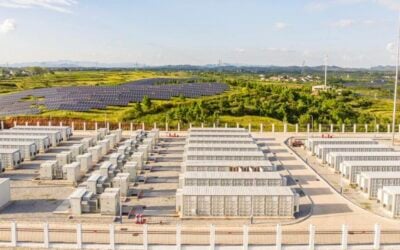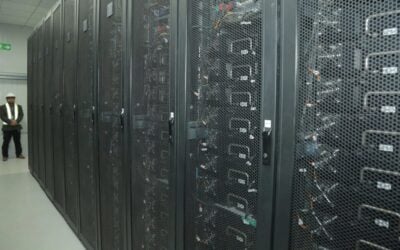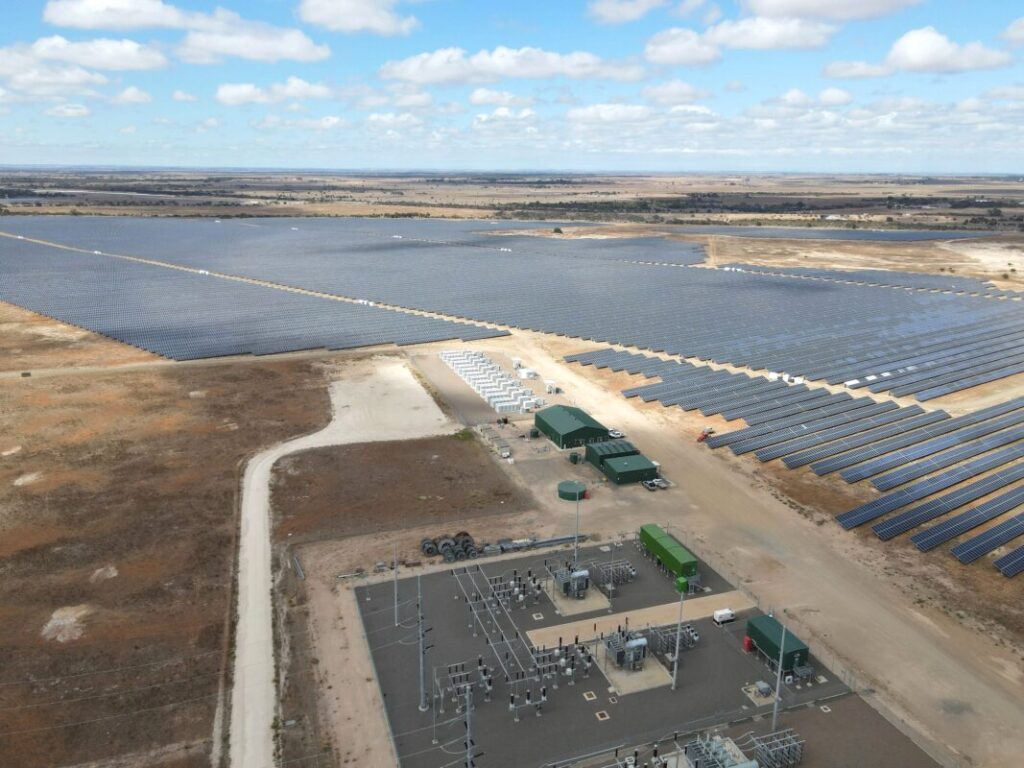
Battery energy storage system (BESS) capacity in Australia’s National Electricity Market (NEM) expanded by 2,936MW/6,482MWh over the 12 months leading to the end of Q3 2025.
The Australian Energy Market Operator’s (AEMO) latest Quarterly Energy Dynamics report reveals that battery storage deployment accelerated during Q3 2025, with 2,936MW of new capacity and 6,482MWh of energy storage entering the NEM since the end of Q3 2024. Battery discharge averaged 215MW throughout the quarter, representing a 150% increase from the previous year.
The expansion fundamentally altered grid operations, with battery systems providing essential support during evening peak demand periods when solar generation declines and traditional demand patterns create supply challenges.
Battery discharge increased by 463MW year-over-year during evening peak hours between 1,600 and 2,000, representing a 177% growth that addressed grid stability requirements.
Try Premium for just $1
- Full premium access for the first month at only $1
- Converts to an annual rate after 30 days unless cancelled
- Cancel anytime during the trial period
Premium Benefits
- Expert industry analysis and interviews
- Digital access to PV Tech Power journal
- Exclusive event discounts
Or get the full Premium subscription right away
Or continue reading this article for free
This additional battery output reduced dispatch requirements for gas-fired generation by 11% and hydro output by 3.5% during high-demand periods, demonstrating how energy storage displaces higher-cost generation sources while providing superior grid response capabilities.
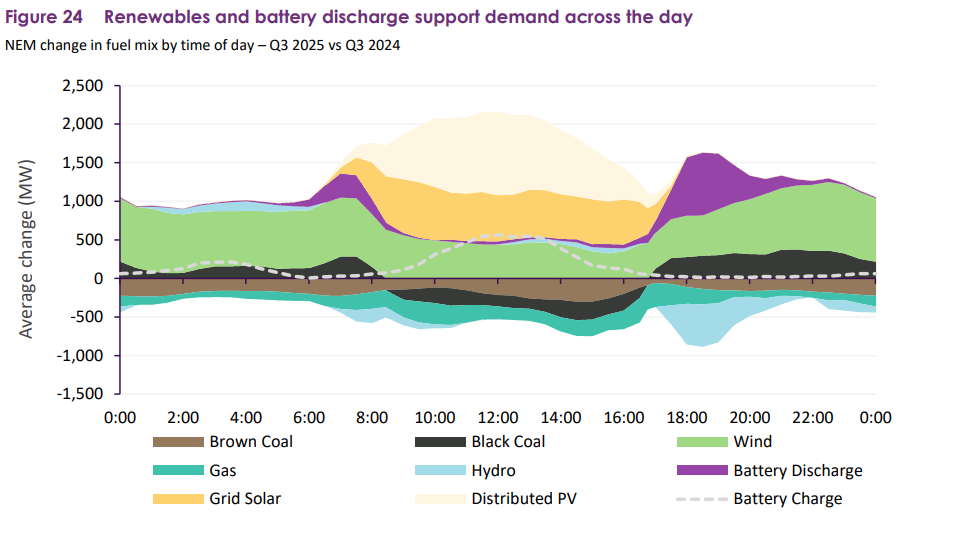
AEMO states that these battery systems demonstrated sophisticated operational strategies through their state of charge (SoC) patterns, peaking in late afternoon before discharging during evening hours. This behaviour aligns with grid requirements and reflects the technology’s ability to provide predictable, dispatchable capacity when needed most.
The operational data suggests battery systems are being deployed to maximise both grid benefits and commercial returns, with charging occurring during periods of renewable energy abundance and discharging when demand peaks.
The integration of solar and storage technologies created complex market dynamics that revealed both opportunities and challenges for grid operators. Queensland recorded the lowest quarterly average spot price across the NEM at AU$72/MWh (US$47.21/MWh), with a record 25.9% of dispatch intervals experiencing negative or zero prices.
This pricing pattern reflects the abundance of renewable energy generation during specific periods, when solar output peaks during midday hours and storage systems provide additional flexibility.
You can read the full article on our sister site PV Tech.