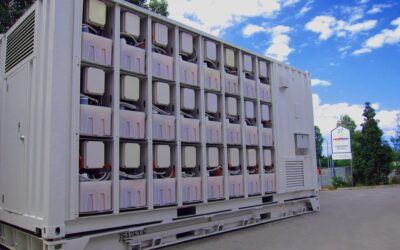
Over the past couple of weeks, various flow battery makers have touted new sales and supply chain agreements as the fledgling sector fights for a share of the stationary energy storage market.
Trade associations the Australian Solar Council and counterpart the Energy Storage Council have merged together to form the national Smart Energy Council.
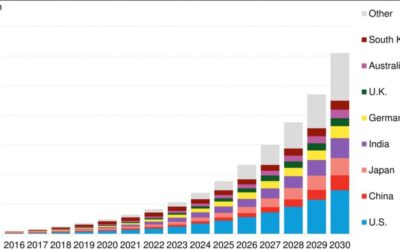
The rise of energy storage will enjoy a similarly meteoric trajectory to that enjoyed by solar PV deployment in the past and could reach 305GWh of installations by 2030, BNEF has predicted.
Start-up Romeo Power has opened a lithium battery pack factory in Los Angeles, aimed at the EV and stationary energy storage markets, aiming to ramp up to 4GWh production capacity by next year.
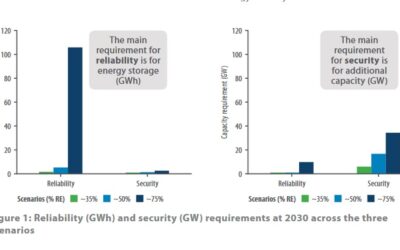
While energy storage can be considered “critical” to Australia’s transformation to a distributed, low carbon energy mix, a lack of investment and planning for the technology could have negative consequences for the network.
US Energy Secretary Rick Perry has applauded the coming together of National Grid and his Department of Energy’s Pacific Northwest National Laboratory, to jointly research areas including grid-scale storage and grid modernisation.
Intended to “kick start concrete projects”, the European Commission is set to allocate a further €200 million (US$235.53 million) towards supporting the scale-up of lithium battery manufacturing on the continent.
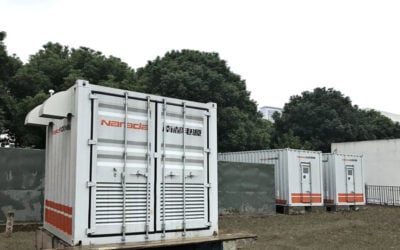
Narada Power, which makes batteries and complete energy storage systems as well as acting as a project system integrator, is establishing a subsidiary for the recycling of lithium-ion batteries.
A new solid state electrolyte for lithium batteries developed by Panasonic and nano-electronics and digital tech innovation hub imec has achieved “exceptionally high” ionic conductivity at room temperature.
Australia’s Clean Energy Finance Corporation (CEFC) will help finance the country’s first “unsubsidised large-scale grid-connected battery”, co-located with a wind farm in South Australia.