The Australian Energy Regulator (AER) has remade two revenue determinations for Akaysha Energy’s Waratah Super Battery in New South Wales (NSW) to reflect amended contractual arrangements.
This includes an extended project term and new revenue adjustment mechanisms.
The AER is the economic regulator for Australia’s electricity networks and sets the revenues that network businesses can recover from customers. It decided to review and remake the Paired Generation Service and System Integrity Protection Scheme (SIPS) Battery Service determinations after a proposal from Transgrid, the operator of NSW’s high-voltage transmission network, on 24 August.
The AER said the changes allow the utility-scale battery storage system to operate more dynamically, trading in the energy market while still meeting energy security requirements.
Try Premium for just $1
- Full premium access for the first month at only $1
- Converts to an annual rate after 30 days unless cancelled
- Cancel anytime during the trial period
Premium Benefits
- Expert industry analysis and interviews
- Digital access to PV Tech Power journal
- Exclusive event discounts
Or get the full Premium subscription right away
Or continue reading this article for free
Any revenue earned from energy trading is shared with consumers, thereby reducing future service charges and lowering the total cost of the battery storage system.
The remade determinations extend the project term and the payment schedule to match each other.
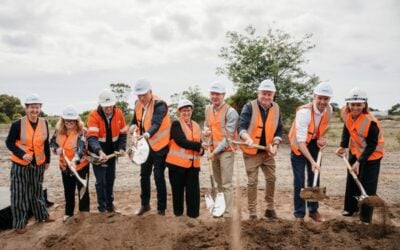
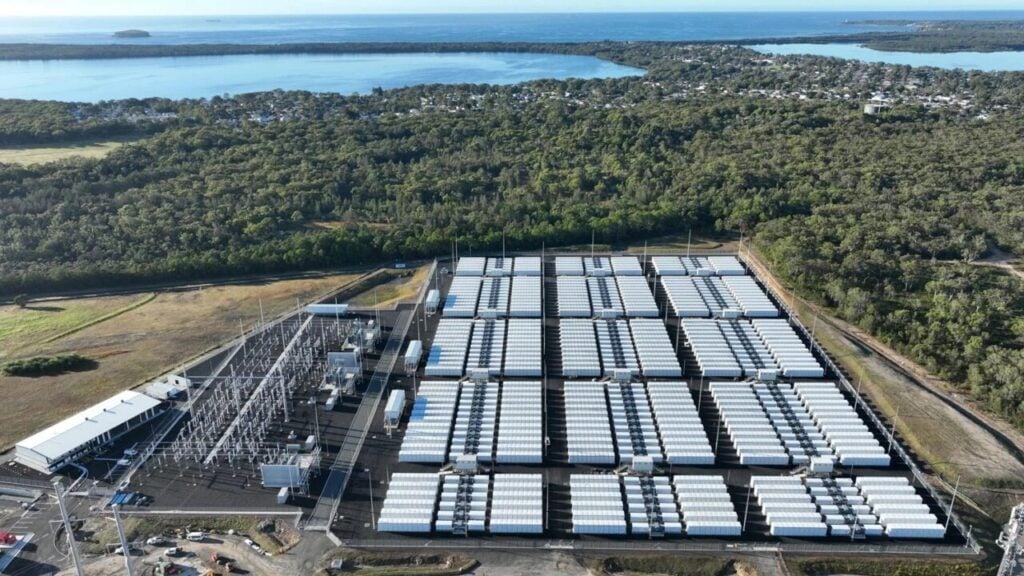
Akaysha Energy, which is backed by investment giant BlackRock and the developer and owner of the project, recently confirmed that the 850MW/1,680MWh Waratah Super Battery, deemed Australia’s “most powerful utility-scale battery storage system”, had been completed.
The AER said its decision is consistent with the NSW Minister’s direction and with the outcome of the initial competitive assessment process, and that consumers still receive the benefits of the project.
It also said the decision follows the Electricity Infrastructure Investment Act 2020 (NSW), the associated regulation and its revenue determination guideline for NSW contestable network projects.
The AER intends to publish the adjusted schedule of payments as an aggregated figure around June 2027.
That schedule will include annual revenue adjustments made before then, including any adjustment for the delay in the battery storage system reaching commercial operation.
The remake follows a year of reduced capacity
The decision comes after a commissioning period that ran well beyond a clean start. The 850MW/1,680MWh system discharged its first full output to the National Electricity Market (NEM) on 10 October 2025.
That same month, a high-voltage transformer suffered a “catastrophic failure,” and a second was taken offline as a precaution, cutting output to 350MW and meeting only an interim SIPS obligation.
The second transformer returned in June 2026, restoring 700MW and the full 1,680MWh. Running at 350MW for most of the commissioning period left Akaysha Energy with roughly half of its expected contracted revenue.
The battery storage system is built on the site of the former Munmorah coal-fired power station near Budgewoi, with more than AU$1 billion (US$690 million) in private investment.
Transgrid contracted 700MW and 1,400MWh of guaranteed capacity from it, with payments adjusted through an annual process with the AER to reflect the service actually provided.
The Waratah Super Battery is classed as a Priority Network Infrastructure Project under the state’s Electricity Infrastructure Investment framework and aims to increase power transfer capacity on lines that connect generation in northern and southern NSW to the Sydney, Newcastle and Wollongong region.
It has four components, and the AER made its initial determinations for the SIPS Battery Service in December 2022 and the Paired Generation Service in March 2024.
A SIPS is a control scheme that lets Transgrid signal the battery to inject power while paired generators adjust their output, so existing lines serving the Hunter, Sydney and Illawarra regions carry more electricity.
The control system monitors 36 transmission lines in real time. Former NSW Energy Minister Matt Kean previously described the project as a “giant shock absorber for the grid”.
In response to the AER determination, Akaysha confirmed the modified SIPS agreement was developed jointly by EnergyCo, the NSW state-owned corporation that ran procurement, Transgrid and Akaysha.
The modified arrangements are due to start in late 2026, and the battery storage system keeps its 700MW SIPS service while participating more in the energy market.
Paul Curnow, Akaysha’s chief commercial officer and managing director, said the arrangement is aimed at “improving utilisation of critical infrastructure without compromising system security”.
Never miss an Australian energy storage story. Sign up for our Australia newsletter and get the latest project announcements, policy updates and market analysis delivered directly to you.