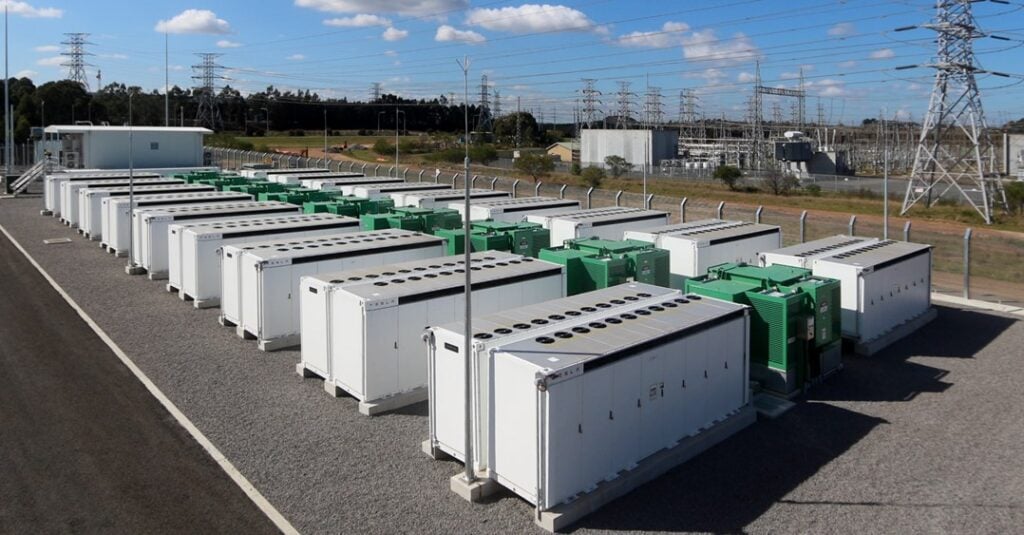
Australian transmission operator Transgrid has opened a pathway for 900MW of grid-forming inverter-equipped battery storage to contribute to New South Wales’ minimum system strength requirements.
This follows a formal reassessment of the state’s grid-stability portfolio, triggered by a 38% blowout in synchronous condenser costs.
The draft material change in circumstances (MCC) assessment was triggered by a cost increase in the Phase 1 synchronous condenser programme.
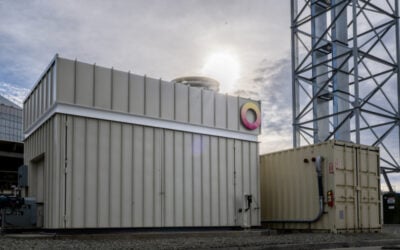
The five Phase 1 synchronous condensers, being delivered by energy equipment manufacturer GE Vernova at substations in Newcastle, Kemps Creek, Armidale, Wellington and Darlington Point, now carry a total project cost of AU$1.13 billion (US$790 million), against an average per-site estimate of AU$163 million in the original Project Assessment Conclusions Report (PACR).
Try Premium for just $1
- Full premium access for the first month at only $1
- Converts to an annual rate after 30 days unless cancelled
- Cancel anytime during the trial period
Premium Benefits
- Expert industry analysis and interviews
- Digital access to PV Tech Power journal
- Exclusive event discounts
Or get the full Premium subscription right away
Or continue reading this article for free
The actual average cost has risen to AU$225 million per site, with Transgrid noting that further escalation is likely for the remaining Phase 2 condensers due to supply chain impacts from the Middle East conflict.
The MCC assessment focuses on the remaining five Phase 2 synchronous condensers identified in the PACR, which are required to prepare the NSW grid for the retirement of the remaining coal generators.
Transgrid has concluded that three Phase 2 synchronous condensers, rather than five, represent the appropriate response under updated cost and coal-retirement assumptions, with the gap in system strength coverage to be filled by 900MW of grid-forming equipped BESS, pending confirmation of technical credibility for the minimum level requirements.
The credibility question remains unresolved. Grid-forming equipped BESS are currently not considered by AEMO to meet minimum system strength requirements.
Transgrid said it is engaging with industry, AEMO and other network service providers to validate whether grid-forming BESS can credibly contribute at the minimum level, with a final statement due by 24 August 2026 following a one-month public consultation on the draft assessment.
From efficient to the minimum level
The PACR, published in July 2025, already established grid-forming BESS as a core component of the efficient level of NSW system strength, with 5GW required by the early 2030s.
Transgrid shortlisted nine battery projects totalling up to 2GW in March 2026 to begin meeting the efficient level requirement, with the fleet expected to deliver the equivalent stabilisation capacity of 17 additional synchronous condensers.
Commercial negotiations with shortlisted asset owners are ongoing, with grid-forming equipped battery storage expected to begin providing system-strength services before the end of 2026.
The MCC assessment now proposes that grid-forming BESS be considered for the minimum level, which represents the floor of system strength required to keep the grid operating safely under all foreseeable conditions.
Meeting minimum level requirements has historically required synchronous machines capable of providing protection-quality fault current, a standard that grid-forming battery storage has not yet been confirmed to meet at scale in Australia.
If technical credibility is confirmed, the 900MW of grid-forming BESS would substitute for two of the five originally planned Phase 2 synchronous condensers.
AEMO designated grid-forming BESS as a priority action for 2026, describing the technology as set to form the operational heartbeat of the NSW power system as synchronous generation retires.
Grid-forming inverters now feature in 74% of Australia’s 33.2GW NEM battery storage pipeline, a penetration rate that reflects both the commercial incentive of system strength contracts and a growing operational base.
AGL’s 250MW/1,000MWh Liddell BESS in the Hunter Valley identified island commissioning and battery oversizing as key practical lessons from its delivery, knowledge that now feeds into the procurement and technical assessment underway for Transgrid’s system strength programme.
The reassessment also incorporates updated coal retirement timings from AEMO’s draft 2026 Integrated System Plan Step Change scenario, which defers several NSW coal unit retirements compared to the 2024 ISP assumptions used in the PACR.
The deferred retirements reduce the urgency of Phase 2 synchronous condenser delivery but do not remove the underlying need, given that AEMO’s 2026 draft General Power System Risk Review explicitly states that further system strength support will be needed as synchronous generation retires.
Transgrid has modelled two synchronous condenser delivery timings and two coal retirement scenarios to reflect the range of uncertainty, with the assumed Phase 2 delivery timeline now set at the beginning of FY34 rather than the FY29 to FY30 window envisaged in the PACR.
The cost of the synchronous condenser programme has attracted scrutiny from consumer advocates, who have urged the Australian Energy Regulator (AER) to examine whether the AU$400 million being sought from consumers under Transgrid’s revenue proposal reflects the long-term interests of electricity customers, given the pace of cost escalation and the emerging role of grid-forming BESS as a lower-cost alternative for parts of the system strength task.
For a broader explanation of how grid-forming inverter technology works, Energy-Storage.news has published a white paper in partnership with Kehua Digital Energy and TÜV Rheinland.
Our publisher, Solar Media (part of Informa Group), will host the Battery Asset Management Summit Australia 2026 on 25-26 August at Amora Hotel Jamison in Sydney. You can find out more about the Summit on the official website.