The Marinus Link interconnector project, a major infrastructure initiative connecting Tasmania and mainland Australia, has reached two key milestones: a positive Final Investment Decision (FID) and approval under the Environment Protection and Biodiversity Conservation (EPBC) Act.
The announcement of the FID confirms the 1.5GW Marinus Link transmission interconnector project’s financial and technical feasibility. In contrast, the EPBC Act approval imposes conditions to minimise the project’s impact on protected species, habitats, and the marine environment during construction, operation, and decommissioning.
Marinus Link Pty, said the positive FID decision results from extensive technical studies, financial modelling and collaboration between the Tasmanian, Victorian and Federal governments.
It enables the mobilisation of resources and suppliers for the first 750MW Stage 1 of the project, with construction expected to begin in 2026. While the decision represents a significant step forward, the future of Stage 2, which would add another 750MW, remains uncertain, with funding arrangements yet to be finalised.
Try Premium for just $1
- Full premium access for the first month at only $1
- Converts to an annual rate after 30 days unless cancelled
- Cancel anytime during the trial period
Premium Benefits
- Expert industry analysis and interviews
- Digital access to PV Tech Power journal
- Exclusive event discounts
Or get the full Premium subscription right away
Or continue reading this article for free
Commenting on the positive FID decision, Marinus Link Pty CEO Stephanie McGregor said the coming together of three jurisdictions has cemented the interconnector’s role in supporting Australia’s climate targets.
“The coming together of three jurisdictions demonstrates Marinus Link’s truly national significance and benefit across the NEM, as well as directly to communities in Tasmania and Victoria,” McGregor said.
“We will continue to engage regularly with the communities and landholders along the project alignment before construction commences, which is planned for 2026.”
Marinus Link secures EPBC Act approval
In addition to the FID, the Marinus Link has secured approval under the EPBC Act, Australia’s primary environmental legislation.
The EPBC approval follows a positive environmental effects assessment under Victorian legislation earlier this year. Final approvals under Tasmanian legislation are expected by the end of 2025.
The environmental clearance is a critical milestone, allowing the project to proceed without delays while maintaining compliance with national and state regulations.
“As the project progresses, we will continue to engage with key stakeholders, including landholders, to implement the conditions and deliver the project to a high environmental standard,” McGregor added.
Enabling the ‘Battery of the Nation’ initiative
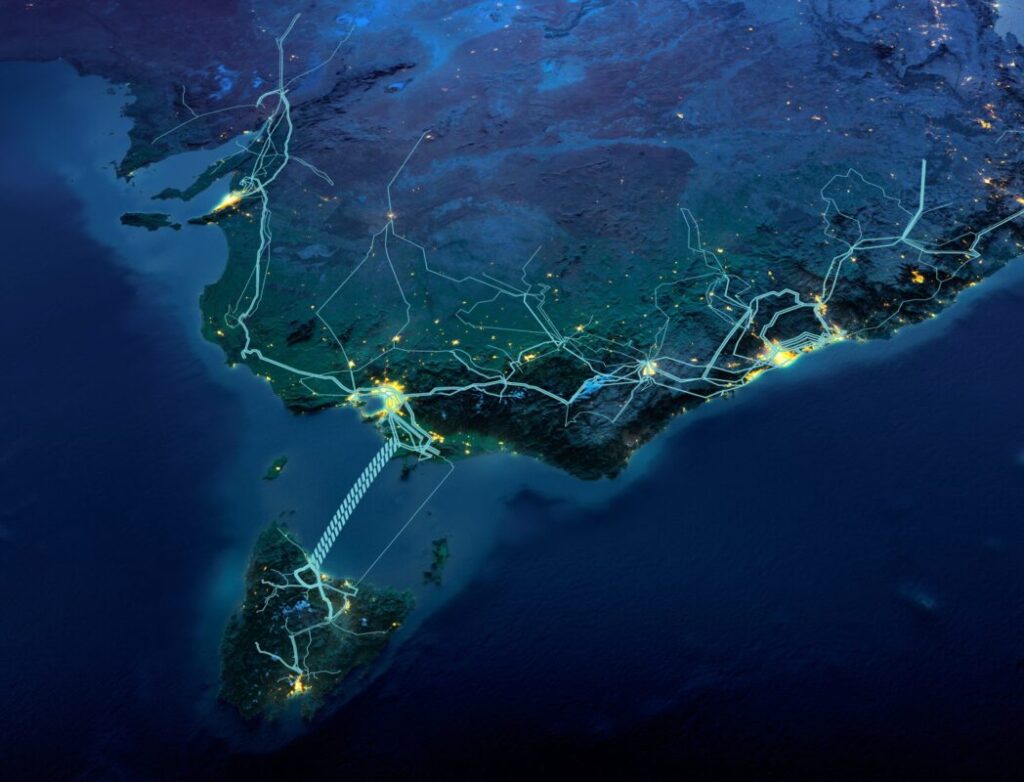
The proposed Marinus Link project would add 1,500MW of transmission capacity through a new undersea HVDC interconnector between Northwest Tasmania and Victoria’s Latrobe Valley, significantly enhancing Tasmania’s ability to export renewable energy.
It would enable Tasmania’s renewable energy assets to participate more in the National Electricity Market (NEM) and help the island state become the “Battery of the Nation”, with Tasmania’s grid currently connected to mainland Australia via the sole 500MW Basslink interconnector.
Together, Basslink and Marinus Link will create a robust transmission network capable of meeting up to 20% of Victoria’s winter electricity demand.
Meanwhile, the “Battery of the Nation” initiative was proposed by utility Hydro Tasmania in 2022, with plans to develop a further 1,500MWh to 3,500MWh of pumped hydro energy storage (PHES), providing dispatchable power to the NEM.
By doubling interstate transmission capacity, the Marinus Link interconnector will help address the intermittency challenges associated with wind and solar generation, while optimising Tasmania’s PHES potential.
Our publisher, Solar Media, will host the Battery Asset Management Summit Australia 2025 on 26-27 August in Sydney. You can get 20% off your ticket using the code ESN20 at checkout.