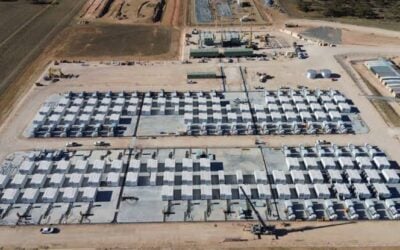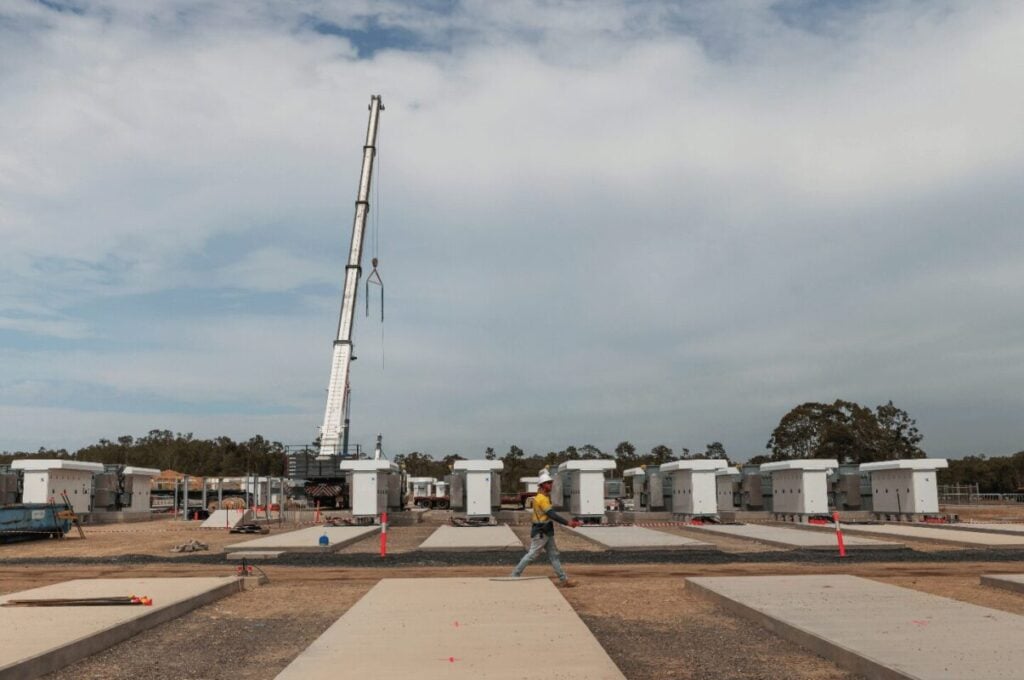
The New South Wales (NSW) Energy Security Corporation (ESC) has deployed its first investment, committing AU$100 million (US$70 million) to a 650MW large-scale battery storage platform being developed by PLUS Grid Storage.
PLUS Grid Storage is a separate commercial entity within Ausgrid, the largest electricity distributor on Australia’s east coast, serving Sydney, Newcastle, and the Hunter and Central Coast.
The funding will support the construction of four lithium-ion utility-scale battery energy storage system (BESS) projects. The first two are 200MW systems located at Steel River Industrial Estate in Newcastle and at Homebush in western Sydney.
The Steel River East 200MW/400MWh project in Mayfield West, Newcastle, was approved by the NSW Independent Planning Commission in March 2026 following a contested planning process. Meanwhile, the Homebush project is currently progressing through the state planning system.
Try Premium for just $1
- Full premium access for the first month at only $1
- Converts to an annual rate after 30 days unless cancelled
- Cancel anytime during the trial period
Premium Benefits
- Expert industry analysis and interviews
- Digital access to PV Tech Power journal
- Exclusive event discounts
Or get the full Premium subscription right away
Or continue reading this article for free
Both 2-hour duration systems are positioned to deliver peak-demand firming in the period immediately following the closure of coal-fired generation in the Hunter Valley.
The next two projects, at approximately 150MW and 100MW respectively, are at an earlier stage of development.
ESC confirmed that the first 500MW of storage is expected to be operational by early 2029, timed to coincide with the progressive retirement of NSW’s coal-fired generators, with a further 150MW expected online in late 2029. Construction on the Newcastle project is expected to begin in July 2026.
The battery energy storage projects will be built, owned, and operated by PLUS Grid Storage, which operates independently of Ausgrid’s regulated network business, thereby placing the assets outside the regulated asset base. The ESC participated in the investment as part of a senior debt syndicate alongside commercial banks.
ESC CEO Paul Peters said the platform’s location and delivery timeline were decisive factors.
“This is a platform investment in one of the state’s most critical load centres, where demand is highest, land is constrained and the need for storage is most immediate,” Peters said.
“PLUS Grid Storage’s ability to deliver these projects by 2029, while making better use of existing infrastructure, was a critical factor in our decision to invest in this battery platform.”
Kelly Wood, executive in charge of PLUS Grid Storage, said the ESC’s participation would accelerate delivery of storage infrastructure the state’s grid needs as it transitions away from coal.
“These partnerships are essential to delivering the next generation of energy infrastructure for NSW and ensuring customers continue to have access to reliable and affordable electricity as the energy system changes,” Wood said.
Ausgrid flagged a total portfolio of eight BESS developments under the PLUS Grid Storage umbrella, with the four backed by the ESC forming the first phase.
ESC’s mandate and the scale of the task ahead
The investment is the first deployment from the AU$1 billion in seed funding assigned to the ESC.
The organisation, which is a state-owned green bank, was established in July 2025 to invest in large-scale BESS, community batteries, pumped hydro and virtual power plants, with energy storage selected as the key priority to maximise the use of electricity generated from solar PV and wind across the state.
At the time, NSW Energy Minister Penny Sharpe said the corporation would “collaborate with the private sector to plug investment gaps, ensuring we keep the lights on and prices down for New South Wales residents and businesses.”
The ESC’s investment mandate is designed to be flexible, allowing it to act as a co-investor alongside private capital rather than as a direct developer or owner of assets.
The PLUS Grid Storage transaction reflects that structure, with the ESC joining a commercial bank syndicate as a senior debt participant rather than taking an equity stake or acting as project developer.
Peters has described the ESC’s role as advancing projects by months and specifically targeting investments that deliver system-wide benefits in locations where market signals alone would not drive timely delivery.
The urgency of the first investment reflects the significant growth in the state’s storage requirements. At the Energy Storage Summit Australia 2026 in March 2026, Peters told the audience that NSW’s storage target had risen from 40GWh to 56GWh, driven entirely by an accelerating solar penetration that was not anticipated when earlier planning was done.
Of the 56GWh needed, only 12.5GWh had reached financial investment decision, leaving 75% of what the state requires for 2030 without committed funding. NSW alone requires 37GWh to reach financial close by 2030.
Energy-Storage.news publisher Solar Media (part of the Informa Group) will host the next edition of this global event series, Energy Storage Summit Asia 2026, on 1-3 July at QSNCC in Bangkok, Thailand.
The conference takes place during ASIA Sustainable Energy Week 2026 (ASEW), the region’s most influential platform for driving clean energy. For more information, visit the official website.