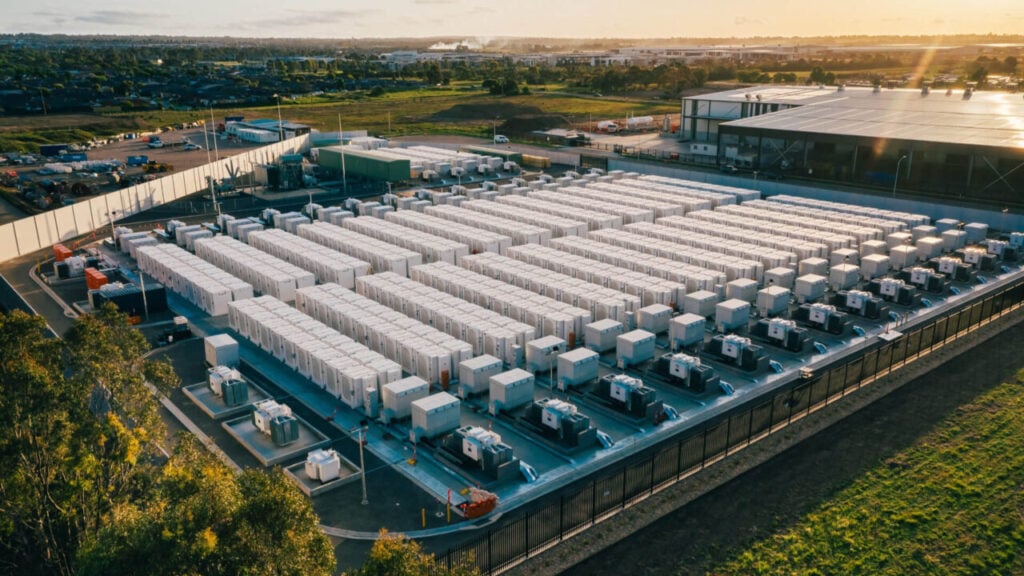
Australia’s Clean Energy Finance Corporation (CEFC) has announced it has invested a record AU$4.7 billion (US$3.09 billion) in large-scale renewables, energy storage, and transmission projects during the 12-month period ending 30 June 2025.
This milestone highlights CEFC’s pivotal role in advancing Australia’s clean energy transition, with the investment figure being 2.5 times more than the previous 12 months.
Among these investments is CEFC’s largest single commitment since its establishment: up to AU$1.92 billion allocated for the construction of the HumeLink transmission project.
The HumeLink will involve the construction of 365 kilometers of new 500 kV high-voltage transmission infrastructure connecting Wagga Wagga, Bannaby, and Maragle in New South Wales.
Try Premium for just $1
- Full premium access for the first month at only $1
- Converts to an annual rate after 30 days unless cancelled
- Cancel anytime during the trial period
Premium Benefits
- Expert industry analysis and interviews
- Digital access to PV Tech Power journal
- Exclusive event discounts
Or get the full Premium subscription right away
Or continue reading this article for free
This project is expected to unlock the full capacity of the expanded Snowy Hydro Scheme, better known as Snowy 2.0, which includes a 2GW pumped hydro energy storage project with a storage duration of 175 hours, providing additional grid stability for Australia’s energy network.
CEFC’s CEO, Ian Learmonth, emphasised the organisation’s role in positioning Australia as a global leader in clean energy innovation and investment.
“While the economy-shaping impact of our larger-scale transactions is clear, the full story of CEFC investment activity this year demonstrates that we are delivering for taxpayers, with direct and immediate benefit in homes and small businesses, for vehicle owners and on farms,” Learmonth said.
“By providing access to discounted CEFC finance, we are paving the way for an increasing number of Australians to cut their individual carbon footprint in their everyday activities – and tapping into growing consumer sentiment in favour of measures to address climate change.”
The CEFC’s record-breaking year also reflects its commitment to emerging technologies.
The organisation said it increased investments in hydrogen, bioenergy, and energy efficiency projects, which are expanding the scope of Australia’s renewable energy transition.
These initiatives are diversifying the country’s clean energy portfolio and positioning Australia as a leader in the development of next-generation technologies.
To read the full article, please visit our sister site PV Tech.
Our publisher, Solar Media, will host the Battery Asset Management Summit Australia 2025 on 26-27 August in Sydney. You can get 20% off your ticket using the code ESN20 at checkout.