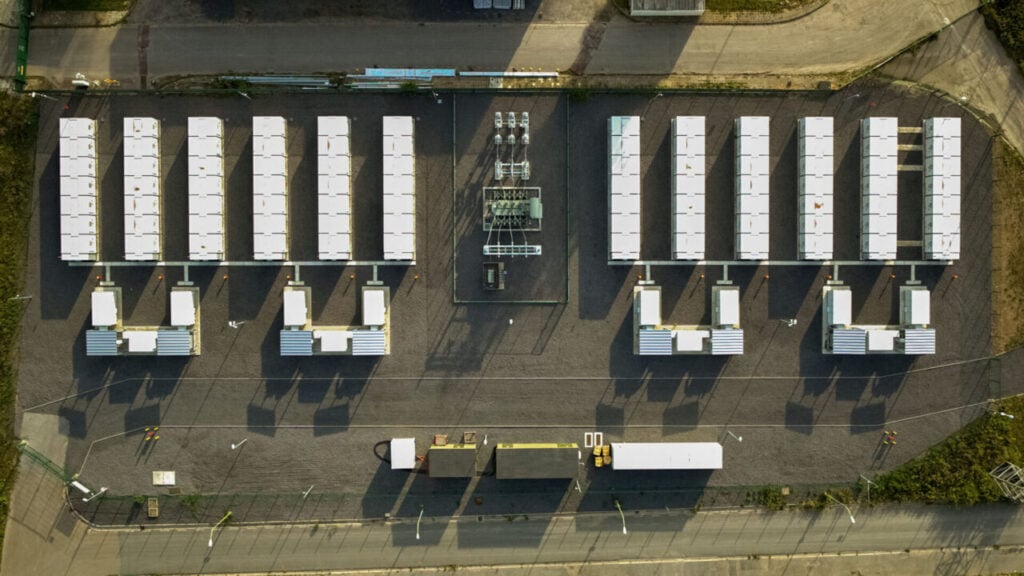
Lenders are increasingly willing to back large-scale BESS projects in Germany that don’t have any contracted revenues, although that merchant risk is priced in to structures, an executive at Aquila Clean Energy EMEA said.
Grace Kankindi, deputy head of investment management for the clean energy IPP, was speaking to us ahead of the Energy Storage Summit at The Battery Show Europe, in Stuttgart, Germany in three weeks’ time (9-11 June).
Kankindi will be speaking on the ‘Developing a Bankable German BESS Project in 2027 and Beyond’ keynote panel discussion on Day One.
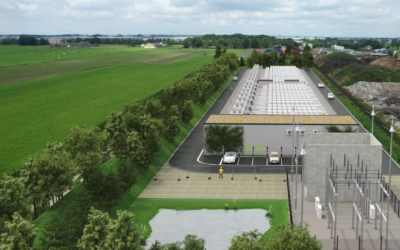
The firm is currently building two c.50MW/100MWh battery energy storage system (BESS) projects in Germany, part of a 14 project-strong pipeline. It was one of the early movers in the Belgian market too, and is active elsewhere in Europe.
Try Premium for just $1
- Full premium access for the first month at only $1
- Converts to an annual rate after 30 days unless cancelled
- Cancel anytime during the trial period
Premium Benefits
- Expert industry analysis and interviews
- Digital access to PV Tech Power journal
- Exclusive event discounts
Or get the full Premium subscription right away
Or continue reading this article for free
In this Q&A, Kankindi discusses progress and challenges in the German market, financing and building projects, and the key regulatory and policy topics of the day.
Activity in Germany continues to accelerate. Just this month, large-scale BESS projects in Germany have been progressed either towards construction or completion by Return, RWE, Terra One, Green Flexibility, SWB, ArcelorMittal, Suncatcher, Goldbeck Solar and Flower.
Merchant BESS in Germany now financeable
Energy-Storage.news: How would you characterise the current state of the German energy storage market, in terms of the key trends, major successes and achievements, and challenges still to be overcome?
Grace Kankindi: In the last three years, Germany’s utility-scale BESS market has grown from under 1GW to over 2GW by end of 2025, with annual additions accelerating sharply year on year. This proves that BESS in Germany has become an institutional asset class with a real pipeline, available capital, and grid need that is undeniable.
Furthermore, merchant BESS revenue is now financeable without a capacity contract—as exists in countries such as Belgium or Italy—which was genuinely uncertain not long ago.
The challenges that remain are around execution speed: grid connection timelines and building permits still delay projects reaching ready-to-build, and the market has not fully priced that risk.
How is the financing of BESS projects evolving?
One key trend we have seen is that lenders are now actively involved in financing BESS projects despite a merchant revenue case. However, the merchant risk is priced into the terms—with mini-perm structures, tighter Debt Service Coverage Ratios (DSCRs), and heavy scrutiny on revenue assumptions. As more projects come into operation and build supporting track records, we expect this to gradually shift toward longer-tenor debt structures.
How is the balance between merchant and tolling/fixed revenue schemes changing? In other words, to what extent are offtake and contracted revenues key to getting project finance?
Our experience is primarily on the merchant side in Germany, and merchant revenue is increasingly being accepted by lenders as a basis for financing without a tolling agreement. The key is having a high-quality optimiser managing the revenue stack.
What is the current mix of ‘full wrap’ and ‘multi-contracting’ for BESS project delivery, and is this/how is this expected to change going forward?
In our experience, multi-contracting has always been the preferred structure—separating BESS supply and balance-of-plant contracts gives you cost efficiency and flexibility that a full wrap simply doesn’t.
However, it is critical to note that having the right technical capability on the owner’s side is key to ensuring this is done successfully. Because multi-contracting done without that expertise creates more risk than it removes.
What are the key policy questions and grey areas which German industry and government still need to find solutions for, to unlock storage’s full potential for the grid?
Flexible connection agreements (FCAs) offer a potential route to bypass lengthy grid connection timelines, but the lack of standardisation means you are negotiating bilateral agreements with individual grid operators—creating uncertainty, as operators can impose restrictions that may materially harm project economics.
The grid connection backlog remains one of the biggest structural constraints for BESS deployment; however, recent proposed measures—including a maturity assessment procedure, binding response deadlines, and digitalisation of the connection process—are steps in the right direction, though they amount to incremental reform rather than a major amendment/change.