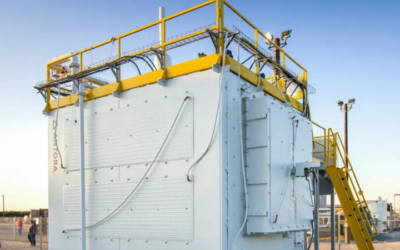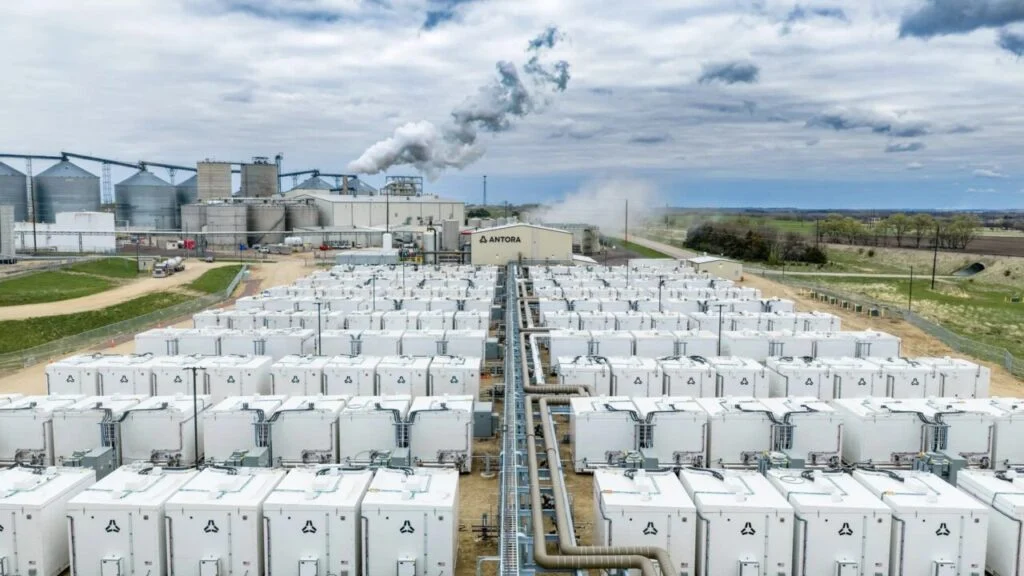
California, US-headquartered thermal energy storage (TES) technology provider Antora has installed one of the world’s largest energy storage systems, in South Dakota.
Antora is commissioning Project Big Stone, a 5GWh, multi-day-duration energy storage system based on the company’s thermal battery technology, at a biofuels production plant in Big Stone City, South Dakota, operated by POET Bioprocessing.
Expected to go into full operation later this year, the system will improve the Big Stone plant’s efficiency and lower its energy costs. The two companies have signed a long-term heat offtake agreement that Antora claims provides the biofuels company with cost-competitive, round-the-clock energy.
Basically, Antora thermal batteries store heat energy in blocks of solid carbon, an abundant and cheap material that is also very energy-dense and has good thermal conductivity.
Try Premium for just $1
- Full premium access for the first month at only $1
- Converts to an annual rate after 30 days unless cancelled
- Cancel anytime during the trial period
Premium Benefits
- Expert industry analysis and interviews
- Digital access to PV Tech Power journal
- Exclusive event discounts
Or get the full Premium subscription right away
Or continue reading this article for free
Charging occurs when electricity is used to resistively heat the carbon blocks, with their high thermal conductivity enabling fast charging. The blocks then store energy at temperatures up to 2,400°C, high enough to enable the thermal battery to serve continuous industrial demand for multiple days.
In addition, Antora has developed thermophotovoltaic (TPV) heat-to-power technology that converts light from the hot carbon blocks into electricity.
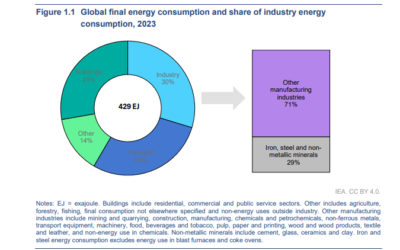
Thermal energy storage can help reduce the significant share of global greenhouse gas (GHG) emissions from industrial heating and cooling processes. Storing energy also allows for factories and processing plants to either buy electricity when it is cheap to charge their TES asset, or charge directly from onsite solar PV or other renewable sources, reducing costs.
However, the high temperatures required for many industrial processes make them difficult to abate emissions from, as this requires a lot more energy and an effective storage medium. Antora has claimed that its technology operates at high enough temperatures to meet the requirements of ‘hard-to-abate’ industries such as steel and cement production.
‘Critical investment in affordable, reliable energy’
In a blog for the World Economic Forum at the beginning of this year, Antora CEO and co-founder Andrew Ponec wrote that he and his co-founders “studied every type of battery technology—from advanced chemistries based on lithium and sodium to approaches using molten salt and iron,” when they started up the company.
“What we found surprised us: The cheapest, most scalable way to store huge amounts of energy is to heat up some of the most abundant materials on earth,” Ponec wrote.
The Big Stone project in South Dakota went from the start of construction to commissioning in less than a year, another benefit of TES technology that CEO Ponec talked up in his World Economic Forum blog. Ponec said the speed of deployment made the thermal batteries a good solution for AI data centre developers, who prize speed-to-power.
For the South Dakota project, Antora worked with electric utility Otter Tail Power to develop an electric rate for bioethanol producer POET that allowed the system to deliver 24/7 power to the Big Stone plant without impacting electricity rate rises for the utility’s other customers.
Local politicians, Senator Mike Rounds and Representative Dusty Johnson, both praised the project. Rounds said it “will have a real economic impact in South Dakota while also creating jobs and boosting our domestic energy production.”
Johnson called it a “critical investment in affordable, reliable energy, fuelling South Dakota’s role in bolstering America’s domestic energy dominance.”
While the overall energy storage market share of thermal storage remains small, the past year or so has seen the emergence of multi-megawatt-hour projects for a range of industries and applications.
Antora, meanwhile, first featured on Energy-Storage.news in 2022, when it raised US$50 million from investors including Breakthrough Energy Ventures, Shell Ventures, and Grok Ventures.
In 2024, it raised US$150 million in a Series B funding round, with new investors joining, including Decarbonization Partners, a joint venture (JV) between BlackRock and Singaporean asset manager Temasek.
Proceeds from the Series B, which brought Antora’s total funding raised to that point to US$230 million, went toward scaling up manufacturing capacity and commercial deployments, including the construction of a factory in California. At the beginning of April, the startup said it had completed the expansion of its manufacturing campus, adding two new facilities near an existing factory in San Jose.