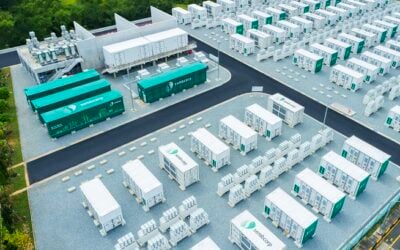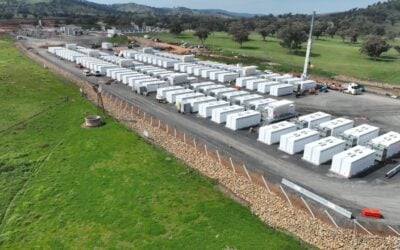
The Asian Development Bank (ADB) has approved a Royal Government of Cambodia application for financial support toward the cost of a 250MW/500MWh battery storage project.
The multilateral development finance institution announced its approval of a US$63.44 million package on Wednesday (24 June), supporting the construction of a battery energy storage system (BESS) at Takeo substation in southern Cambodia.
The financing comprises a US$40 million concessional loan and US$5 million Asian Development Fund grant, plus US$18.44 million co-financing from the global Green Climate Fund (GCF) and the UK government via the ASEAN Catalytic Green Finance Facility (ACGF).
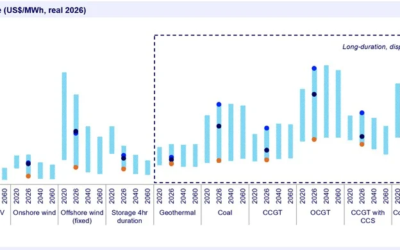
The global average cost of a 2-hour-duration turnkey BESS was US$124/kWh in 2025, according to BloombergNEF, meaning the ADB funding will likely cover most of the project’s cost, although Capex requirements vary by region.
Try Premium for just $1
- Full premium access for the first month at only $1
- Converts to an annual rate after 30 days unless cancelled
- Cancel anytime during the trial period
Premium Benefits
- Expert industry analysis and interviews
- Digital access to PV Tech Power journal
- Exclusive event discounts
Or get the full Premium subscription right away
Or continue reading this article for free
ACGF is an ASEAN Infrastructure Fund initiative launched in 2019 to accelerate investments in green infrastructure across the Association of Southeast Asian Nations (ASEAN) countries.
ADB and state-owned utility Electricité du Cambodge (EDC) issued an invitation for bids on 22 June for the design and build of the project, which will be equipped with grid-forming (GFM) inverter capabilities.
The project’s primary application will be to help integrate variable renewable energy (VRE) onto the grid in industrial zones, agricultural processing facilities and urban districts.
It will also facilitate cross-border electricity trade with Vietnam in line with the ASEAN Power Grid initiative, while the addition of grid-forming will enable the asset to participate in frequency control to stabilise the grid, a service historically performed by the rotating mass of thermal and hydroelectric generator turbines.
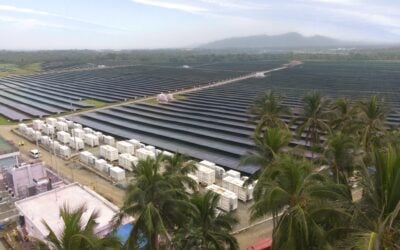
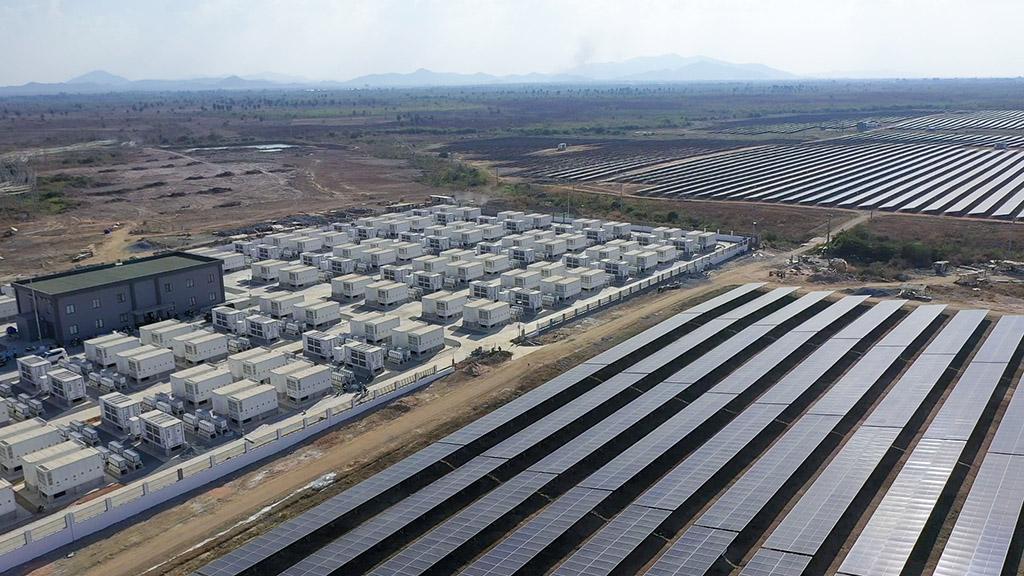
In March, Cambodia’s first grid-forming BESS project went into operation, a 500MW/1,000MWh asset co-located with large-scale solar PV generation in the country’s western Pursat province.
Bidding window open until 20 August
The open competitive bidding process will be conducted in accordance with ADB’s Single-Stage: One Envelope bidding procedure. Bids are submitted in a single envelope containing both the price and technical proposals and are opened in public.
Deadline for submissions is 10am Cambodia local time on 20 August 2026. Works must be completed within 12 months from the date the contract becomes effective.
Conditions include a track record of supplying at least 75% of the total value of previous BESS contracts either as contractor, joint venture (JV) partner, supplier or subcontractor within three years of bid submission date.
Companies that have completed or put into implementation at least 2GWh of grid-connected or microgrid BESS projects within the last five years as prime contractor, JV member or supplier are also eligible.
In addition, contractors, JV partners, suppliers or subcontractors to at least two successfully completed BESS projects within the past five years are also eligible, provided each contract is of 100MWh or more and the project performs frequency control. These projects must demonstrate a full year of operation, and the cumulative value of contracts must exceed US$13 million.
There are also net worth and annual turnover conditions: average annual turnover for the past five years must be at least US$83 million. Financial obligations for current contract commitments must be at least US$13.7 million.
ADB said the project will help reduce Cambodia’s energy sector reliance on expensive and polluting imported fossil fuels and support the adoption of renewable energy. Cambodia is targeting 70% renewable energy capacity by 2030 under its 2022-2040 Power Development Master Plan.
Thanks largely to significant hydroelectric power resources, the country is already at 63% renewables in its generation mix. According to local media, energy and mines minister Keo Rottanak said in March that it is on track to meet the target.
This puts it well ahead of the ASEAN nations’ 35% by 2030 target. However, the fossil fuels Cambodia does import are subject to price fluctuations.
“Amid the global energy crisis, this project further reinforces Cambodia’s commitment toward clean energy transition,” ADB country director for Cambodia Yasmin Siddiqi said.
“By strengthening the power grid with advanced battery storage, we are helping the country unlock more renewable energy while ensuring that families, farmers, and businesses benefit from safe, stable, and affordable electricity.”
An Initial Environmental Assessment published in December 2025 offers more details on the planned project, as does a Social Safeguards Due Diligence Report published in January this year.
Renewable energy integration, grid-forming and the ASEAN Power Grid will be among the topics discussed next week at Energy Storage Summit Asia 2026, hosted by our publisher Solar Media (part of the Informa Group) from 1-3 July at QNCC, Bangkok, Thailand. The conference takes place during ASIA Sustainable Energy Week 2026 (ASEW), the region’s most influential platform for driving clean energy. Our readers can enjoy an exclusive 20% discount on tickets using the code ESN20 at checkout. For more information, visit the official website.