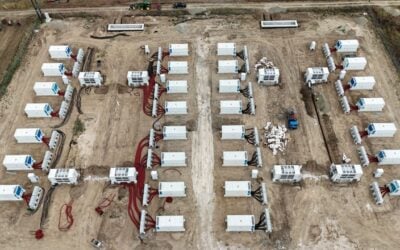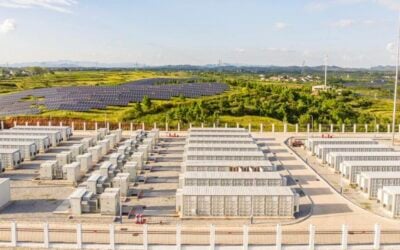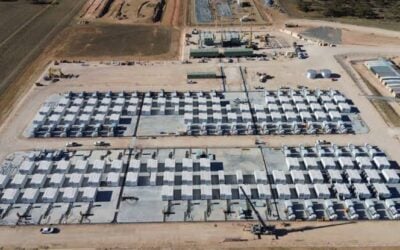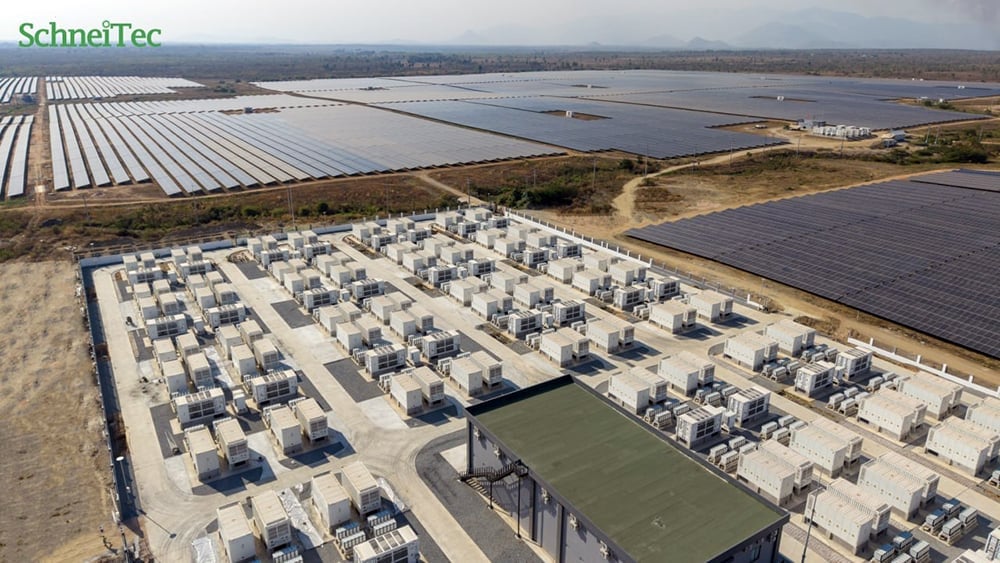
A 500MW/1,000MWh battery energy storage system (BESS) with grid-forming inverters has gone into commercial operation in Cambodia.
The Southeast Asian Kingdom’s official news agency, AKP, announced the launch of the BESS project in Pursat province on Friday (13 March). AKP described it as marking a “significant and historic achievement in Cambodia’s energy sector,” the country’s “first and largest project” of its kind.
The brief announcement noted the integration of grid-forming (GFM) technologies at the plant, putting Cambodia in a leading position among ASEAN countries in the adoption of GFM.
Grid-forming inverters, as opposed to grid-following, enable inverter-based resources to provide system stability services to the grid such as inertia, which are vital to maintaining grid frequency and voltage, and are typically delivered by the rotating mass of thermal generation assets.
Try Premium for just $1
- Full premium access for the first month at only $1
- Converts to an annual rate after 30 days unless cancelled
- Cancel anytime during the trial period
Premium Benefits
- Expert industry analysis and interviews
- Digital access to PV Tech Power journal
- Exclusive event discounts
Or get the full Premium subscription right away
Or continue reading this article for free
The project has been delivered by electrical equipment manufacturer and renewable energy developer SchneiTec, headquartered in the Cambodian capital, Phnom Penh.
The project, in Pursat province’s Krakor district, has been built at the site of a SchneiTec solar PV plant. SchneiTec was established in 2015 and develops renewable energy projects under a number of business models.
SchneiTec Group said in a post to LinkedIn last week that the project “isn’t just about storage, it’s about stability.”
It highlighted that the asset will enhance grid reliability by minimising power fluctuations and ensuring steady power supply for homes and businesses, enable the increased adoption and integration of renewable energy by storing excess solar and wind to supply the grid at night and reduce reliance on fossil fuels and spearhead the adoption of GFM technologies in the ASEAN region.
“As Cambodia marches toward its goal of 70% clean energy by 2030, infrastructure like this serves as the backbone of our green transition,” SchneiTec Group said.
Neither the AKP nor SchneiTec announcements mentioned partners or technology providers to the project by name.
Project follows GFM testbed with Huawei Digital Power
However, in mid-2025, Huawei Digital Power announced that, in partnership with SchneiTec Group, it had commissioned Cambodia’s first-ever GFM project to be certified by TÜV SÜD. The 12MWh project includes a 2MWh testbed, which was dedicated to validating Huawei Digital Power’s Smart String grid-forming technology.
Huawei claimed the system had demonstrated “its exceptional capabilities” to stabilise the grid in strong and weak grid scenarios, through the seamless integration of variable renewable energy (VRE) sources.
According to a 11 June release, highlights of the testing included inertial response performance that achieved an inertia time constant (Tj) range of 3-20 seconds, which the company said is “well beyond” the standard 3-12 seconds requirement.
The system also managed voltage fluctuations effectively, maintaining grid stability through short-term voltage fluctuations, remaining operational through a wide voltage range of 5% to 130% of rated grid voltage.
Overload and frequency support to suppress low-frequency oscillations across the 0.2Hz-5Hz range, with the BESS operating stably and reliably through short-term overload conditions of up to 300%. The test system can also provide black start to the grid, Huawei Digital Power said.
Meanwhile, SchneiTec’s other partnerships include SchneiTec CHINT, a joint venture (JV) with another Chinese clean energy manufacturer, CHINT. Established in 2021, SchneiTec CHINT makes medium voltage (MV) products aimed at the Cambodian clean energy sector.