Tech giant Google and distributed energy resource (DER) platform Voltus have announced an expanded agreement to build a 1GW virtual power plant (VPP) in the US.
Announced 22 October, the VPP will serve PJM, the largest regional transmission organisation (RTO) in the US with 67 million people across 13 US states and Washington, D.C.
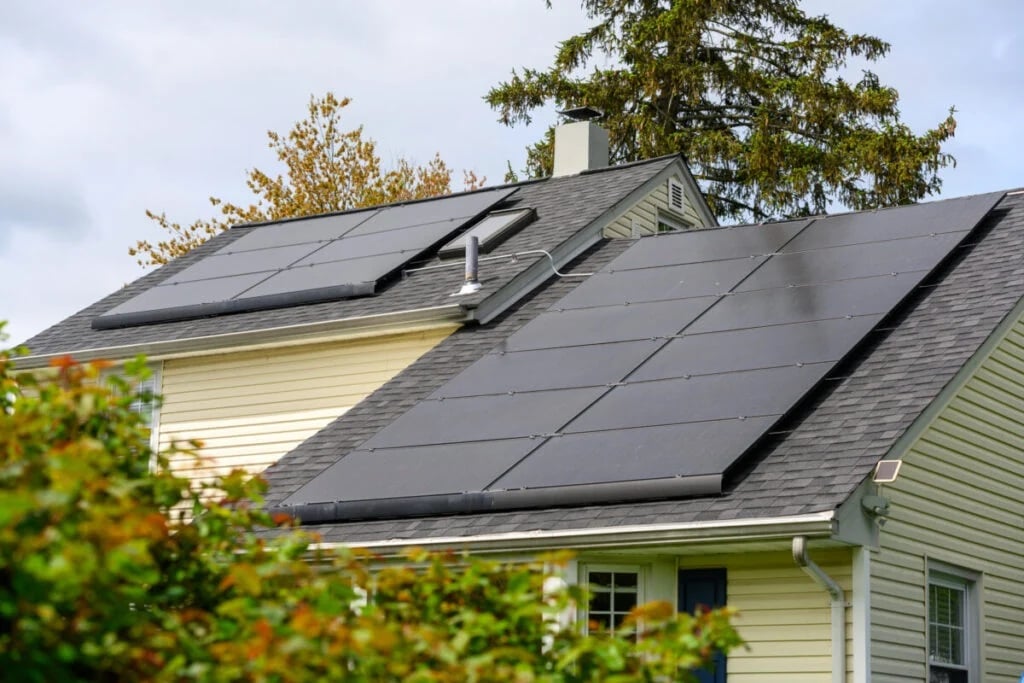
Voltus aggregates flexible capacity from local businesses and homes — including smart thermostats, residential battery energy storage systems (BESS) and industrial assets — into a Google-funded VPP.
During periods of peak demand, these assets temporarily reduce energy use to support grid reliability. Participating customers receive economic benefits in return, including bill savings and cash payments.
Try Premium for just $1
- Full premium access for the first month at only $1
- Converts to an annual rate after 30 days unless cancelled
- Cancel anytime during the trial period
Premium Benefits
- Expert industry analysis and interviews
- Digital access to PV Tech Power journal
- Exclusive event discounts
Or get the full Premium subscription right away
Or continue reading this article for free
The expanded deal represents a 10-fold increase on the companies’ original agreement, announced on 2 June, under which Voltus agreed to aggregate up to 100MW of DERs annually from local businesses and homes into a Google-funded VPP over three years.
That initial deal was structured so that Voltus would pay participating customers, turning Google’s capacity demand into direct economic benefits for PJM customers.
Google and Voltus have described the arrangement as a “bring your own power” (BYOP) or “bring your own capacity” (BYOC) deal. Such structures have been encouraged by the US government, including through the White House’s “Ratepayer Protection Pledge”.
In August, residential solar and BESS provider Sunrun signed an agreement with Voltus to support its BYOC programmes for AI hyperscalers.
In October 2025, the US Energy Storage Coalition (ESC) published a study indicating that, assuming forecasted demand in PJM’s 2025 Load Forecast Report materialises, the region’s summer peak would increase by 16GW by 2028 and by a further 30GW by 2032.
The projected rise in load, combined with backlogs in the interconnection queue, has prompted calls for reform from local leaders and the federal government.
Google has made several moves in the data centre and energy sector this year. In March, the company announced plans with utility DTE Energy to develop a data centre in Michigan supported by 1,600MW of solar paired with 450MW of energy storage.
Last month, Google announced it would purchase the energy, capacity, and clean energy attributes of the Mammoth Solar project in Kanawha County, West Virginia combining 86MW of solar and 10MW/100MWh of BESS, from renewables developer-operator MN8 Energy and zinc hybrid cathode battery and storage system maker Eos Energy Enterprises.
The use of DERs to ease the strain that large loads place on consumers has also featured prominently in industry discussion. On 16 April, developer-operator Lightshift Energy announced a five-project, distribution-scale BESS portfolio in Virginia.
Rather than pursuing 200MW-500MW transmission-scale projects requiring lengthy PJM interconnection studies and significant upgrade costs, Lightshift is deploying smaller batteries, typically 20MW or less, at existing distribution substations, aiming to reduce the burden placed on regular energy consumers.