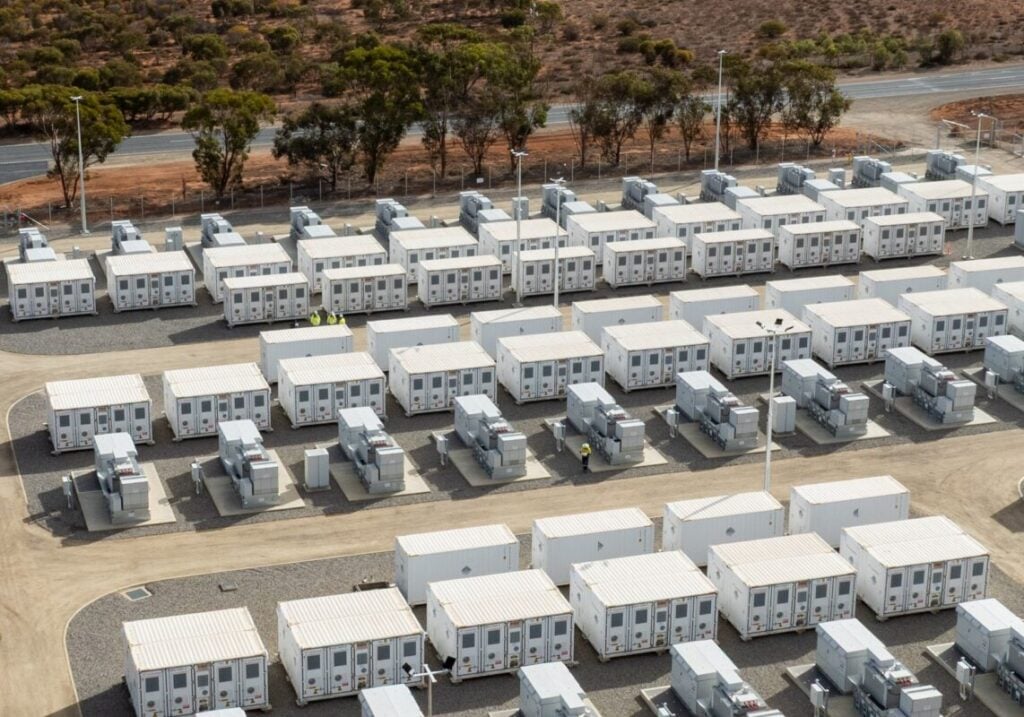
South Australia’s SA1 trading region reached the National Electricity Market (NEM) AU$20,300/MWh price cap twice during the evening of 21 June, with battery storage analytics platform NEMPulse recording an estimated AU$324,000 in fleet revenue across the event.
According to NEMPulse’s Market Events breakdown, the extreme pricing window began at 19:35 AEST. It lasted 2 hours and 35 minutes, with a peak regional reference price of AU$20,300/MWh and an average price across the event of AU$3,900/MWh.
Of the 15 grid-scale batteries tracked in the SA1 region, four were actively dispatched into the market, two were charging, and the remainder were either idle or offline.
Franz David Schaefer, senior analytics specialist at EnergyAustralia, flagged the event on LinkedIn, noting that NEMPulse subscribers received an alert at 19:35 and that the platform’s Market Events page contained the full breakdown of battery responses and estimated revenue.
Try Premium for just $1
- Full premium access for the first month at only $1
- Converts to an annual rate after 30 days unless cancelled
- Cancel anytime during the trial period
Premium Benefits
- Expert industry analysis and interviews
- Digital access to PV Tech Power journal
- Exclusive event discounts
Or get the full Premium subscription right away
Or continue reading this article for free
NEMPulse is an independent, open-data dashboard that tracks the dispatch, revenue, and bidding behaviour of every grid-scale battery storage system in the NEM.
As depicted in the graph above, Epic Energy’s 100MW/200MWh Mannum battery energy storage system (BESS) delivered the strongest individual performance, discharging from 21.4% to 3.2% state of charge at an average output of 15MW, generating an estimated AU$151,740.
The Mannum BESS is optimised by UK-headquartered route-to-market (RTM) specialist Habitat Energy, which utilises its software platform, Evolve. The battery storage system was supplied by e-STORAGE, a subsidiary of Canadian Solar, and utilises its proprietary lithium iron phosphate (LFP) SolBank technology.
AGL’s 250MW/205MWh Torrens Island BESS trailed behind Mannum with AU$107,230, discharging from 16.1% to 1.4% state of charge while also committing 107.8MW to frequency control ancillary services (FCAS), the largest FCAS commitment of any battery storage system during the event.
The Torrens Island BESS is optimised using Wärtsilä’s digital GEMS power plant controller and energy management platform.
Neoen’s 150MW/193.5MWh Hornsdale Power Reserve, one of the first utility-scale battery storage systems in the world, added a further AU$70,810, discharging from 24.6% to 12.4% state of charge, while Dalrymple North BESS contributed AU$16,180.
A second tier of battery storage systems remained largely idle through the event despite holding available capacity.
Tailem Bend 2 Hybrid Renewable Power Station, Happy Valley Water Treatment Plant, Bungama BESS, Adelaide Desalination Plant, Christies Beach Wastewater Treatment Plant, Blyth BESS and Bolivar Waste Water Treatment Plant were all classified as idle, generating between AU$1,010 and AU$10,120 each despite availability ranging from under 1MW to more than 40MW in Bungama’s case.
Lincoln Gap Wind Farm Battery and Clements Gap BESS were both offline throughout the event, contributing no dispatch or revenue.
Two battery storage systems charging into the price cap
NEMPulse’s data confirms that two utility-scale battery storage systems were charging rather than discharging as prices hit AU$20,300/MWh.
Iberdrola Australia’s 25MW/52MWh Lake Bonney BESS1 charged from 13.5% to 16.1% state of charge at an average rate of 1.4MW, recording an estimated revenue loss of AU$14,160. This BESS uses Tesla’s AutoBidder software.
Meanwhile, ZEBRE’s 111MW/330MWh Templers BESS charged more aggressively, moving from 4.5% to 6.1% state of charge at an average of 3.5MW, with an estimated loss of AU$35,410. The Templers BESS utilises technology from Chinese manufacturer Sungrow.
Together, the two charging BESS had a combined negative revenue impact of approximately AU$49,570 during the event, a cost offsetting the AU$324,720 generated by the four discharging battery storage systems.
The decision to charge in a price cap event is not necessarily a dispatch error. Battery storage systems may be configured to maintain a minimum state of charge for contracted FCAS obligations, to honour pre-existing bid schedules submitted before the price spike was forecast, or to position for a subsequent discharge opportunity later in the evening.
Both Lake Bonney BESS1 and Templers BESS started the event at comparatively low states of charge, 13.5% and 4.5% respectively, which may have constrained their ability to participate in the discharge side of the market regardless of price.
South Australia has built a track record as the NEM region most prone to extreme pricing events, a pattern closely tied to its high renewable energy penetration and its comparatively thin generation buffer when wind and solar output fall.
As Energy-Storage.news reported at the start of the year, the state’s battery storage fleet entered a 4-hour period of prices above AU$1,000/MWh during the Australia Day heatwave with around 90% state of charge, rationing energy between 18:00 and 21:00. By shortly after 20:00 that evening, much of the fleet had depleted its available charge, allowing thermal generation to keep prices elevated for a further hour and a half.
South Australia is not the only region where Market Price Cap events have tested battery storage. New South Wales electricity prices hit the AU$20,300/MWh cap on 10 October 2025, with battery storage assets capturing a share of the resulting volatility through coordinated discharge.
In an interview with ESN Premium, Sahand Karimi, co-founder and CEO of RTM optimiser OptiGrid, emphasised that NEM-specific optimisers captured materially more revenue than generic optimisation tools during that New South Wales price spike.
Interested in Australia? Read Energy-Storage.news’ Energy Storage Summit Australia coverage and related content.