A group of sodium-ion (Na-ion) battery-focused companies have launched a new industry coalition, the American Battery Leadership Coalition (ABLC).
The group is led by Na-ion startups Alsym Energy, Peak Energy, Batri, iron flow battery startup ESS Tech Inc, chemical company Ingevity, Na-ion battery cell platform Mana Battery Inc, a company building “North America’s first Na-ion gigafactory”, NAION, domestic manufacturing company Re:Build Manufacturing, manufacturer of separators for lithium-ion and lead-acid batteries, Microporous, and others.
While it therefore does include companies involved in other non-lithium electrochemical storage technologies, ABLC says it is “dedicated to establishing sodium-ion batteries as an essential battery technology for US energy storage, manufacturing competitiveness, and national security strategy.”
The group sees Na-ion batteries as an evolution beyond lithium-ion (Li-ion) technologies, which currently dominate the supply chain.
Try Premium for just $1
- Full premium access for the first month at only $1
- Converts to an annual rate after 30 days unless cancelled
- Cancel anytime during the trial period
Premium Benefits
- Expert industry analysis and interviews
- Digital access to PV Tech Power journal
- Exclusive event discounts
Or get the full Premium subscription right away
Or continue reading this article for free
ABLC recognises that China has a greater cell supply chain than the US, and is currently dominanting Na-ion manufacturing.
However, the group believes that the chemistry “remains early enough in its commercialisation that the United States can still establish a leadership position, supported by a domestic resource base and American innovation.”
The group states that American companies have announced more than 15GWh of planned Na-ion storage offtakes, as a reflection of the technology’s reliability and a broader want to diversify from Li-ion supply chains.
Graeme Grant, COO of Alsym Energy said, “Sodium-ion is a better path forward for stationary energy storage because it offers strong economic advantages, including lower operating costs, long cycling performance, full depth of discharge and high roundtrip efficiency.”
He continued, “Importantly, sodium-ion is built on abundant global resources, for some of which the US has a structural competitive advantage, and none of which are rare earth minerals. This means we can create a competitive and sustainable domestic, non-Foreign Entity of Concern (FEOC) supply chain. As raw material and manufacturing costs continue to decline, sodium-ion batteries are positioned to become the low-cost leader for stationary storage applications.”
China Energy Storage Network (ESCN) recently noted that China’s CATL, the world’s largest lithium-ion manufacturer will deliver its first round of Na-ion battery energy storage systems (BESS) to customers in September.
CATL also signed the world’s largest Na-ion BESS order to date, a three-year strategic partnership with system integrator HyperStrong, covering 60GWh of Na-ion capacity.
Several Chinese companies have also made technological breakthroughs in the scaling of Na-ion cells.
One of the world’s largest manufacturers of cathode active material for Li-ion batteries, Ronbay Technology reduced the processing cost of polyanion, a sodium battery cathode material, by 30%-50%.
Wanhua Chemical is replacing imported coconut shell-based hard carbon anodes with two engineered alternatives, one coal-based (lower cost) and another resin-based (more consistent quality). This shift is expected to cut anode costs from CNY¥60,000-70,000 (US$9,000-US$10,000)-per-ton in 2024 to US$5,000-US$6,000 by 2026, with potential future reductions below US$4,000-per-ton.
ABLC says it will need favourable policy support to advance at pace and compete. Na-ion is left behind in terms of statutory recognition, eligibility for key manufacturing incentives, procurement rules that favor incumbent technologies, and insufficient dedicated funding pathways for research, pilot projects, and commercialisation.
Additionally, the group states that over 90% of federal grant funding for battery development has gone to mature lithium-based projects while the US has continued to struggle to compete or meaningfully diversify its lithium-based supply chains.
The coalition will focus on driving federal policies that “promote American leadership in sodium-ion manufacturing and supply chains. American leadership will require scaling midstream processing, driving offtake for sodium-ion batteries, and ensuring procurement pathways that offer long-term demand and stability for domestic content.”
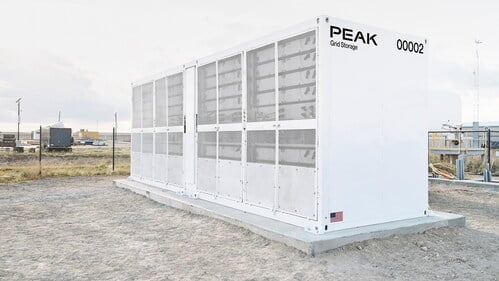
Earlier this month, coalition member Peak Energy announced it would partner with US automotive giant General Motors (GM) to develop prototype Na-ion cells at its Wallace Battery Cell Innovation Center R&D facility in Warren, Michigan.
Peak Energy CEO Landon Mossburg said the company’s proprietary BESS will be “safer, cheaper, and faster to deploy” than competing technologies, enabling the US to meet growing energy demand without raising consumer costs. The company claims 20% cost reductions, 99% uptime, and lower energy waste via passive cooling versus lithium iron phosphate (LFP) systems.
Despite Na-ion’s wider operating temperature tolerance, performance varies significantly with heat. CATL’s new Na-ion cells show a potentially far longer cycle life at 25°C than at 45°C.