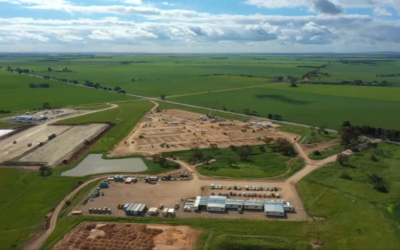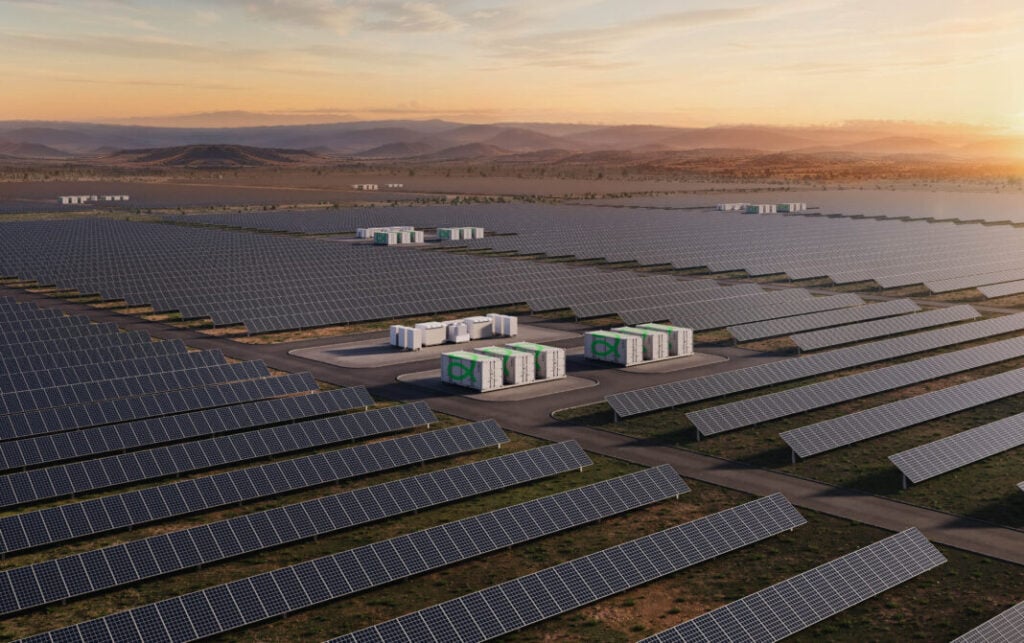
Chinese battery manufacturer CATL will supply 2,400MWh of battery energy storage systems (BESS) for Edify Energy’s Smoky Creek and Guthrie’s Gap Solar Power Stations in central Queensland.
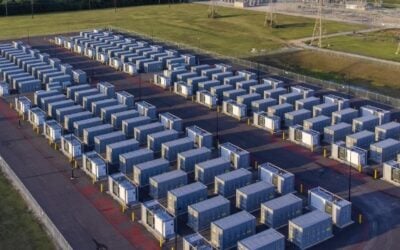
The two projects together comprise a 600MW hybrid solar-plus-storage plant featuring 720MWp of solar generation and 600MW/2,400MWh of battery storage.
Each plant operates as an independent 300MW generating unit, with both connecting to Powerlink’s 275kV network through a new terminal station. The CATL battery storage systems will be integrated with grid-forming inverters in a reverse DC-coupled hybrid configuration, a design Edify has said will enhance power network stability and resilience.
The projects are located approximately 40km north of Biloela on the traditional lands of the Gaangalu Nation People in Banana Shire, central Queensland.
Try Premium for just $1
- Full premium access for the first month at only $1
- Converts to an annual rate after 30 days unless cancelled
- Cancel anytime during the trial period
Premium Benefits
- Expert industry analysis and interviews
- Digital access to PV Tech Power journal
- Exclusive event discounts
Or get the full Premium subscription right away
Or continue reading this article for free
Construction is being delivered by DT Infrastructure, the Australian subsidiary of Malaysian contractor Gamuda. The projects are targeting commercial operations in 2028.
Last month, Edify reached financial close on both projects, backed by a consortium of 14 domestic and international lenders and supported by shareholder La Caisse, the Canadian institutional investor that acquired Edify in a AU$1.1 billion (US$780 million) transaction.
The projects are underpinned by a 20-year hybrid services agreement with Rio Tinto, under which the mining company will purchase 90% of the power and storage capacity to supply its Gladstone aluminium operations with lower-carbon firmed electricity.
Both projects have also secured long-term underwriting through the federal government’s Capacity Investment Scheme, adding a second revenue backstop alongside the Rio Tinto offtake.
The combination of CIS underwriting, a 20-year corporate offtake, and now a confirmed battery supply agreement from CATL completes the key commercial and technical building blocks needed to advance construction at scale.
CATL’s Australian footprint
The Smoky Creek and Guthrie’s Gap supply agreement is one of CATL’s largest confirmed battery storage deliveries in Australia to date.
The Chinese manufacturer has been building its presence in the Australian market across both grid-scale stationary storage and electric vehicle (EV) battery supply, with the country’s accelerating BESS pipeline creating growing procurement opportunities for manufacturers with proven large-format systems.
The reverse DC-coupled hybrid configuration specified for the Edify projects is notable for its technical design.
In a DC-coupled system, solar generation and battery storage share a common DC bus before conversion to AC for grid export, improving round-trip efficiency and reducing balance-of-system costs compared to separately connected AC-coupled designs.
The reverse DC-coupled variant, where the battery is connected on the grid side of the inverter rather than behind it, is optimised for projects where the battery needs to charge from the grid as well as from co-located solar, giving operators greater dispatch flexibility.
In an interview with ESN Premium, last year, Neha Sinha, product manager for energy storage systems at Wärtsilä Energy Storage, discussed how DC-coupled hybrid systems address emerging market challenges and maximise system potential by improving operational flexibility and reducing capital costs through shared inverter infrastructure.
The world’s biggest lithium-ion battery manufacturer has been expanding its energy storage system (ESS) integration and supply footprint globally, recently supplying 1.5GWh for Grenergy’s long-term tolled Spanish BESS projects, with battery storage remaining a key revenue driver for clean energy technology suppliers as the sector scales.
The testing platform also supports CATL’s push into alternative chemistries. In April 2026, the company signed a 60GWh sodium-ion agreement with Hyperstrong, a deal that was described as a threshold crossed, though not a silver bullet, signalling growing commercial interest in sodium-ion (Na-ion) technology for cost-sensitive applications.
Most recently, the Chinese manufacturer opened what it describes as the “world’s largest and most comprehensive testing and validation platform for energy storage systems” at its headquarters in Ningde, China.
Interested in Australia? Read Energy-Storage.news’ Energy Storage Summit Australia coverage and related content.