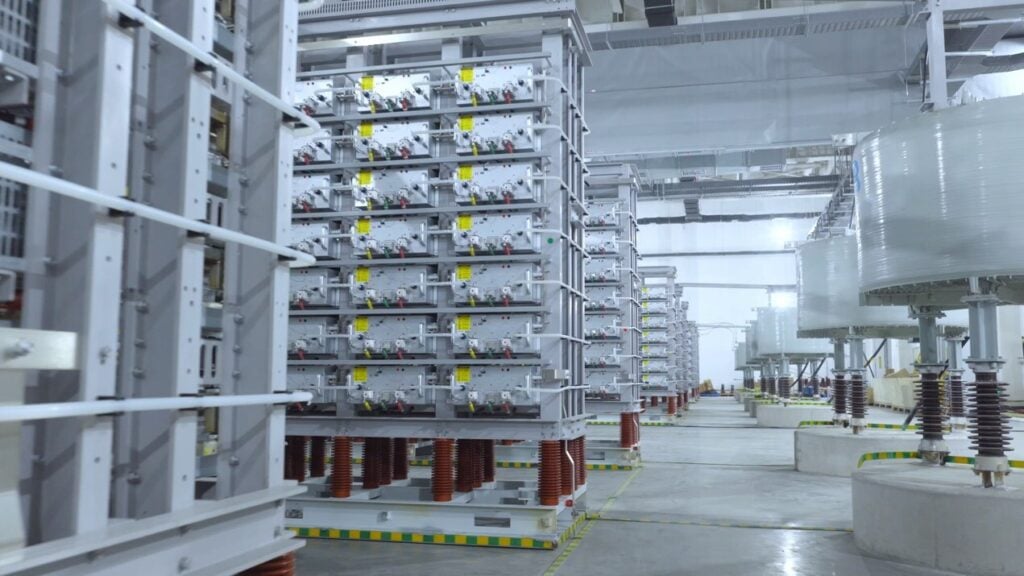
CATL has opened what it describes as the “world’s largest and most comprehensive testing and validation platform for energy storage systems” at its headquarters in Ningde, China.
The facility, which CATL says spans over 100,000 square metres, is designed to simulate real-world operating conditions for battery energy storage systems (BESS) across multiple grid applications, including frequency regulation, peak shaving, renewable energy integration and black start capabilities.
The company said the platform can test systems ranging from individual battery cells to multi-megawatt containerised units, with the capacity to validate performance across temperature extremes, cycling patterns, and grid disturbance scenarios.
CATL framed the launch as a response to growing industry demand for independent, large-scale validation infrastructure to de-risk battery deployments before they reach commercial operation.
Try Premium for just $1
- Full premium access for the first month at only $1
- Converts to an annual rate after 30 days unless cancelled
- Cancel anytime during the trial period
Premium Benefits
- Expert industry analysis and interviews
- Digital access to PV Tech Power journal
- Exclusive event discounts
Or get the full Premium subscription right away
Or continue reading this article for free
The company said the platform will be available to external clients, including project developers, utilities, and equipment manufacturers, marking a shift toward open-access testing services in a sector where performance data has historically been proprietary or limited in scope.
The move comes as battery storage projects face increasing scrutiny over performance guarantees, degradation rates and safety protocols.
Grid operators and financiers have called for more transparent, standardised testing to support bankability and long-term asset management, particularly as project sizes grow and revenue models become more complex.
CATL said that the ability to validate system performance under controlled conditions before deployment could reduce technical risk for lenders and improve project financing terms.
The facility’s scale and scope position CATL to set de facto industry standards for performance validation, particularly in markets where regulatory frameworks for energy storage testing remain underdeveloped.
Whether the platform will operate as a neutral third-party service or primarily support CATL’s own product development remains unclear, though the company indicated it intends to offer testing services commercially.
The world’s biggest lithium-ion battery manufacturer has been expanding its energy storage system (ESS) integration and supply footprint globally, recently supplying 1.5GWh for Grenergy’s long-term tolled Spanish BESS projects, with battery storage remaining a key revenue driver for clean energy technology suppliers as the sector scales.
The testing platform also supports CATL’s push into alternative chemistries. In April 2026, the company signed a 60GWh sodium-ion agreement with Hyperstrong, a deal that was described as a threshold crossed, though not a silver bullet, signalling growing commercial interest in sodium-ion (Na-ion) technology for cost-sensitive applications.