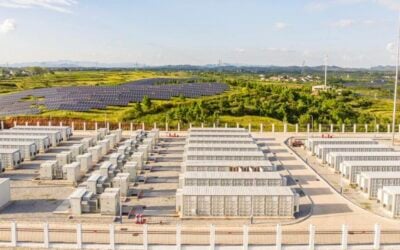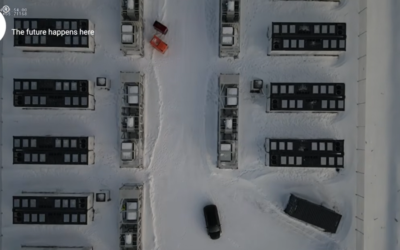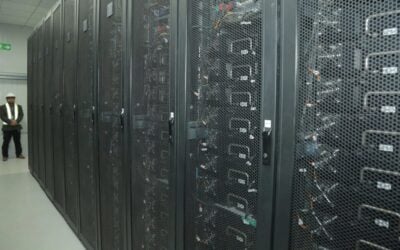
Environmental services company Veolia has been selected to operate and maintain a 350MW microgrid to power an AI data centre campus in New Albany, Ohio, US, which includes a 430MWh BESS.
The microgrid is expected to support 35-40 full-time jobs and adds to growing evidence that the region is becoming a hub for AI-driven energy infrastructure investment.
Announced 30 July, the news comes one day after independent power producer (IPP) Eolian began construction on the Flint Grid battery storage project in Licking County (New Albany is primarily located in Franklin County, with a small portion extending into Licking County)—a 200MW/1.06GWh facility located next to New Albany data centre and industrial loads.
Project details
The microgrid will integrate gas engines, linear generators, and battery energy storage systems to deliver continuous power for AI operations. Key specifications include:
Try Premium for just $1
- Full premium access for the first month at only $1
- Converts to an annual rate after 30 days unless cancelled
- Cancel anytime during the trial period
Premium Benefits
- Expert industry analysis and interviews
- Digital access to PV Tech Power journal
- Exclusive event discounts
Or get the full Premium subscription right away
Or continue reading this article for free
- Generation capacity: 350MW
- Battery storage: 430MWh
- Availability target: 99.9%
- On-site workforce: 35-40 full-time personnel operating 24/7
Veolia will oversee operations integration, commissioning support, and long-term plant operations under a performance-based contract. The company was brought into the project before commercial operations to coordinate among multiple contractors and equipment manufacturers working under compressed construction timelines.
The Veolia microgrid project and Eolian’s Flint Grid facility underscore central Ohio’s rapid emergence as a centre for energy infrastructure supporting AI and data centre loads.
Flint Grid is the first large-scale battery energy storage system (BESS) to qualify for the PJM capacity market and the largest BESS to clear the 2027/28 Residual Capacity Auction, representing more than 50% of all new battery storage capacity in that capacity year. It is also the first grid-scale BESS permitted by the Ohio Power Siting Board and will be the largest BESS built to date in Ohio and PJM when it enters commercial operation ahead of the 2027-2028 capacity year.
Grid interconnection challenges
The shift toward on-site generation reflects mounting challenges securing timely grid interconnections. Veolia cited Lawrence Berkeley National Laboratory, which recently stated that new power projects in the US spend an average of nearly five years in interconnection queues.
By generating power independently, data centre developers can accelerate deployment timelines, though this approach requires significant capital investment in generation and storage infrastructure and shifts operational complexity from utilities to private operators.
The Veolia project is part of the company’s Data Centre Resource 360 offering, which addresses energy, water, and waste management for data centre operations. Veolia recently partnered with Amazon Web Services on a sustainable cooling project in Mississippi featuring reclaimed water cooling and is working on mobile water solutions for data centres in other locations to reduce impacts on local water resources.
The developer of the AI data centre campus was not disclosed.
Energy-Storage.news Premium recently spoke with Bryen Alperin and Sophie Brkovic of tax equity investor Foss & Company about financing microgrids.
Alperin noted, “The big banks—the top four or five in the country—may still prefer to do utility-scale projects because they can get more scale with fewer projects. But for groups like Foss that are syndicators able to navigate the complexities of these distributed generation (DG) projects more efficiently, there is growing interest in microgrids.”