Update 14 September 2026: Vattenfall representatives offered more details and responded to Energy-Storage.news enquiries about this item after initial publication. According to a spokesperson, Vattenfall’s in-house trading and optimisation team will operate the Brunsbüttel BESS on a fully merchant basis.
“The Brunsbüttel battery is being developed as a flexibility asset that will help balance electricity supply and demand, support grid stability and enable a more efficient integration of renewable generation.”
The company is in the final stages of establishing the project’s supply chain, and expects to share further details and key contracts in due course. Developing the asset at the site of the nuclear plant means available land and existing high-capacity grid connection provide “attractive conditions for large-scale flexibility projects,” the spokesperson said, although Vattenfall has no other plans to develop facilities such as renewable generation at the site.
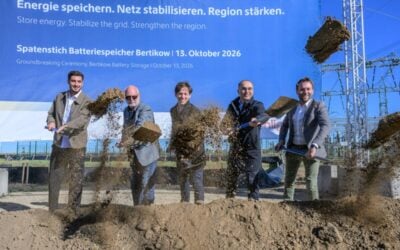
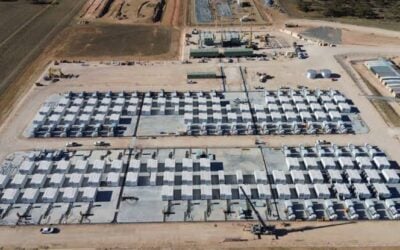
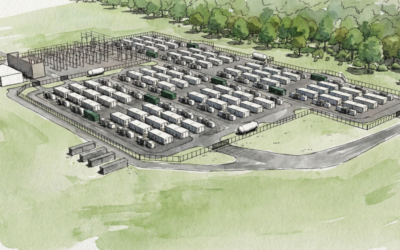
Swedish multinational power company Vattenfall has taken a final investment decision (FID) to proceed with a 254MW/1,000MWh battery storage project in Germany.
Try Premium for just $1
- Full premium access for the first month at only $1
- Converts to an annual rate after 30 days unless cancelled
- Cancel anytime during the trial period
Premium Benefits
- Expert industry analysis and interviews
- Digital access to PV Tech Power journal
- Exclusive event discounts
Or get the full Premium subscription right away
Or continue reading this article for free
One of the country’s and Europe’s largest battery energy storage system (BESS) projects will be built at the site of the Brunsbüttel nuclear power plant in Schleswig-Holstein, northern Germany.
The nuclear plant, 67% owned by Vattenfall, was decommissioned in 2019 after just over 40 years of service and is still being dismantled. The energy company received planning approval from Brunsbüttel city council for the battery storage project in December 2025.
The battery storage system and associated grid connection infrastructure are scheduled to go into commercial operation by the end of 2028. It will be connected to the 380kV grid of the region’s transmission system operator (TSO), 50Hz. It has become increasingly common to see renewable energy and battery storage deployed at former thermal generation sites, including nuclear, coal and gas power plants, which offer suitable land and crucially, grid access, while enabling the economic redevelopment of communities formerly dependent on legacy energy industries.
Vattenfall did not provide a detailed explanation of the applications the BESS will serve, or whether its route-to-market (RTM) trading and optimisation would be carried out by the energy company’s in-house team, which provides these services to other BESS asset owners. Energy-Storage.news has reached out to the company and will update this article on receipt of a response.
The company’s announcement comes amid a boom in the development and construction of large-scale BESS assets for the German grid. The market offers wholesale trading opportunities and a range of tolling and offtake options that have helped unlock financing.
The Vattenfall project, if completed today, would be Germany’s biggest operational BESS, but others are already in construction that will dwarf it. BESS owner-operator BW ESS recently broke ground on the 1,000MW/5,700MWh Klostermansfeld BESS in Saxony-Anhalt, and utility LEAG is currently building the 1GW/4GWh GigaBattery Jänschwalde 1000 as well as the 400MW/1.6GWh GigaBattery Boxberg 400 project, to give just three examples.
In a recent interview, BW ESS senior commercial manager Nikhil Koppaka told Energy-Storage.news that Germany is “one of the most attractive BESS markets in Europe,” with the market “supported by a strong buildout of renewable generation, increasing price volatility, and deep intraday liquidity, all of which create a compelling case for large-scale battery storage.”
Germany has moved beyond early-stage development and into “true delivery,” Koppaka said. The main challenge now is in ensuring grid access and regulatory clarity keep pace with the market’s momentum, issues critical to maintaining investor confidence and enabling Germany to realise its full potential as a leading energy storage market in Europe, he said.
For Vattenfall, the BESS at Brunsbüttel will almost double the company’s operational battery storage capacity, which currently comprises 150MW in operation and 120MW under construction. Most of its other battery storage installations are at solar PV or wind plants. Meanwhile, the company’s in-house trading and optimisation arm aims to optimise a portfolio of up to 1,500MW by 2029 for third-party asset owners.
Energy Storage Summit Germany, a dedicated, standalone conference focused entirely on the German market, takes place 15-16 September 2026 at Leonardo Royal Hotel Berlin Alexanderplatz, Berlin. Hosted by our publisher Solar Media (part of the Informa Group), the summit will unite the country’s leading investors, developers, policymakers, TSOs, manufacturers, optimisers, and innovators to explore the opportunities, challenges, and pathways for energy storage deployment in Germany. Energy-Storage.news readers can get a 20% discount on tickets at checkout with the code ESN20. For more details, visit the website.