
We hear from Nikhil Koppaka, senior commercial manager for BESS owner-operator BW ESS on the big opportunities and challenges in Germany’s grid-scale energy storage market.
Koppaka will be among industry executives speaking at the Energy Storage Summit Germany 2026, which is just around the corner, on the 15-16th September in Berlin. (Use our code ESN20 for a 20% discount on tickets.)
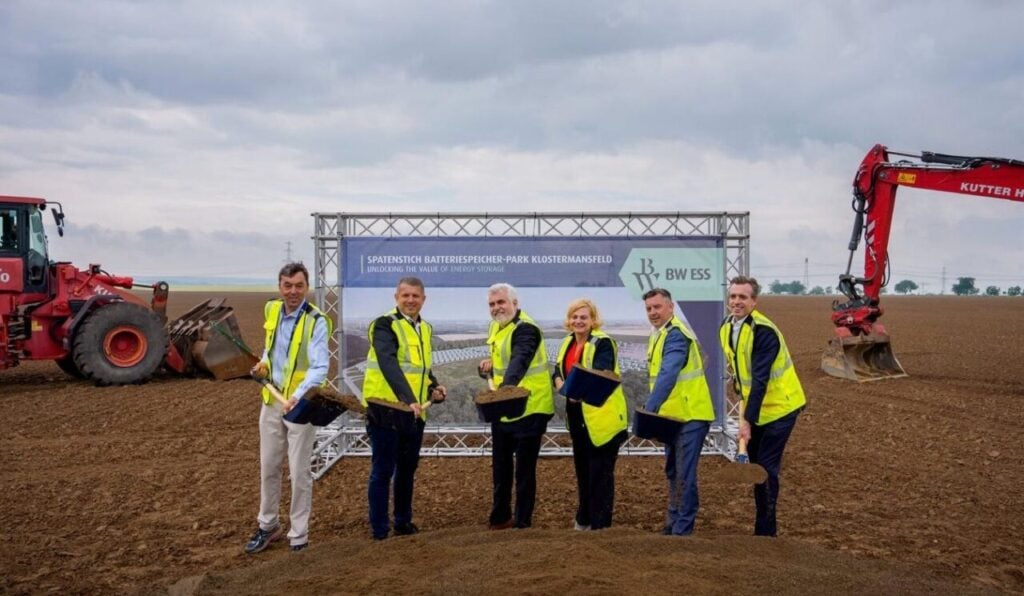
BW ESS announced early-stage construction works on a 1GW/5.7GWh battery energy storage system (BESS) in Germany in June, its first in the country and one of the largest on the continent. We caught up with executive director Roberto Jimenez about the project a few weeks later (subscription required). Germany is its fourth country with projects in operation or construction, after the UK, Sweden and Australia (see all coverage of BW ESS here).
A big theme in that interview was grid fees and the August 2029 exemption, clarification of which in May enabled BW ESS to proceed with its Germany plans. They are still a big talking point, in this Q&A and those with other event speakers (see here), along with flexible connection agreements (FCAs), tolling and more.
Try Premium for just $1
- Full premium access for the first month at only $1
- Converts to an annual rate after 30 days unless cancelled
- Cancel anytime during the trial period
Premium Benefits
- Expert industry analysis and interviews
- Digital access to PV Tech Power journal
- Exclusive event discounts
Or get the full Premium subscription right away
Or continue reading this article for free
Challenge is now ‘ensuring grid access and regulatory clarity keep pace with that market momentum’
Energy-Storage.news: How would you characterise the current state of the German energy storage market, in terms of the key trends, major successes and achievements, and challenges still to be overcome?
We see Germany as one of the most attractive BESS markets in Europe. The market is supported by a strong buildout of renewable generation, increasing price volatility, and deep intraday liquidity, all of which create a compelling case for large-scale battery storage.
A key trend is that the sector is now moving beyond early-stage development and into true delivery. Large projects are progressing from concept and permitting into investment decisions, construction and commissioning. BW ESS’s recent groundbreaking of the 1,000MW/5,700MWh Klostermansfeld BESS in Saxony-Anhalt, one of Europe’s largest battery storage projects, is a clear example of this shift.
This is a major achievement for the German market. It demonstrates that investor appetite is strong, that large-scale storage can be deployed in Germany, and that BESS is increasingly recognised as essential infrastructure for integrating renewables, supporting system flexibility and strengthening security of supply.
The main challenge now is ensuring that grid access and regulatory clarity keep pace with that momentum. In particular, further clarity is needed on grid fees, flexible connection agreements, BKZ costs, system services and connection queue management. Addressing these issues will be critical to maintaining investor confidence and enabling Germany to realise its full potential as a leading European energy storage market.
Is there any clarity on what grid fees/network charges will look like for BESS coming online after 4 August 2029?
BW ESS welcomes the overall direction of the proposals, which we believe address several of the key concerns raised by the storage industry during the consultation process.
In our view, the proposed framework, which envisages energy-based grid fees alongside a reasonable capacity-based charge for projects coming online after the deadline, represents a balanced compromise and provides investors with the clarity they need.
However, some uncertainty remains, particularly around the future design of dynamic grid charges. These charges are expected to be developed through separate follow-up determinations.
Overall, we see the draft framework as a constructive and balanced step forward. It provides greater clarity for the sector and supports the development of large-scale battery storage in Germany. We would urge Bundesnetzagentur (Federal Grid Agency) to implement the core proposals swiftly, while ensuring that any future dynamic grid charge regime is designed carefully and consistent with flexible grid connection agreements.
What opportunities and challenges do you see with the capacity market (CM) for energy storage?
A well-designed capacity market could be positive for storage because it would add a more predictable revenue stream alongside merchant and ancillary revenues. The key is ensuring storage is considered fairly: derating, duration requirements, penalties, revenue stacking and locational signals all need to reflect the real system value batteries provide. Germany should take the lessons learned here from other European countries like the UK, Belgium or Italy on how to design a technology-open market that enables a fair competition between various technologies. This will also enable policy makers to do a cost-benefit analysis of various technologies and move the German policy discussion away from ideological arguments to what makes most sense from a system perspective.
What are the other key policy questions and grey areas which German industry and government still need to find solutions for, to unlock storage’s full potential for the grid?
For FCAs, there is a key risk in predictability and standardisation. In many cases, the detailed terms only become clear after significant development capital has already been committed, creating a higher-risk environment for investors. Given the limited operational track record of how FCAs affect asset revenues in practice, they can also make it more challenging to secure contracted revenues and, by extension, project financing. FCAs can be a real accelerator for large battery storage projects. However, without uniform national rules, they remain an individual case instrument with considerable legal and financing uncertainty. Alongside this, grid operators likely need to have an incentive to provide grid connections that are less constrained to enable the build-out of necessary BESS capacities.
For BKZ (Baukostenzuschuss), a one time payment to the grid operator for the expansion of the electricity grid, the key issue is ensuring charges are cost-reflective and do not penalise batteries that can help relieve congestion. We believe that linking BKZ discounts to grid-friendly locations or flexible operation could be a sensible direction. For the grid connection backlog, Germany should consider a more transparent and maturity-based process. Therefore, we appreciate the Reifegradverfahren (Maturity Assessment Procedure) that recently has been implemented by the German TSOs.
However, there is still a lot to do to clean up the existing backlog at DSO and TSO. From our experience, the regulators and grid operators can learn from international experience like the grid connection reform process in the UK. The current volume of applications is above realistic near-term buildout, so prioritising also existing grid connections based on readiness, deliverability and system benefit would help relieve this backlog in the long-term.
How is the financing of BESS projects evolving?
The financing market for BESS projects is becoming more selective, more structured and more sophisticated. As the sector matures, lenders are moving beyond headline market opportunity and looking much more closely at the fundamentals of each project.
In particular, financing parties are increasingly focused on grid connection certainty, route-to-market strategy, downside revenue protection, optimiser quality, OEM bankability and exposure to regulatory change. These factors are now central to how projects are assessed, priced and ultimately financed.
Therefore, we see a good appetite for larger projects from experienced operators that have a bankable revenue and offtake strategy in place.
How is the balance between merchant and tolling/fixed revenue schemes changing? In other words, to what extent are offtake and contracted revenues key to getting project finance?
As the German market continues to develop, it is beginning to resemble the more mature UK market, where tolls and floors have become established and widely used offtake structures. Several tolling and virtual tolling arrangements have now been executed in Germany, demonstrating growing market depth and counterparty appetite. Going forward, we expect to see more blended structures that support debt sizing while preserving some merchant upside, such as partial tolls, floors and hybrid revenue arrangements.
What are the key evolutions in how BESS projects are being optimised and dispatched in the German market?
As several optimisers now have operational assets, the assessment of optimiser quality is shifting from backtests and forecasts to realised portfolio performance. However, given limited transparency on actual results and the practical complexity of switching optimisers once an asset is operational, including the potential need to requalify for certain services, selecting the right counterparty before COD is becoming increasingly important.
As for asset revenues, multi-market dispatch remains the primary strategy for BESS in Germany. For longer-duration assets, such as our Klostermansfeld project at over 4-hours, energy markets including day-ahead, intraday and aFRR energy are expected to remain central to the revenue stack. We also see a larger role for other system services that can be provided to the grid operators like voltage, inertia and black start.
What is the current mix of ‘full wrap’ and ‘multi-contracting’ for BESS project delivery, and is this/how is this expected to change going forward?
We see both approaches in the market. Experienced builders and operators will go for multi-contracting since it provides better value to the project.
What are the factors and strategies that are determining which BESS suppliers succeed in the German energy storage market?
While we cannot comment definitively on what determines whether a supplier “succeeds” in the German energy storage market, our experience as a global energy storage owner-operator gives us a strong perspective on the qualities that matter most.
Across our international portfolio, we have built close relationships with experienced, reliable and safety-focused suppliers across the BESS value chain. For our German projects, we aim to draw on this global supplier network and apply the lessons learned from other advanced storage markets.
In our view, the suppliers best positioned to support the German market are those that can combine proven technical performance, robust safety standards, bankability, delivery reliability and the ability to operate efficiently in a fast-moving project environment. As large-scale BESS projects in Germany continue to grow in size and complexity, execution capability, supply-chain resilience and a strong understanding of local grid and regulatory requirements will become increasingly important.
For BW ESS, the ability to bring international experience into the German market, work with trusted partners, and move at pace without compromising quality or safety has been an important factor in our progress to date.
How is the role of TSOs and DSOs in the German energy storage market evolving?
TSOs and DSOs are becoming increasingly important enablers of the next phase of Germany’s BESS build-out. As more large-scale storage projects enter development, grid operators will play a critical role in facilitating grid connections, coordinating technical requirements, and helping ensure that projects can be commissioned on time.
From our experience across multiple markets, successful BESS deployment depends on a close and constructive partnership between project owners and grid operators. A strong mutual understanding of project timelines, grid needs and operational requirements is essential to delivering storage assets efficiently and safely.
At the same time, the right regulatory framework remains crucial. In Germany, there is still room to improve clarity and consistency, particularly around the standardisation of flexible grid connection agreements. Greater standardisation would help reduce uncertainty, accelerate project delivery and support the integration of storage in a way that benefits both the grid and the wider energy system.
