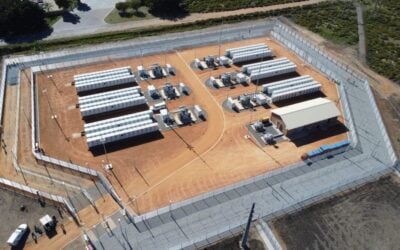
A UK grid storage trial in Leighton Buzzard. Source: S&C Electric.
The UK remains on track for a big push on energy storage with the latest budget backing changes proposed in a key report and an imminent consultation looking to shake-up the role of network operators.
Last week, chancellor George Osborne’s budget confirmed backing for energy storage with a £50 million (US$71 million) allocation for R&D and a pledge to back the findings of the National Infrastructure Commission’s (NIC’s) Smart Power report. The NIC is a new cross-party agency set up with a reported budget of £100 billion across all sectors and its Smart Power study suggested incentivising Distribution Network Operators (DNOs) to deploy energy storage. At present, DNOs are not allowed to invest in or own generation assets.
A spokesman for the government Department of Energy and Climate Change (DECC) could not give specifics but reiterated the department’s commitment to energy storage.
“Our priority is providing clean, secure energy at the lowest possible price for families and businesses. We recognise the potential for storage technologies to help us use energy flexibly,” they said.
Try Premium for just $1
- Full premium access for the first month at only $1
- Converts to an annual rate after 30 days unless cancelled
- Cancel anytime during the trial period
Premium Benefits
- Expert industry analysis and interviews
- Digital access to PV Tech Power journal
- Exclusive event discounts
Or get the full Premium subscription right away
Or continue reading this article for free
Any changes in the treatment of DNOs or Distribution Service Operators (DSOs) would be regulated by Ofgem. It told Energy Storage News that the imminent consultation on energy storage would look to address several barriers in the UK together.
“We recognise that the status of storage in the energy market rulebook does need to be addressed,” a spokesman said in reference to the absence of a dedicated definition of where storage sits in the electricity market.
“We’ll be setting out our thinking and calling for evidence on these issues so that we can tackle it all together and come up with a set of proposals that will really make the electricity system more flexible in the future.
In addition, Ofgem said it would be looking to ensure DNOs participated but it was too early to say whether that would involve establishing incentives as the NIC report suggested.
“At the moment the distribution networks really just take power off the national grid itself and transfer it to homes and businesses but in future they are going to have to actually do more system operation and that means they take more control of managing flows on their actual grids,” he added.
Responding to a government consultation can take the form of a detailed analysis of the issues at stake or a simple statement of your preferences that can be drafted and sent in minutes. Lessons from the solar industry show that wide participation in a consultation can boost stakeholder’s say in the end result.
In January, a DECC representative stated that the department would be holding its own Call For Evidence, run on similar lines to a consultation, during this year and welcomed input from the industry, which was reiterated during DECC’s participation at a Solar Media-hosted round table in London in February.
Ghost of Christmas future
Simon Daniel, CEO of UK energy storage manufacturer Moixa said lessons from other markets could inform how the UK grid develops.
“To understand the future grid you should look at Germany, it’s the Ghost of Christmas Future for the UK grid,” he said. “It shows what happens when a lot of renewables are put on a traditional grid infrastructure. The consequences are significant problems for traditional utility and network operators in recovering their costs during the day when solar is generating a lot of the intra-day power. As a consequence peak prices have risen considerably to 29 euro cents (US$0.33) per kwh.”
This reinforces the economic case for storage both by absorbing some of that generation and offering a route for customers to avoid exposure to peak pricing, Daniel said.
Solar Media is hosting the Energy Storage Summit at Twickenham Rugby Stadium, London on 28 April as part of the UK Clean Energy Summit.