Trina Storage has been selected to supply the battery energy storage system (BESS) for Stage One of Frontier Energy’s Waroona Renewable Energy Project, located 120km south of Perth in Western Australia.
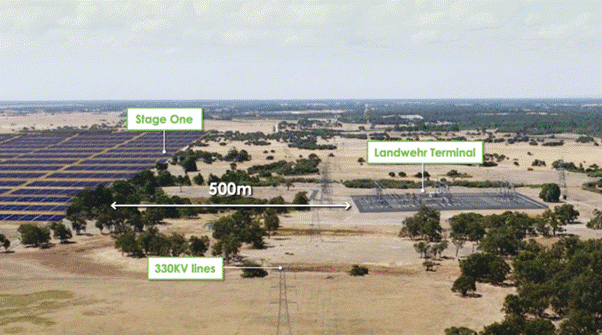
Trina Storage, Trina Solar’s utility energy storage business, said Stage One pairs a 132MW solar facility with an 81.5MW/562MWh, 6.9-hour duration BESS on Western Australia’s main electricity grid. First generation is scheduled from 2028.
Trina Storage will supply its Elementa utility-scale DC solution, built around lithium iron phosphate (LFP) cells produced at the company’s Changzhou plant in China, incorporating liquid cooling and layered fire-safety systems, including heat, gas, and smoke detection.
Warrick Stapleton, head of sales for APAC at Trina Storage, said close collaboration with developers has become increasingly important as utility-scale storage projects grow more sophisticated.
Try Premium for just $1
- Full premium access for the first month at only $1
- Converts to an annual rate after 30 days unless cancelled
- Cancel anytime during the trial period
Premium Benefits
- Expert industry analysis and interviews
- Digital access to PV Tech Power journal
- Exclusive event discounts
Or get the full Premium subscription right away
Or continue reading this article for free
“We’re pleased that Frontier Energy selected Trina Storage for this project. Our team worked closely with Frontier throughout the procurement process to understand the project requirements and demonstrate how our technology could support their objectives,” Stapleton said.
“As Western Australia continues its energy transition, projects such as Waroona will play an increasingly important role in providing reliable, dispatchable capacity to the South West Interconnected System (SWIS),” he added.
Frontier Energy chief executive Adam Kiley said Stage One forms the foundation of the company’s broader plans for the site.
“Western Australia is undergoing an energy transition, and Waroona Energy Park has the potential to support it through our integrated solar and battery strategy,” Kiley said.
“Stage One is designed to support a more reliable and flexible electricity system.”
The agreement includes a 20-year warranty and performance guarantees, terms Trina Storage said would underpin the project’s financing requirements.
A duration requirement shaped by Western Australia’s capacity market
The BESS specification itself reflects the mechanics of the Wholesale Electricity Market (WEM), which covers Western Australia’s SWIS and operates separately from the National Electricity Market (NEM), which spans the eastern and southern states.
Frontier Energy has said the design grew from an initial 80MW/4.75-hour BESS to the current 81.5MW/6.9-hour configuration to comply with the WEM’s Reserve Capacity Mechanism, which sets a minimum 6-hour duration requirement for batteries seeking capacity payments.
Frontier’s path to Stage One has not been straightforward. The developer secured an AU$110 million equity raise in June after the project was halted in October 2024, when it failed to secure Reserve Capacity Credits from the Australian Energy Market Operator (AEMO)that had underpinned its original revenue assumptions.
Trina Storage previously partnered with Pacific Green on a 250MW/500MWh BESS in South Australia, supplying cells and integrating battery cabinets for a project since sold to Intera Renewables for AU$460 million.
Trina Solar has also pursued its own project pipeline in the state, including a 660MW/2,640MWh BESS proposal in Wellesley, Western Australia.
Stapleton has previously described the shift in project scale playing out across the region.
Speaking to ESN Premium, Stapleton said developers across Australia, India, Japan and the Philippines are increasingly moving from 10-30MWh deployments to 500MWh or larger systems, often as their first major project, a shift he said has made integration confidence, rather than proving the underlying technology, the industry’s central challenge.
He has also pointed to Australia as a testbed whose grid-forming and hybrid project experience informs Trina’s approach elsewhere in the region. Trina Storage has separately signed a 1GWh memorandum of understanding to supply battery storage in Japan, where transport and land constraints have led the company to offer a smaller 1.56MWh unit alongside its standard containers.
Never miss an Australian energy storage story. Sign up for our Australia newsletter and get the latest project announcements, policy updates and market analysis delivered directly to you.