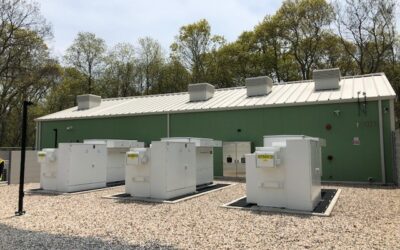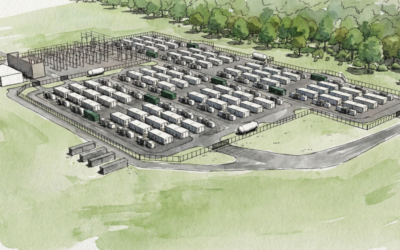
Proposals for two large-scale battery storage facilities have been put before decisionmakers at Riverhead Town Council on New York’s Long Island.
Plans for the projects are under review and comprise a 100MW/200MW battery energy storage system (BESS) at one site and a 60MW/120MWh BESS at another, according to regional news outlet Riverhead Local.
For both projects to get approval, exemptions to local zoning laws would have to be granted, as the battery facilities do not fall under permitted use for the land selected under existing designations.
The larger project is being proposed by developer Hexagon Energy. Called Riverhead Energy, the 100MW BESS and associated infrastructure would be built on approximately 1 acre of a 3.5-acre project site currently under industrial use.
Try Premium for just $1
- Full premium access for the first month at only $1
- Converts to an annual rate after 30 days unless cancelled
- Cancel anytime during the trial period
Premium Benefits
- Expert industry analysis and interviews
- Digital access to PV Tech Power journal
- Exclusive event discounts
Or get the full Premium subscription right away
Or continue reading this article for free
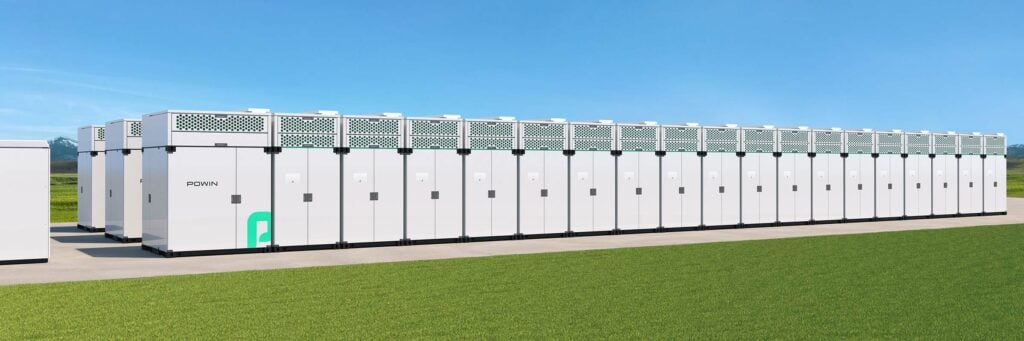
BESS system integrator and manufacturer Powin Energy has already been contracted as the battery system supplier to the project with its lithium iron phosphate (LFP) technology.
Riverhead Energy would help alleviate grid constraints in a particularly congested area of Long Island’s Suffolk County, Hexagon Energy claimed.
The use of existing industrial land means there will be limited disturbance to nature and the environment, while the site is also close to grid infrastructure through which it could connect to the network, the company has said.
Hexagon Energy was founded in 2015. The Charlottesville, Virginia-headquartered developer has already developed more than 1GW of clean energy projects representing around US$2.5 billion investment.
The other BESS being considered is under development through a partnership between commodities trading giant Trafigura and power and infrastructure developer Rhynland Energy, Riverhead Local said. The latter is developing battery storage projects in New York State along with EV charging infrastructure in the US Northeast.
As reported by Energy-Storage.news in March, Rhynland’s partnership is with renewables investment and development group Nala Renewables, Trafigura’s joint venture (JV) with investment manager IFM Investors.
Rhynland and Nala Renewables are working together on a pipeline of four BESS projects, totaling 280MW, all on the Long Island peninsula.
The 60MW/120MWh BESS project put before the Riverhead Town Council is called EC Battery Storage, with the developers trading under the name Edwards Calverton Battery Storage LLC for it. Proposed for construction on another industrial site, this one adjacent to a Long Island Power Authority (LIPA) substation that a number of proposed solar farms would also be closely situated to.
Replacing Long Island’s fleet of peaker plants
With New York aiming for its electricity sector to go emissions-free by 2040 and setting a policy target to deploy 6GW of energy storage in the state by 2030, decarbonising Long Island has been identified as a challenging aspect of that transformation.
The peninsula is home to 4,357MW of fossil fuel-fired peaker plants. A 2020 study by Strategen Consulting found that those plants, which operate on average for around 15% of the year but cost LIPA’s customers about half a billion dollars a year in maintenance cost alone, could largely be replaced by renewables and energy storage cost-effectively by 2030.
In an interview with this site in August 2021, Taylor Quarles of energy storage developer Key Capture Energy said that those “extremely expensive” thermal power plant resources are largely coming offline during this decade as their contracts run down, offering an opportunity for batteries to come in.
“They’re spread across a variety of plants across the island, largely sort of at the periphery of the island, where you can site a large fossil facility. But the beauty of energy storage is that we can target their specific locations,” Quarles said.
Riverhead Local reporter Denise Civiletti wrote on 25 August that applications for both projects had been reviewed by Riverhead Town’s planning department but were denied by the town zoning officer, while the planning department also told teams behind both projects that their applications were considered incomplete.
A possible way forward appears to be to apply to the Zoning Board of Appeals, which could issue a variance determining that the use of land for BESS is not covered by existing rules and making an exception. Meanwhile, the Riverhead Town Board is also working to create legislation to allow special permitting for battery storage projects in various pockets of industrial, agricultural and some residential areas.