Tesla deployed 1,295MWh of energy storage in the third quarter of 2021 and has recorded a 96% compound annual growth rate (CAGR) in deployments over a four-year period.
In reporting its latest quarterly financial results, Tesla said energy storage deployments for the period represent a 71% increase year-on-year from Q3 2020 and a slight increase from 1,274MWh in the previous quarter of this year.
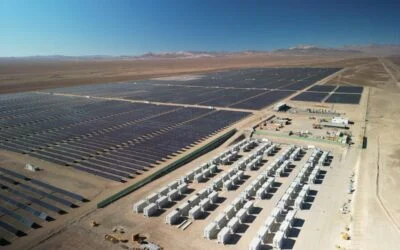
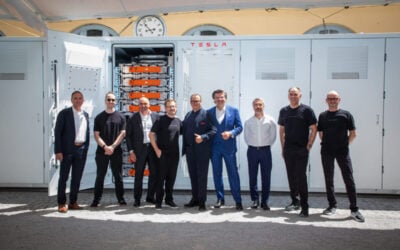
As with Q2 2021, the company said this was driven mainly by “strong deployments” of its Megapack utility-scale battery energy storage system (BESS) solution. Tesla also announced in September that it has broken ground on a 40GWh factory making Megapacks in California, to add to production capacity from its Nevada Gigafactory 1 facility.
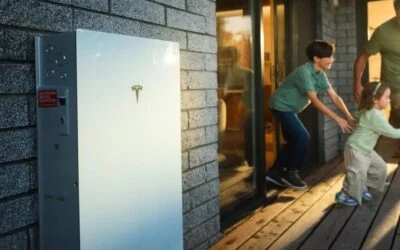
Tesla launched its range of stationary energy storage in 2015, then including the residential Powerwall, commercial and industrial (C&I) Powerpack — which could be stacked for large-scale and utility applications, it then launching Megapack later in 2019, offering stackable 1.5MW output, 3MWh capacity units.
Try Premium for just $1
- Full premium access for the first month at only $1
- Converts to an annual rate after 30 days unless cancelled
- Cancel anytime during the trial period
Premium Benefits
- Expert industry analysis and interviews
- Digital access to PV Tech Power journal
- Exclusive event discounts
Or get the full Premium subscription right away
Or continue reading this article for free
From 2016 — the year Gigafactory 1 started producing battery cells and its Model 3 electric vehicle (EV) was being readied for launch — the energy storage business has grown considerably.
Energy-Storage.news reported at the time of the Q4 2016 results release that 98MWh of energy storage deployments had been made in that quarter. Counting back to then from the quarter just gone gives the CAGR figure reported. Tesla said that in the past 12 months it has deployed around 3GWh of Megapacks.
Battery storage news highlights for the company reported during the quarter by Energy-Storage.news include a 2GW / 6GWh Megapack master supply agreement running through 2022 and 2023 with US renewable energy company Arevon for nine large-scale BESS projects in California, Arizona utility SRP bringing online a 100MWh Megapack project and a UK project using 198MWh of Megapacks going online.
In August the company won its first Megapack order in Japan. While it suffered a setback in seeing a Megapack catch fire during pre-commissioning testing at the 300MW / 450MWh Victorian Big Battery project in Australia in late July, the project has since been declared safe to resume testing ahead of connection to the grid.
In the first few weeks of Q4 2021, renewables developer Genex Power said it has picked Tesla as supplier for a 100MWh project in Queensland, Australia, and UK battery storage investment fund Harmony Energy Income Trust is seeking an IPO to fund a project pipeline including 213.5MW of Megapacks at a number of sites.
Meanwhile the company reported 83MW of solar installations for the third quarter, a slight dip from 85MW in Q2 but far above the 27MW it installed in Q2 of 2020, which was the lowest solar installs have dropped to since Tesla acquired residential solar and leasing company SolarCity in 2016.
Having said earlier this year it is targeting higher margins for its energy business, Tesla said again that this remains a goal and that cost improvements continue to be made to its energy division, specifically targeting the installation side to increase profitability.
Tesla does not separate out solar and energy storage revenues in reporting its financials. It said revenues for the total energy division stood at US$806 million, a 36% year-on-year increase, while its cost of revenue was US$803 million, for a profit of about US$3 million.
Demand for energy storage does not appear a problem, with CEO Elon Musk having said earlier this year that Megapack is more or less sold out to the end of 2022. Company executives on an earnings call to explain results said Tesla is working to expand production of Megapacks and Powerwalls “as quickly as parts and cells allow us to do so”.
Musk was absent from the call, having said he will not appear on them regularly anymore. Another call Tesla announced was that it will start to use lithium iron phosphate (LFP) battery cells for more of its standard range vehicles. This was a strategy Musk and SVP Drew Baglino had previously already suggested the company could adopt at Tesla’s Battery Day in 2020.
Additional reporting by Liam Stoker.
For more on Tesla’s solar installation results, visit PV Tech.